Although this book was written from the Zionists' point of view and filled with Hasbarah ("after-the-fact explanations" that are not correlated with factual events) to justify being FIRST in normalizing trade and relations with Nazis for 8 to 9 years straight, we highly recommend it. The research is very good and well foot-noted, which enabled us to verify the facts on the NY Times wayback server. Although it contains lots of useful data, please be alert to Black's Hasbarah (i.e., pp. 250, 377, 379-382). That being said, there was an exception. Page 379 contains important statistics, but no source was provided. It should be noted that we used the 2001 Edition; therefore, the page number could be off compared with other editions.
We found this old 1984 review at Foreign Policy by Fritz Stern to be very helpful:
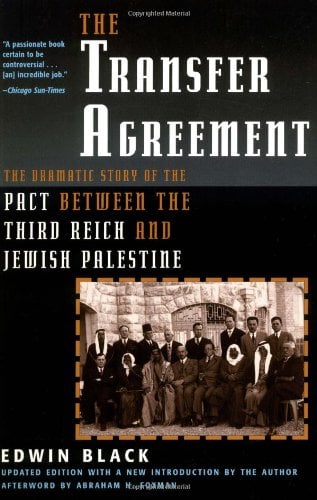 The Transfer Agreement by Edwin Black
Hitler's early anti-Jewish measures provoked worldwide efforts at a boycott of German goods, a measure that would have injured a still precarious economy. Jews orchestrated these efforts at a boycott, but hesitated over whether it would inflame or moderate German anti-Semitism. Meanwhile Zionist leadership and the Third Reich agreed on arrangements whereby German Jews could emigrate to Palestine under somewhat more favorable financial conditions and whereby German trade with Palestinian Jewry would increase. In turn, majority Zionists (as against the Revisionists) backed away from the boycott. The author documents the divisions within Jewry, insisting that the Zionists put their cause-German emigration to Palestine-ahead of the possible protection of Jews via more militant economic measures. Although shockingly deficient in his grasp of German developments, Black explicates the several Jewish positions, and seems to argue both that an early boycott might have succeeded and that "the Zionists were the coldest realists-perhaps the only realists-of the period."
Here is another relevant review by Avraham Baraki; pay attention to the notes section
We found the 25th anniversary version hosted at archive.org, and we thought you may find it useful.
 Menu
Menu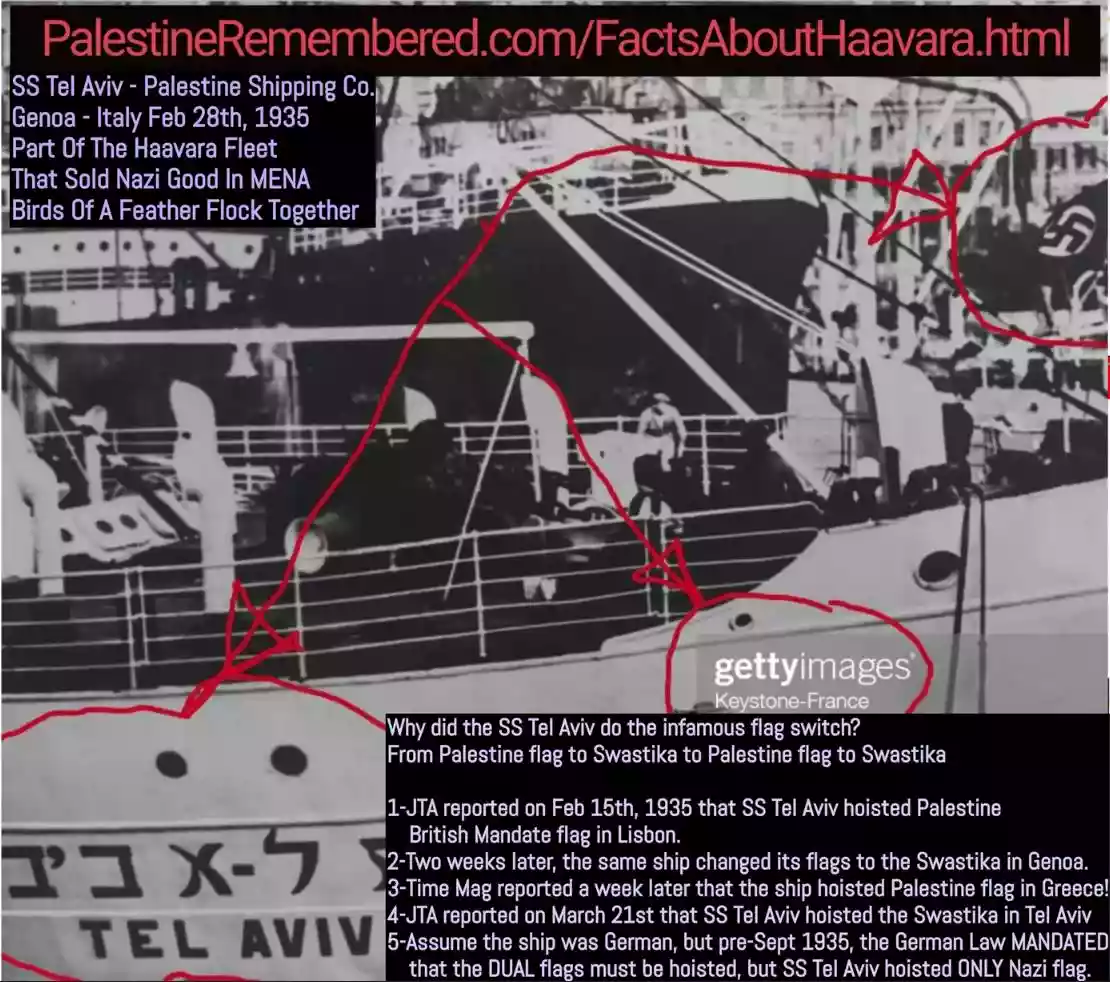


 Over 700 Oral History interviews (including 3,500+ hours of recording) can be viewed online.
Post Your Comment
*It should be NOTED that your email address won't be shared, and all communications between members will be routed via the website's mail server.
Both the Nazis and Zionists robbed the Jews, and it's almost guaranteed that this agreement did far more to enable Germany to rearm and turn on the Jews than to save Jews. In other words, the Holocaust almost certainly could have been prevented! Furthermore, this agreement also enabled the oppression of Palestinians, who were not responsible for the Holocaust.
As I said, Black is a very good researcher, but I can't understand how he remained a supporter of Israel after doing this research, even though his parents and other relative were victims of the Nazis. He shows many Jews were victims of both the Nazis and the Zionists, and so are Palestinians.