Disclaimer: The analysis below was written four months before it was revealed by Ha'aretz that Yahya Sinwar and Bibi Nehenyahu were negotiating a prisoner exchange that failed to materialize ten days before the Oct. 7th Raid happened. In fact, a deal was on the table that it seems was agreed upon, but Bibi could not make the final move to ease the suffering of Palestinians in the Gaza Strip. What has been revealed enforces our core argument, as you shall discover soon.
In the aftermath of October 7th, Western analysts and media quickly settled on a comforting, simplified narrative regarding Yahya Sinwar: he was a cunning mastermind who spent years orchestrating a singular, apocalyptic massacre. To the West, his trajectory was a straight line of unbroken malice. He learned Hebrew in Israeli prisons merely to deceive his captors, playing the long game to lull them into a false sense of security.
This narrative is a geopolitical farce.
It is a fairy tale designed to absolve the Israeli establishment of its most fatal strategic blunder. The reality of Sinwar and the evolution of Hamas’s strategy is not a straight line, but a series of calculated pivots, desperate diplomatic gambles, and ultimately, a violent ideological snap when every other door was bolted shut.
Sinwar did not emerge from prison intent only on a supernova. He emerged as a student of the Israeli mind. He understood their language, their societal fractures, and their political machinery. And for a brief, critical window, he actually tried to build a bridge.
The 2018 Gamble: A Golden Bridge Smashed
The most glaring omission in the Western narrative is the 2018 peace initiative. Facing a suffocating blockade and a collapsing economy, Hamas offered a monumental ideological concession: a 50-year Hudna (truce) in exchange for a sovereign Palestinian state based on the 1967 borders.
To Western observers, this might seem like a baseline negotiating tactic. But inside Gaza, it was a political earthquake. By offering a half-century of peace, Sinwar and the pragmatic wing of Hamas risked destroying their own movement. Hardliners viewed it as a betrayal of the resistance. The offer fractured the organization, causing many to leave. For a movement born out of armed struggle, offering 50 years of normalcy--a period long enough for generations to grow up with mortgages rather than rifles--was an existential risk.
Protesters throwing rocks at IoF soldiers at the Gaza border during the right of return march of 2018
But it was a risk born of naivety. Sinwar operated under the illusion that the Zionist establishment actually desired a quiet border. He failed to realize that Israel’s messianic greed for the Land of the West Bank--compounded by an overriding, pathological obsession with absolute security--had completely superseded its rational need to secure the State.
To the Israeli establishment, a peace offer is not an opportunity; it is a Trojan horse. Possessing a "Hammer" mentality, they only recognize the language of force. Because their obsession with security dictates that they can never trust a neighbor, they are structurally incapable of recognizing a golden bridge. When Hamas presented one, Benjamin Netanyahu did not just reject it; he responded with the sniper fire of the 2018 Great March of Return.
The "Policeman" Trap
By rejecting the Hudna, Israel forced Hamas back into a corner, but with a humiliating twist: they relegated Hamas to the role of an Israeli prison guard.
For years, the movement that prided itself on resistance was reduced to managing the misery of a besieged enclave. They were policing their own starving people to maintain a status quo that only benefited Tel Aviv. This was a slow, terminal rot. If this dynamic had continued, it would have destroyed the Palestinian cause from the inside out, completely eroding Hamas’s legitimacy just as it had destroyed the Palestinian Authority in Ramallah.
Western analysts love to point to the Abraham Accords as the primary catalyst for October 7th. While the looming normalization between Israel and Saudi Arabia played a factor, it was not the decisive element. The decisive element was internal. The resistance was dying a quiet, administrative death. They had to break the paradigm, with or without the Abraham Accords, because functioning as Israel’s pacification force was a fate worse than military defeat.
2021: The Ideological Snap
Protesters throwing rocks at IoF soldiers at the Gaza border during the right of return march of 2018
The definitive pivot did not happen in a vacuum; it happened in Jerusalem.
In May 2021, the Israeli establishment escalated its provocations at the Al-Aqsa Mosque compound and accelerated the ethnic cleansing of Sheikh Jarrah. This was the breaking point. After his diplomatic overtures were mocked and his movement was reduced to the role of a besieged municipal authority, Sinwar flipped.
Israeli intelligence documents recovered in Gaza after October 7th confirm this timeline. It was the assault on Al-Aqsa that served as the primary ideological and physical catalyst for the planning of the "Al-Aqsa Flood."
When the Israeli establishment smashed the diplomatic bridge in 2018 and threatened the physical and spiritual center of Palestine in 2021, they violated Sun Tzu’s most ancient rule: never corner an enemy unless you have a death wish. They sealed every political and non-violent exit, leaving an armed, desperate society with nothing left to lose.
The Language of the Explosion
The West misread Sinwar because the West refuses to understand the Israeli machine he was up against. The Israeli establishment--obsessed with its own Hasbara and convinced that Arabs "only understand force"--projected its own supremacist worldview onto Gaza. They believed a besieged people could be managed indefinitely.
Sinwar did mislead the Israelis, but not by planning a massacre for two decades. He misled them by letting them believe their arrogance was working, right up until the moment he proved it wasn't. The straight line is a myth. The reality is that the Israeli establishment was handed the "peace they never knew" on a silver platter, swatted it away in a fit of messianic hubris and security paranoia, and deliberately locked themselves in a room with a ticking bomb.
Details of the Failed Negotiations Between Sinwar & Bibi
Hands down, here is one of the best summeries and the best analysis from the team of "Breaking Points" about the failed negotiations between Sinwar and Bibi. Mr. Sinwar reluctantly executed on Oct. 7th when all other avenues were closed by Bibi and Company. In fact, a deal was on the table, but Bibi could not move forward. All could have been avoided just ten days before the raid on Oct. 7th. Pay attention to how Sinwar kept saying zilzal (meaning an earthquake in Arabic), which is synonymous with toufan (meaning a tsunami in Arabic):
 Menu
Menu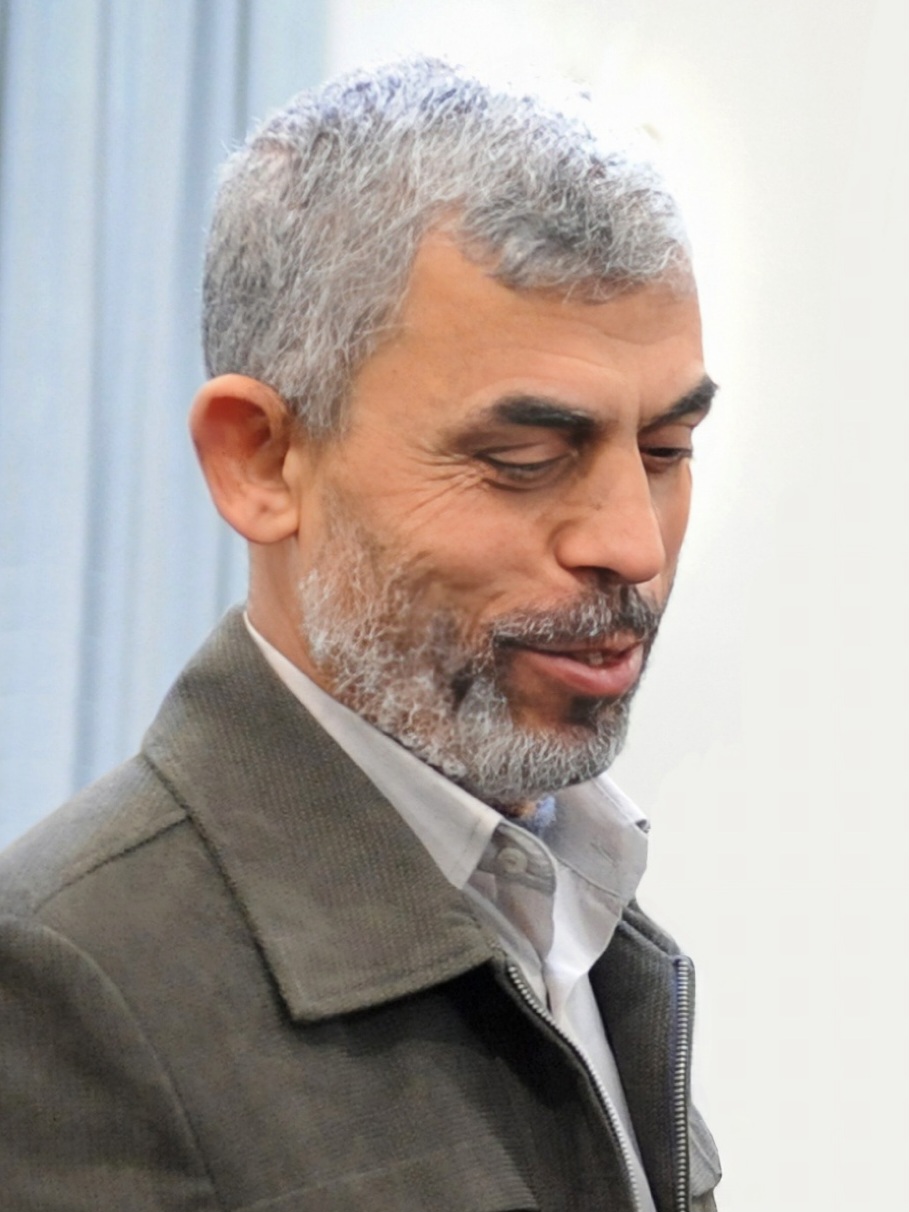 Yahya Sinwar, 2012
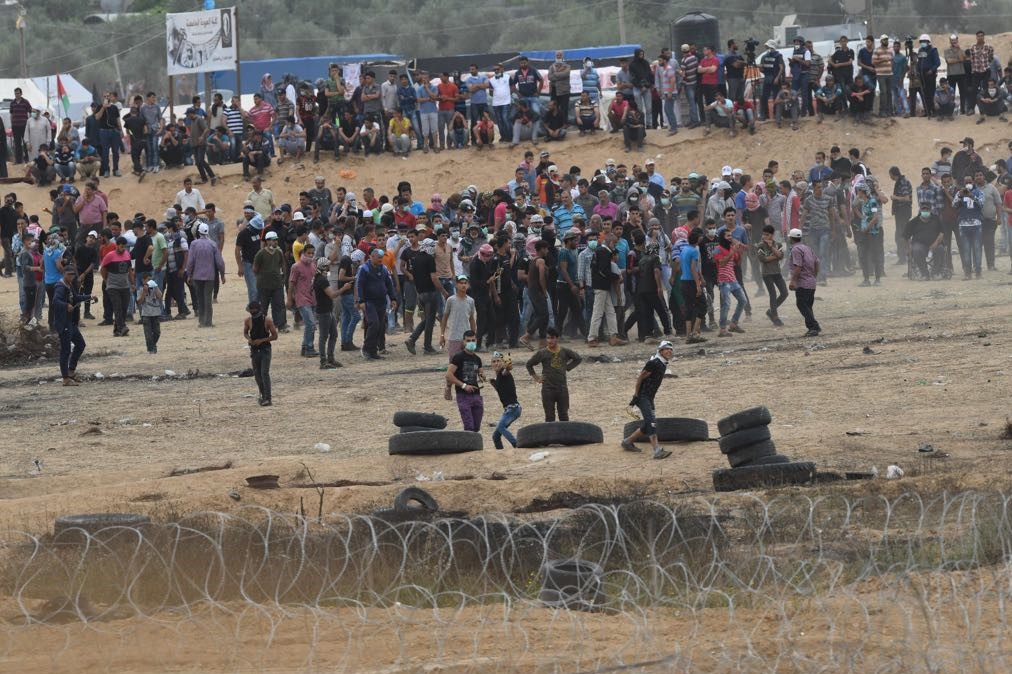 Protesters throwing rocks at IoF soldiers at the Gaza border during the right of return march of 2018
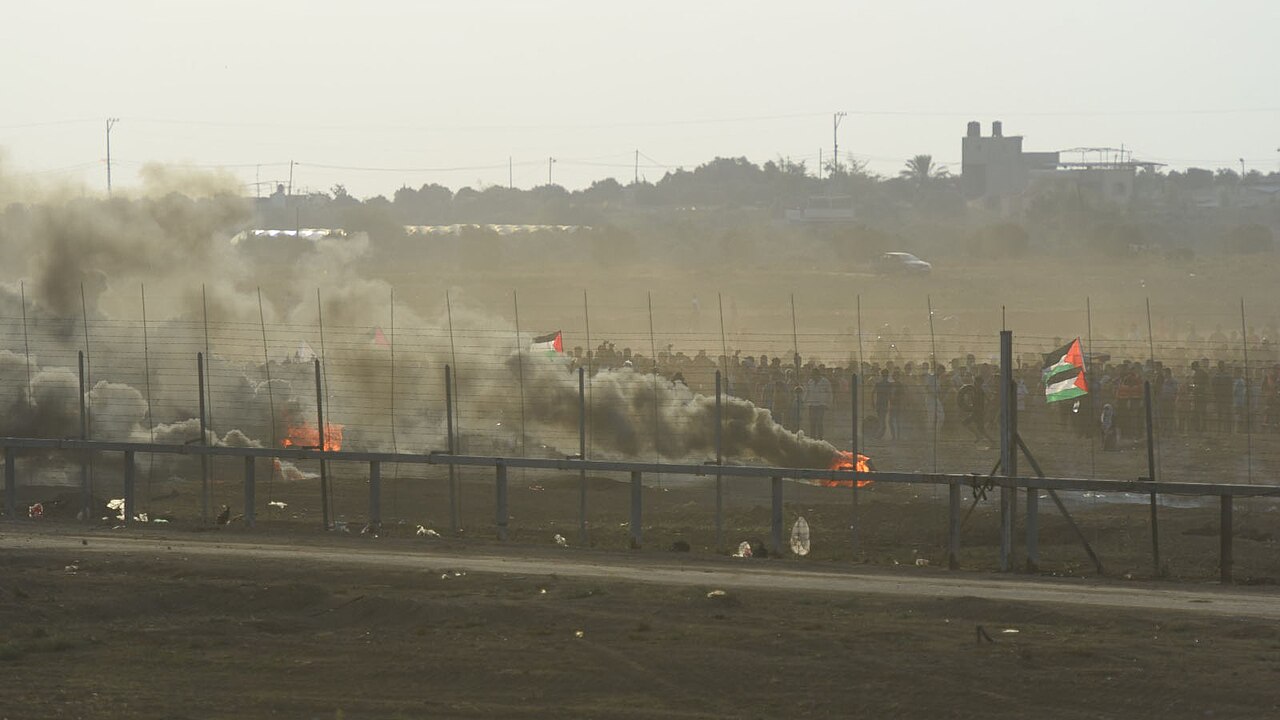 Protesters throwing rocks at IoF soldiers at the Gaza border during the right of return march of 2018


 Over 700 Oral History interviews (including 3,500+ hours of recording) can be viewed online.
Post Your Comment
*It should be NOTED that your email address won't be shared, and all communications between members will be routed via the website's mail server.