 Menu
Menu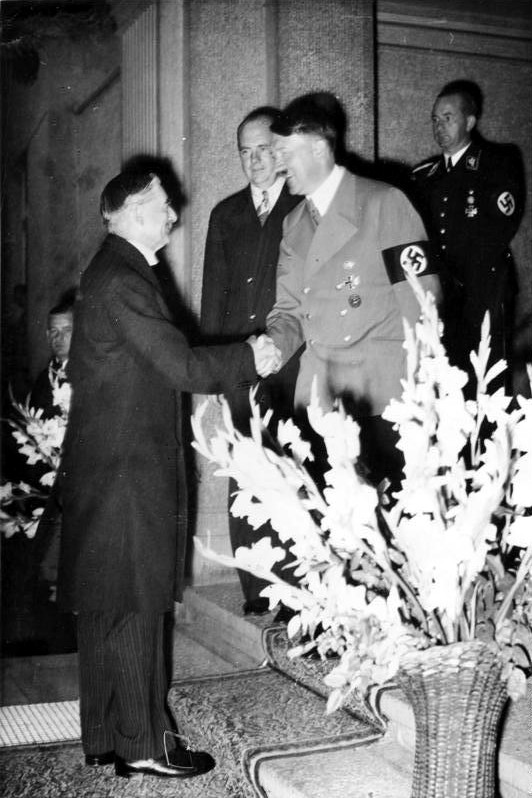 Adolf Hitler greets British Prime Minister Neville Chamberlain at the beginning of the Bad Godesberg meeting on 24 September 1938 in which Hitler demanded annexation of Czech border areas without delay, leading to the Godesberg Memorandum.
One of the most enduring myths of World War II history --largely curated by Winston Churchill after the dust had settled --is that the British public was "against" appeasement. We like to imagine that the average Briton in 1938 stood stoically against Hitler, shaking their head in shame as Prime Minister Neville Chamberlain signed the Munich Agreement.
The historical reality, however, is radically different.
When Chamberlain stepped off the plane at Heston Aerodrome on September 30, 1938, waving that famous piece of paper and declaring "Peace for our time," he was not greeted as a coward who had sold out Czechoslovakia. He was greeted as a Messiah.
To understand why the British people cheered for a deal that we now view as a betrayal, we have to look at the atmosphere of the week before, the hysteria of the moment, and the slow, painful hangover that followed.
1. The Mood: Hysterical Relief
To understand the popularity of Munich, you have to understand the terror of the week before Munich. In late September 1938, the British public was not thinking about geopolitics; they were thinking about survival.
-
The War Scare: The general consensus was that war was starting that Tuesday.
-
The Preparations: The government had begun issuing gas masks to civilians. Trenches were actively being dug in Hyde Park and St James's Park.
-
The Fear of the Air: The British public was terrified of the Luftwaffe. The popular belief--fueled by recent memories of Guernica in the Spanish Civil War --was that a war with Germany would begin with the immediate, total leveling of London and thousands of civilian deaths within hours.
When news broke that Chamberlain had secured a deal, the public didn't analyze the cost to the Czech borders. They simply realized: We aren't going to die this weekend.
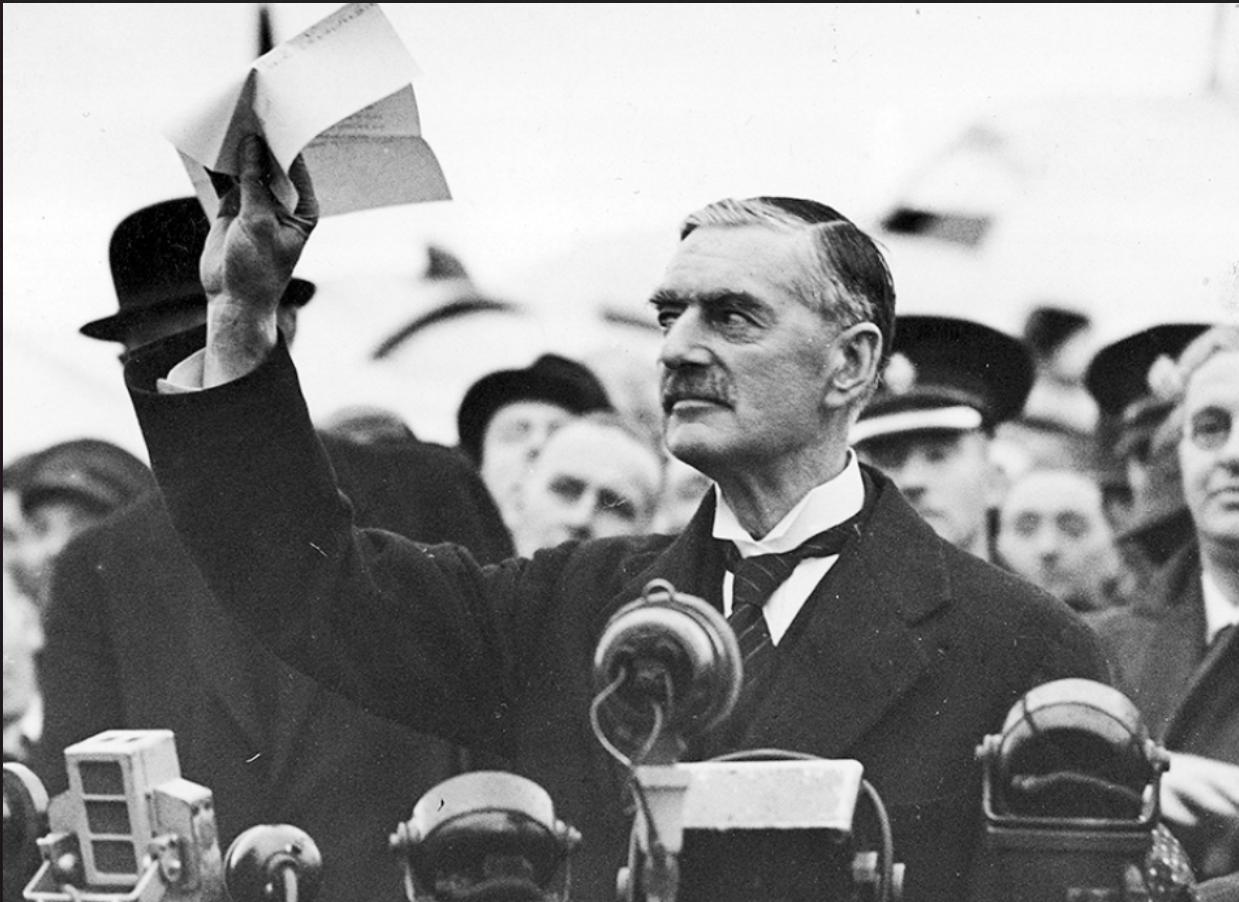 Chamberlain waving the letter he signed with Hitler, 1938.
2. How Popular Was It? (The Numbers)
The adoration for Chamberlain was overwhelming and unprecedented.
-
The Royal Seal of Approval: In a massive breach of protocol, King George VI invited Chamberlain to stand with him on the balcony of Buckingham Palace. The Monarchy is supposed to be apolitical, but the King effectively gave the Royal Seal of Approval to Appeasement. The crowds below chanted "Good Old Neville!"
-
The Mail: In the days following Munich, Chamberlain received 40,000 letters and telegrams of thanks. Gifts poured into Downing Street--fishing rods, umbrellas, and flowers from grateful mothers.
-
The Press: Almost every major newspaper hailed him as the savior of civilization. The Daily Express ran the headline: "NO WAR THIS YEAR OR NEXT YEAR."
If an election had been held in October 1938, Chamberlain would have won by a landslide. At that specific moment, Winston Churchill was seen by the majority not as a prophet, but as a dangerous, warmongering crank.
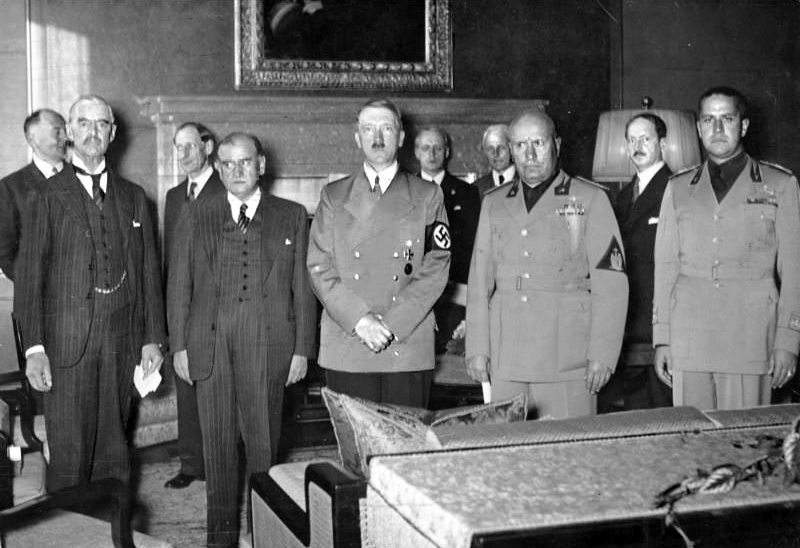 From left to right: Neville Chamberlain, Édouard Daladier, Adolf Hitler, Benito Mussolini, and Galeazzo Ciano pictured before signing the Munich Agreement (1938)
3. The "Secret Shame"
However, historians analyzing the Mass Observation archives (a project that recorded the diaries and honest conversations of ordinary people in 1938) found a more complex emotion beneath the cheering: Guilty Relief.
While there was euphoria, there was little pride. Many people knew, deep down, that they had bought their own safety by feeding a small democracy (Czechoslovakia) to the wolves. A common sentiment recorded in diaries of the time was, "Thank God it's over, but I feel a bit sick about how we did it."
4. The Hangover: When Did They Turn?
The popularity of Appeasement didn't vanish overnight. It eroded in three specific stages as the reality of Hitler's nature became undeniable.
-
Stage 1: The Moral Turn (November 1938 – Kristallnacht): The Munich agreement was sold on the idea that Hitler was a "reasonable statesman" who just wanted German lands back. The brutality of the Kristallnacht pogrom just weeks later made Britons look at their "Peace Paper" and realize they had made a deal with a gangster. The moral gloss of Munich evaporated here.
-
Stage 2: The Strategic Turn (March 15, 1939 – The Invasion of Prague): This was the death blow to Chamberlain’s popularity. Hitler broke the Munich Agreement and invaded the rest of Czechoslovakia, which had no German population. Chamberlain realized he had been lied to. The British public shifted almost overnight from "Peace" to "Prepare for War."
-
Stage 3: The Historical Cementing (1940 – "Guilty Men"): After the disastrous Fall of France in 1940, a book titled Guilty Men was published. It attacked the appeasers not just for avoiding war, but for failing to rearm during the time they bought. This cemented the narrative we hold today: that Munich was a cowardly betrayal.
Conclusion
We judge history backward, but life is lived forward. In September 1938, Neville Chamberlain was the most popular man in the world because he did the one thing the public wanted most: he stopped the bombs from falling.
The British public only turned against Appeasement when it became undeniable that Hitler never intended to keep the peace anyway. They realized, with heavy hearts, that they had dishonored themselves for a peace that lasted only six months.


 Over 700 Oral History interviews (including 3,500+ hours of recording) can be viewed online.
Post Your Comment
*It should be NOTED that your email address won't be shared, and all communications between members will be routed via the website's mail server.