 Menu
Menu Israeli soldiers are enjoying torturing a Palestinian; compare the look on the victim's face with the one on the soldiers' faces! Did Nazis enjoy it like this during WWII?
There is a profound semantic heist occurring in Western political discourse: the modern liberal establishment has successfully vacuumed the "liberty" out of "liberalism." Classical liberalism was built on the fundamental protection of human rights and resistance against state violence. Today’s institutional liberalism, however, often uses the aesthetic of tolerance to enforce absolute conformity, maintaining a sterile echo chamber where the horrors of colonial violence are sanitized for polite society.
Nowhere is this hypocrisy more glaring than in the language used by the "respectable" liberal press to describe the slaughter of Palestinians. When elite commentators on NPR, writers for The Washington Post and The New York Times, or hosts of mainstream liberal podcasts casually deploy phrases like "mowing the lawn" or "cutting the grass," they are engaging in a highly sophisticated form of linguistic dehumanization.
Semantic Anesthesia: The Anatomy of "Mowing the Lawn"
 Fake Valor: Why Did Zionist Jews Hoist Nazis Flag on Their Ships in the 1930s?
The term "mowing the grass" did not originate in a newsroom; it is an actual Israeli military doctrine designed to describe a strategy of periodic, violent containment rather than a permanent political solution.
When Western journalists adopt this military jargon without quotation marks, without moral reservation, and without identifying it as explicitly anti-human, they act as free public relations for a military apparatus. The metaphor performs dark psychological work. Grass does not have a face, a name, a family, or a history. It is a monolith. Grass does not have a political grievance or a demand for civil rights. It just grows annoyingly. You cannot negotiate with a lawn; you can only cut it.
By utilizing this terminology, the liberal press provides semantic anesthesia. They numb their audiences to the kinetic reality of shredded human bodies and destroyed neighborhoods, inherently justifying perpetual, cyclic violence without any moral guilt. No one feels bad for cutting the grass.
The Demographic Reality and the "Exhausted Gardener"
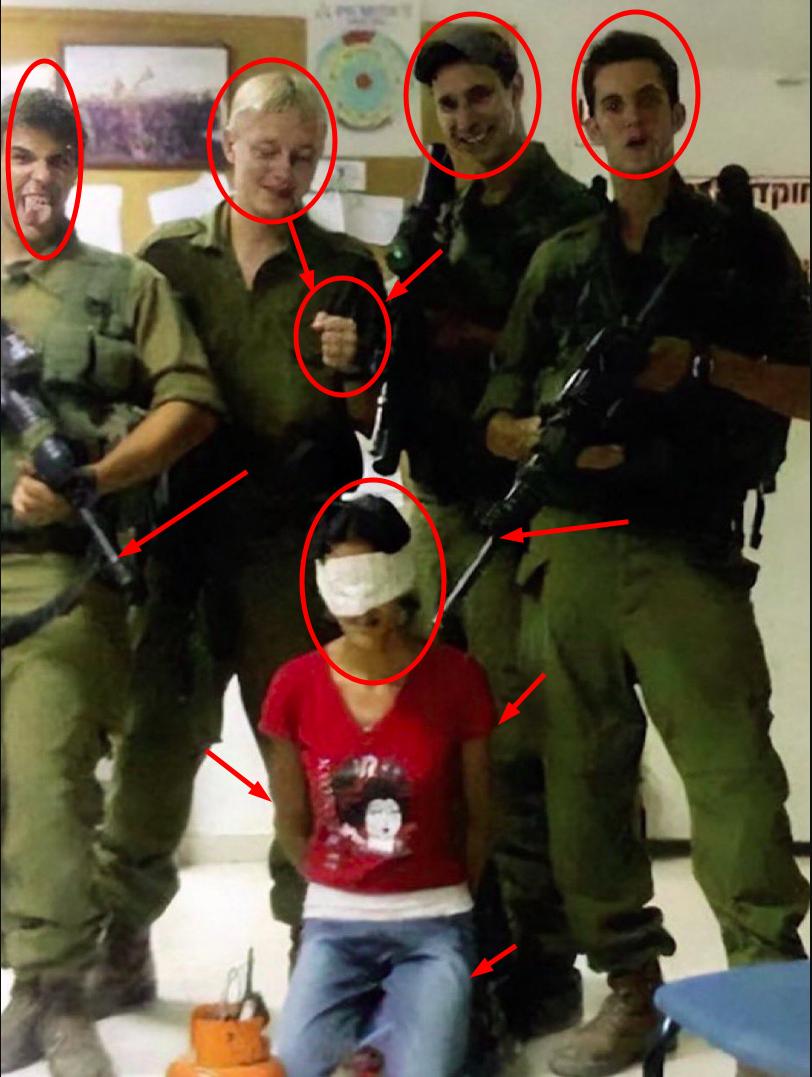 Jewish Values On Full Display: That is the MOST MORAL army during the "good times" in 2012
When you mow a lawn, the blade cuts every stalk equally; it makes no distinction. By adopting this metaphor, the press subtly excuses collective punishment. It conceptually erases the glaring demographic reality of the conflict: the vast, overwhelming majority of Palestinians are non-combatants--civilians, women, and children--who play absolutely no part in armed resistance. They are simply trying to survive.
Simultaneously, the metaphor completely ignores the reality of the Israeli state. Israel is a highly militarized society with universal conscription, where 18-year-olds must serve up to three years in the IDF, followed by 45 to 55 days a year in the reserve army for decades.
Yet, the language of the press treats this heavily armed, nuclear-backed state as the tragic, exhausted "gardener," forced to endlessly maintain a lawn it didn't ask for. It centers the emotional fatigue of the military occupier--suggesting we must pity the poor Israelis whose feelings are injured by having to constantly "mow"--while completely ignoring the kinetic destruction of the stateless people beneath the blade.
The Inevitable Escalation: "Salting the Earth"
 Shukri al-Jamal's Palace in the Talibiya neighborhood in Jerusalem, two days after its completion and just before Zionist Jews looted it from him and his family
If human beings are reduced to an agricultural nuisance, and the "nuisance" refuses to stop growing, the occupier will inevitably get frustrated. The logic of dehumanization demands escalation. If the grass keeps growing faster than it is being cut, the "gardener" will eventually seek a permanent solution. What begins as cutting the grass naturally evolves into a desire for chemicals to destroy the root system entirely.
We are witnessing this rhetorical escalation in real-time. Following the recent destruction of Gaza, commentators in the liberal press began shifting their metaphors from "mowing the lawn" to "salting the earth."
"Mowing the grass" was about cyclic containment. "Salting the earth"--a reference to the Roman destruction of Carthage--is about permanent erasure. You salt the earth so nothing can ever grow there again. When the press casually normalizes this phrase, they are moving the Overton window from "periodic conflict" to acceptable demographic elimination.
Conclusion: The Ultimate Double Standard

To truly understand the toxic nature of this language, one only needs to reverse the roles.
Imagine, for a moment, if Palestinians, Arab commentators, or their advocates routinely went on NPR or wrote in The New York Times referring to Jewish Israelis as "overgrown weeds" that needed to be "pruned." Imagine if they spoke of using a "permanent solution" to "cut down" the Israeli population.
The reaction would be instantaneous, global, and absolute. It would be universally condemned as a grotesque, antisemitic trope. The commentators would be fired before the broadcast ended, and the language would be correctly identified as the exact rhetorical precursor to the atrocities of 1930s Europe.
Yet, when this exact same agricultural, pest-control framework is applied to Palestinian civilians, it is treated as high-level, acceptable geopolitical analysis by the liberal establishment. This is the ultimate proof that the institutions claiming to uphold human rights possess an infinite capacity for empathy when looking in one direction, and a deliberate, genocidal blind spot when looking in the other.



 Over 700 Oral History interviews (including 3,500+ hours of recording) can be viewed online.
Post Your Comment
*It should be NOTED that your email address won't be shared, and all communications between members will be routed via the website's mail server.