 Menu
Menu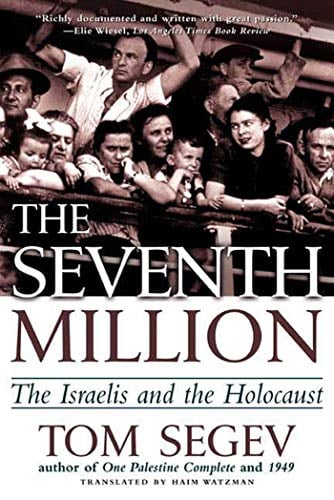 The Seventh Million by Tom Segev
Tom Segev's meticulous research makes The Seventh Million an indispensable text for understanding how the Holocaust shaped Israeli identity. However, Segev frequently defaults to apologetic rationalizations when evaluating the actions of Zionist leadership. He consistently minimizes the profound implications of the Haavara (Transfer) Agreement--the policy by which Zionist leadership became the first major organization to shatter the international Anti-Nazi Boycott in August 1933 (nine years prior to Haj Amin al-Husseini's wartime collaboration in Berlin). Throughout the text, Segev repeatedly portrays the Yishuv executive as "powerless and helpless," downplaying how Haavara jump-started state-building infrastructure fifteen years ahead of 1948--even while acknowledging that the Jewish Agency was on the verge of financial bankruptcy in 1933. Stated plainly: without the capital influx from the Haavara Agreement, the organizational infrastructure of the future state could not have been sustained.
The primary evidence presented in Segev's work demonstrates several key conclusions:
- Incentives for Action: Institutional Zionism demonstrated minimal interest in non-sectarian refugee rescue unless coupled with state-building incentives (specifically, direct capital import and selective immigration). When those material incentives aligned, leadership moved heaven and earth--as demonstrated by signing the Haavara Agreement with the Third Reich in August 1933.
- State-Building Teleology over Rescue: The Zionist executive was singularly fixated on constructing the state apparatus fifteen years ahead of time, treating all other humanitarian considerations as secondary. Segev illustrates this dynamic on pages 102?104, documenting how Zionist leaders discussed the impending destruction of European Jewry in the past tense during the late 1930s--treating the catastrophe as an inevitable historical reality to be exploited for political leverage rather than a crisis to be actively combated.
- Palestine as the Exclusive Destination: The Zionist movement maintained an unyielding insistence that Palestine was the ONLY acceptable solution to the "Jewish Question" in Europe, refusing to entertain the devastating ramifications of this doctrinal bottleneck.
- Persistence During WWII and Post-Pogrom: This policy persisted unaltered following the Nuremberg Race Laws, the Kristallnacht pogroms, and throughout World War II. Official Zionist representatives actively lobbied against opening alternative safe havens anywhere in the Western world unless those destinations directed refugees strictly to Palestine.
These historical realities compel critical structural questions:
- Did Zionist leadership systematically exploit and weaponize European Jewish suffering as a political LEVER to force Great Britain into permitting unrestricted Jewish immigration into Palestine?
- Did closing off alternative diplomatic and geographic avenues of escape for Jewish refugees outside of Palestine inadvertently restrict escape routes and exacerbate the crisis?
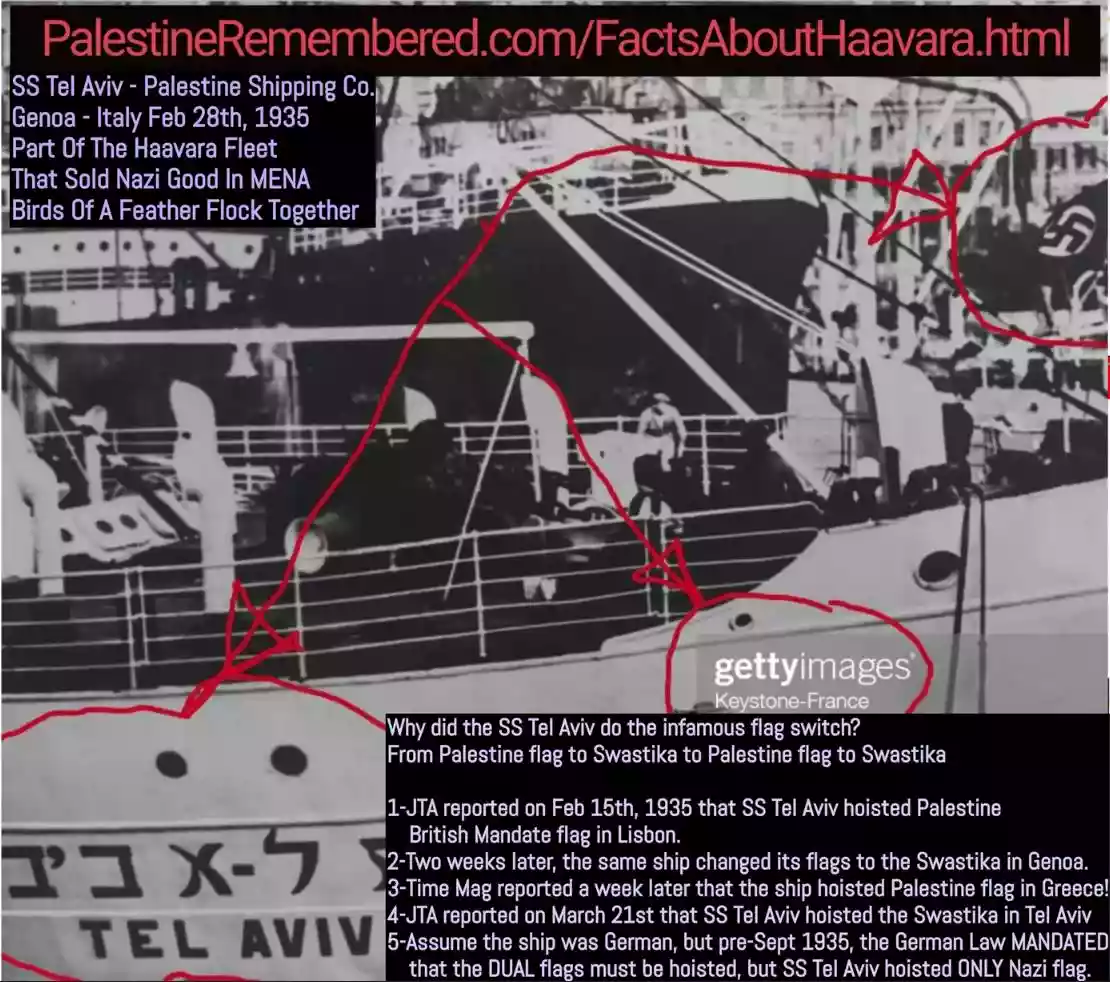
- How could the Zionist executive justify serving as regional distribution agents for Nazi German goods across the Middle East and North Africa (The Transfer Agreement, pp. 373?374), while refusing to lobby Western governments for emergency refugee havens outside of Palestine?
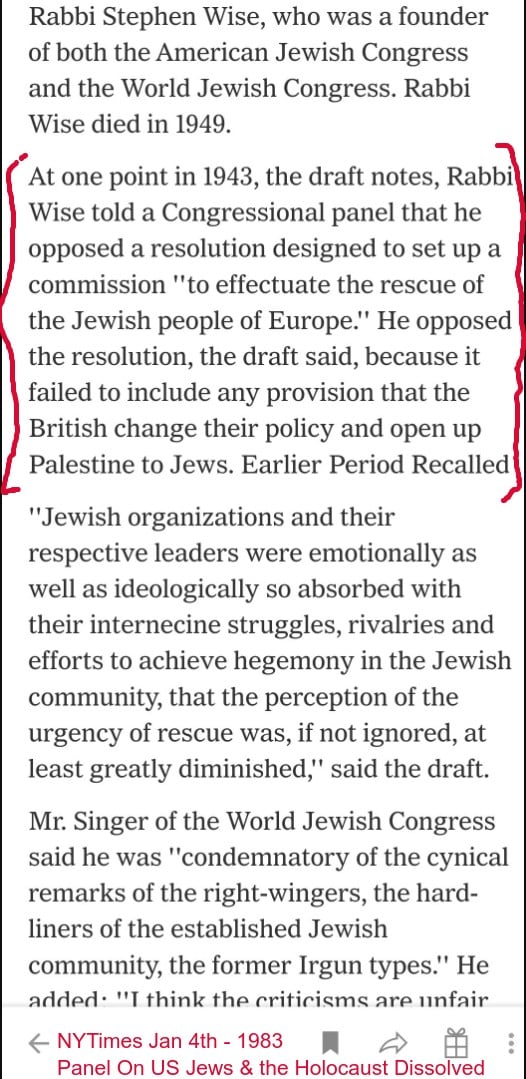 NYTimes: As late as 1943, Zionist leaders were lobbying US Congress to block Jewish refugee havens unless Britain opened immigration into Palestine
It is essential to note that the systematic "Final Solution" was not officially ordered until late 1941; as late as August 1940, Nazi planners were still contemplating the forced relocation of European Jews to Madagascar. While Nazi anti-Semitism was foundational, industrial extermination developed as a specific operational evolution. Therefore, interrogating how political Zionism's diplomatic choices impacted refugee options remains a crucial analytical inquiry.
These critical questions are not new; they were raised by American Jewish leaders following World War II. In 1982, an independent American Jewish commission was established to investigate the Yishuv's wartime rescue policies. However, the commission was abruptly disbanded and defunded in early 1983 following intense institutional pressure. We urge readers to review this New York Times report documenting the panel's collapse. While these historical inquiries remain largely taboo in official Israeli historiography, The Seventh Million remains a vital, mandatory work for anyone seeking to understand the material history behind the state's founding.


 Over 700 Oral History interviews (including 3,500+ hours of recording) can be viewed online.
Post Your Comment
*It should be NOTED that your email address won't be shared, and all communications between members will be routed via the website's mail server.