 Menu
Menu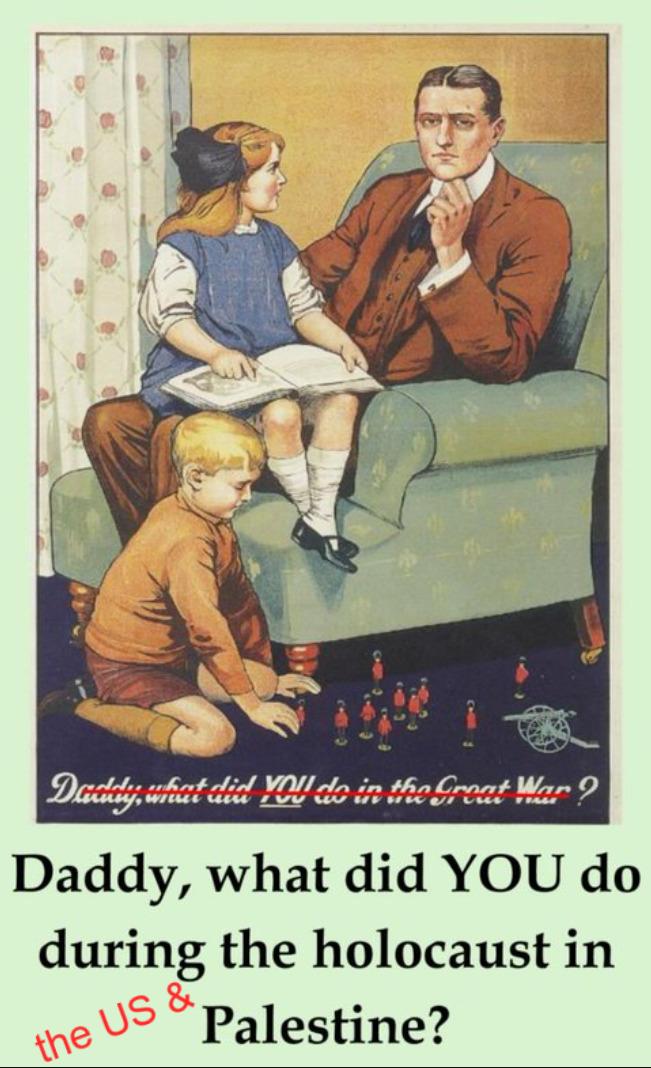 Fake Valor: Daddy, what did you do during the Holocaust while you were in Palestine?
In the study of history, the most effective propaganda is rarely an outright fabrication; rather, it is the strategic use of omission. By presenting a factual but carefully curated piece of the past, institutional gatekeepers can construct an "alibi narrative" that protects powerful interests from historical accountability.
Nowhere is this mechanic more evident than in the mainstream historical treatment of the American Jewish leadership’s response to the Holocaust. For decades, official institutions have framed the failure to rescue European Jewry as an exclusive failure of American bureaucracy. But a closer examination of the timeline, the public press records, and the suppressed intelligence networks of the Zionist establishment reveals a terrifying reality: the leadership knew the house was on fire long before they claimed, and they chose to negotiate the post-war real estate rather than call the fire department.
The USHMM and the "State Department Alibi"
If you visit the United States Holocaust Memorial Museum (USHMM) archives, you will find a prominent educational display of the "Riegner Telegram." Sent in August 1942 by Gerhart Riegner, a World Jewish Congress (WJC) representative in Switzerland, this telegram is frequently cited as the first official intelligence detailing the Nazi plan to exterminate millions using Prussic Acid (Zyklon B).
The official institutional narrative focuses heavily on the U.S. State Department’s malicious handling of this document. The State Department actively suppressed the telegram, hiding it from American Jewish leader Rabbi Stephen Wise, and later--when Wise finally obtained it--Undersecretary of State Sumner Welles asked Wise to keep it a secret for 88 days pending "verification."
This is all factually true. However, the omission is what makes it an alibi.
By framing the Riegner Telegram as the definitive "starting point" of Holocaust awareness, and the State Department as the sole suppressor of that information, the gatekeepers protect the Zionist establishment. This narrative presents Rabbi Wise, Nahum Goldmann, and the Jewish Agency as helpless victims trapped by an antisemitic American bureaucracy. It completely erases the fact that these leaders possessed their own intelligence networks in the middle of Europe, had prior knowledge of the massacres, and willingly chose silence to protect their post-war political goals.
The Swiss Network: They Did Not Need the State Department
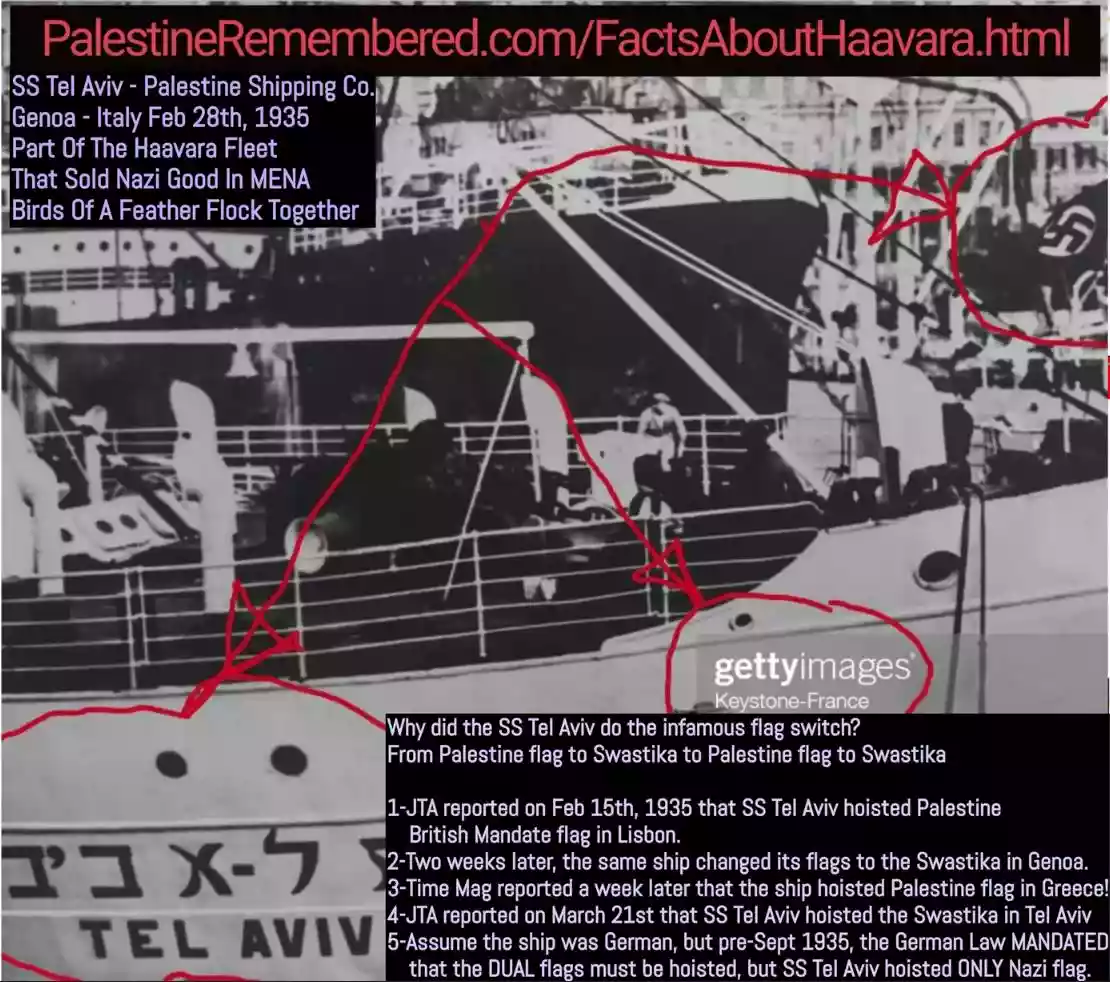
 Fake Valor: Why Did Zionist Jews Hoist Nazis Flag on Their Ships in the 1930s?
The idea that the American Jewish Congress (AJC) and the Jewish Agency were in the dark, waiting for the U.S. government to notify them, is a historical farce.
The Zionist establishment possessed a highly sophisticated, independent communications network centered in neutral Switzerland. Officials like Gerhart Riegner (WJC), Saly Mayer (who was a Zionist working for the Joint Distribution Committee), and Richard Lichtheim (Jewish Agency) were stationed in Geneva and Zurich specifically to gather intelligence from Nazi-occupied Europe. Through couriers, diplomats, and smuggled letters, they had direct lines to the ghettos and the killing fields.
The leaders in New York and Jerusalem were receiving "underground advices" and reports of mass shootings by the Einsatzgruppen throughout 1941 and early 1942. They did not need Sumner Welles to tell them a genocide was occurring; their own operatives were already screaming it across the Atlantic.
The 1941 Smoking Gun: The Baltimore Conference
The timeline completely shatters the "alibi." Three weeks before the United States officially entered the war, and nine months before the Riegner Telegram was drafted, the Inter-American Jewish Conference convened in Baltimore in late November 1941.
According to archival reports from the Jewish Telegraphic Agency (JTA), the conference featured Rabbi Stephen Wise, Nahum Goldmann, and Undersecretary of State Sumner Welles. At this exact moment, hundreds of thousands of Jews had already been slaughtered in the ravines of Babi Yar and the forests of the Baltics--facts that were actively being reported in the Yiddish press.
Yet, what were Wise, Goldmann, and Welles discussing in Baltimore? They were discussing "justice for the Jewish people" in the post-war world. The Zionist leadership was already accepting a "Post-War" framing while the slaughter was in its most frantic phase. They traded the demand for immediate rescue for a seat at the table to negotiate the future State of Israel.
The Summer of 1942: A Genocide Already in Print
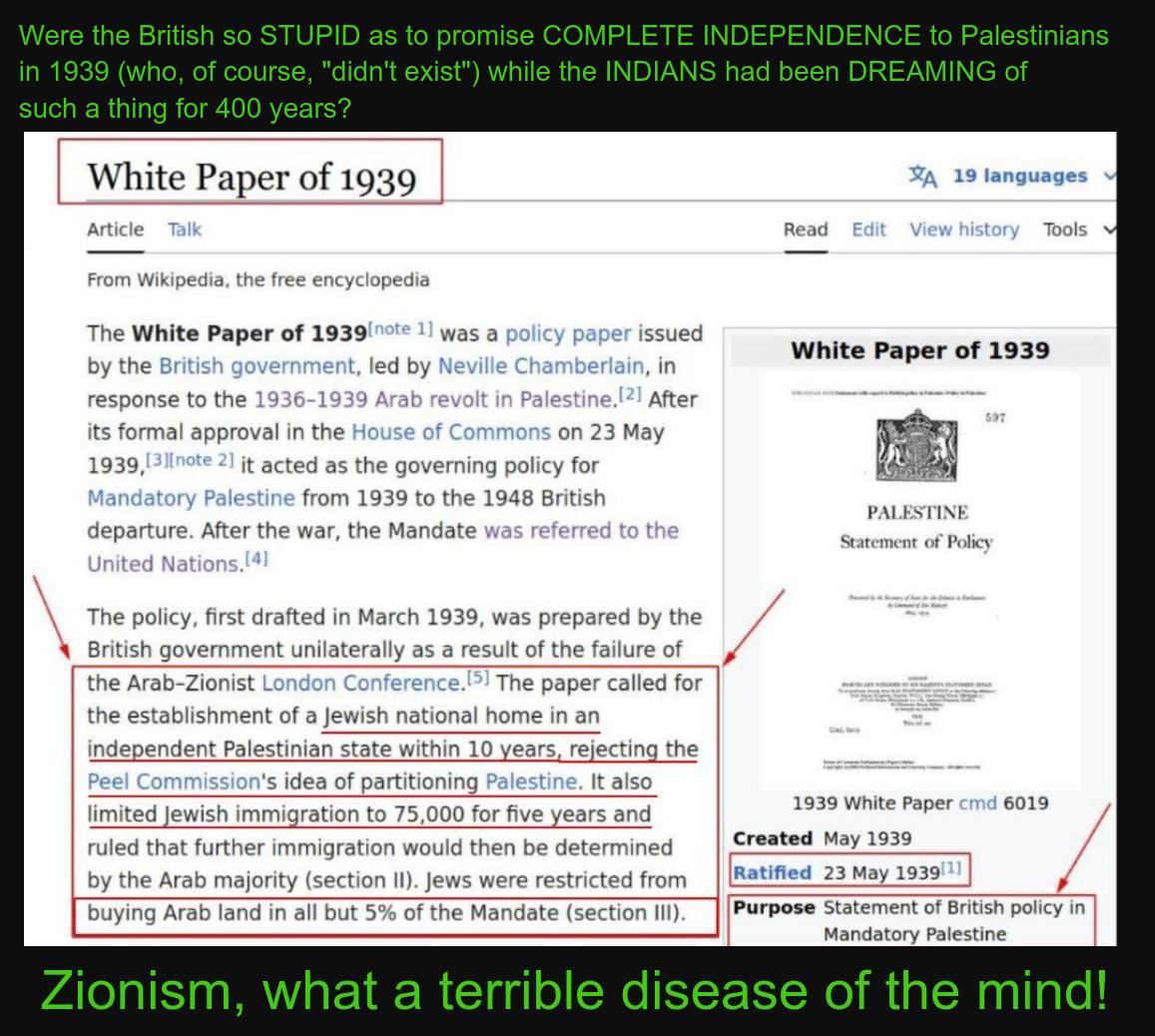 Were the British so STUPID as to promise COMPLETE INDEPENDENCE to Palestinians in 1939 (who, of course, "didn't exist") while the Indians had been DREAMING of such a thing for 400 years?
Perhaps the most damning indictment of the "August 1942 revelation" is the fact that the genocide was already front-page news months before the Riegner Telegram was even sent. The archives of both Jewish and mainstream media prove that the 88-day silence Wise agreed to was not about keeping a secret; it was about smothering a fire that had already been lit in the public domain.
Consider the timeline of the summer of 1942:
-
June 17, 1942: The Jewish Telegraphic Agency (JTA) published a horrifying report detailing a continuous two-week pogrom in Vilna. The article explicitly stated that "60,000 Jews Executed... were lined up and machine-gunned" at Ponary.
-
June 19, 1942: The Jewish Chronicle in Britain reported that "eighty-five thousand men, women and children" had been massacred in Nazi Europe.
-
Early July 1942: Polish Jewish refugee Szmul Zygielbojm published a report in the mainstream British national newspaper, The Daily Telegraph. The report explicitly named the Chelmno death camp and stated that 700,000 Jews had been murdered by gas.
When Rabbi Wise agreed to Sumner Welles' request for an 88-day silence in August, he was not waiting to verify a rumor. He was actively withholding the institutional weight of the American Jewish leadership from reports of gas chambers and mass executions that were already printed in the daily newspapers.
The Yad Vashem Admission: Memorializing While They Burned
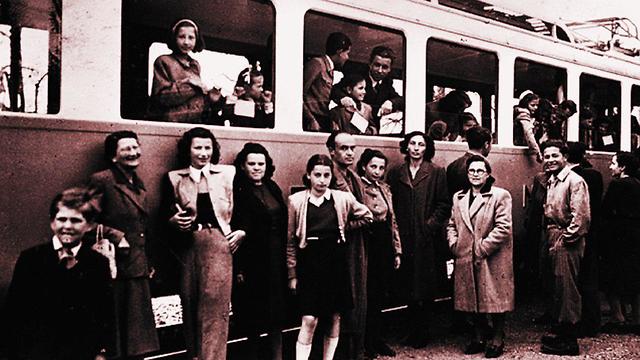
Kastner Saved Lives Too: How does justifying Haavara after the fact not resemble Kastner's defense of what happened on his infamous train but at a much larger scale? Kastner too saved Live!
If one needs absolute proof that the Zionist establishment possessed verified knowledge of the genocide and had already subordinated it to their "State-First" political project, they need look no further than the official archives of Yad Vashem itself.
According to an academic article published on Yad Vashem’s own website detailing the history of the institution: "The idea of establishing a memorial in Palestine to the Jewish victims of the Holocaust was first suggested in the summer of 1942, at the height of World War II," initiated by Mordechai Shenhavi.
This historical footnote is an inadvertent, devastating admission.
How could the American Zionist leadership claim to be waiting for "verification" in August 1942, while the Zionist establishment in Palestine was already proposing a permanent memorial for the victims during that exact same summer? You do not plan a national monument for a rumor.
More chillingly, this exposes the grotesque, utilitarian priorities of the establishment. In the summer of 1942, the extermination was at its absolute peak. Millions of Jews were still alive in ghettos and hiding. The window for rescue, ransom, and bombing the tracks was still open. Yet, the leadership in Palestine was already conceptualizing European Jewry in the past tense. Instead of deploying 100% of their institutional energy and financial capital into emergency rescue, they were already pivoting to memorialization. They were drafting plans for a museum to anchor the mythology of their future State while the victims meant to fill it were still breathing.
We have the receipts; we have the goods; we have the Jewish Agency's budget during the last 29 months of WWII. Once you examine what was spent on rescue from what was donated, well, you might lose your religion.
The Bandwidth of Betrayal: Fighting the White Paper, Not Hitler
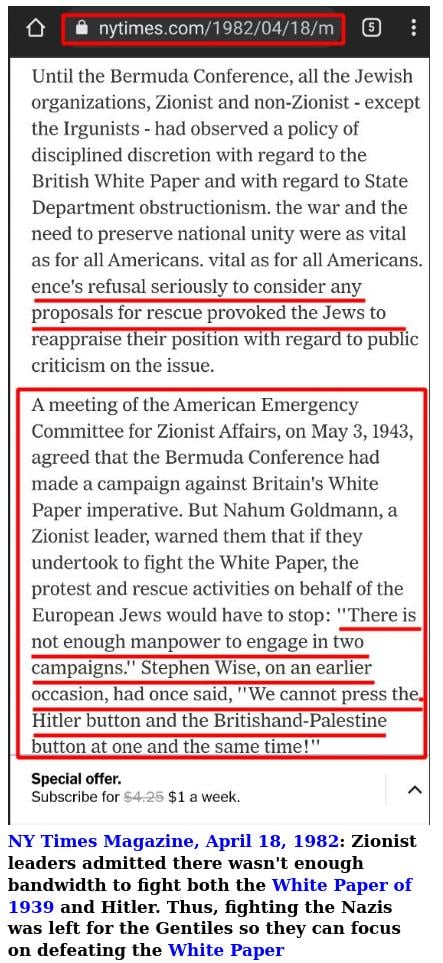 NY Times Magazine, April 18, 1982: Zionist leaders admitted there wasn't enough bandwidth to fight both the White Paper of 1939 and Hitler. Thus, fighting the Nazis for the Gentiles so they can focus on defeating the White Paper
Why would the Zionist establishment actively suppress the cries for rescue and divert funds away from saving lives? The answer lies in a cold, geopolitical calculation: they were terrified that focusing on the Holocaust would rob them of their State.
In 1939, the British issued the infamous "White Paper," which severely restricted Jewish immigration and land purchases in Palestine, effectively threatening the creation of a Jewish demographic majority. When World War II broke out shortly after, David Ben-Gurion famously declared: "We will fight the war as if there were no White Paper, and we will fight the White Paper as if there were no war."
For decades, gatekeepers have cited this quote to paint the Zionist leadership as heroic multitaskers fighting a two-front war for Jewish survival. In reality, the quote was complete nonsense--a PR smokescreen.
The Zionist leadership never intended to confront the Nazis directly. As an April 18, 1982, article in the New York Times Magazine corroborated regarding this era, Zionist leaders privately admitted there simply wasn't enough "bandwidth" or resources to fight both the British White Paper and Hitler. Their chilling decision was to fight the White Paper to secure the State, and leave the fighting of the Nazis to the Gentiles.
 Fake Valor: Jewish-Brigade, Italy April 1945: The Impostering Hero, see me while I bomb Nazis. We wonder: were any similar selfies taken at the al-Alamein meat grinder?
This calculated apathy explains why the Jewish Agency dragged its feet when it came to participating in the Allied war effort. Today, institutional histories heavily brag about the "valor" of the Yishuv (the Jewish community in Palestine), proudly citing that over 30,000 Palestinian Jews volunteered for the British Army. But this statistic is another carefully crafted alibi.
The Jewish Agency actively politicized this recruitment, demanding that the British recognize them as an independent national army with their own flag, rather than just rushing troops to the frontlines to stop the genocide. Because of this political foot-dragging, the famous "Jewish Brigade" was not officially formed until late 1944. Out of the 30,000 volunteers, a mere 5,000 were deployed as part of this Brigade.
The ultimate farce of this "valor" is the timeline of their deployment. The Jewish Brigade saw its first real combat in Italy in the spring of 1945--literally five weeks before Nazi Germany surrendered. The primary armed effort of the Zionist establishment against the Nazis was a symbolic, five-week photo op designed entirely to secure a "combatant" seat at the post-war victor's table, ensuring they had the political leverage to defeat the White Paper and claim their State.
The 1968 Invention: Manufacturing the Alibi
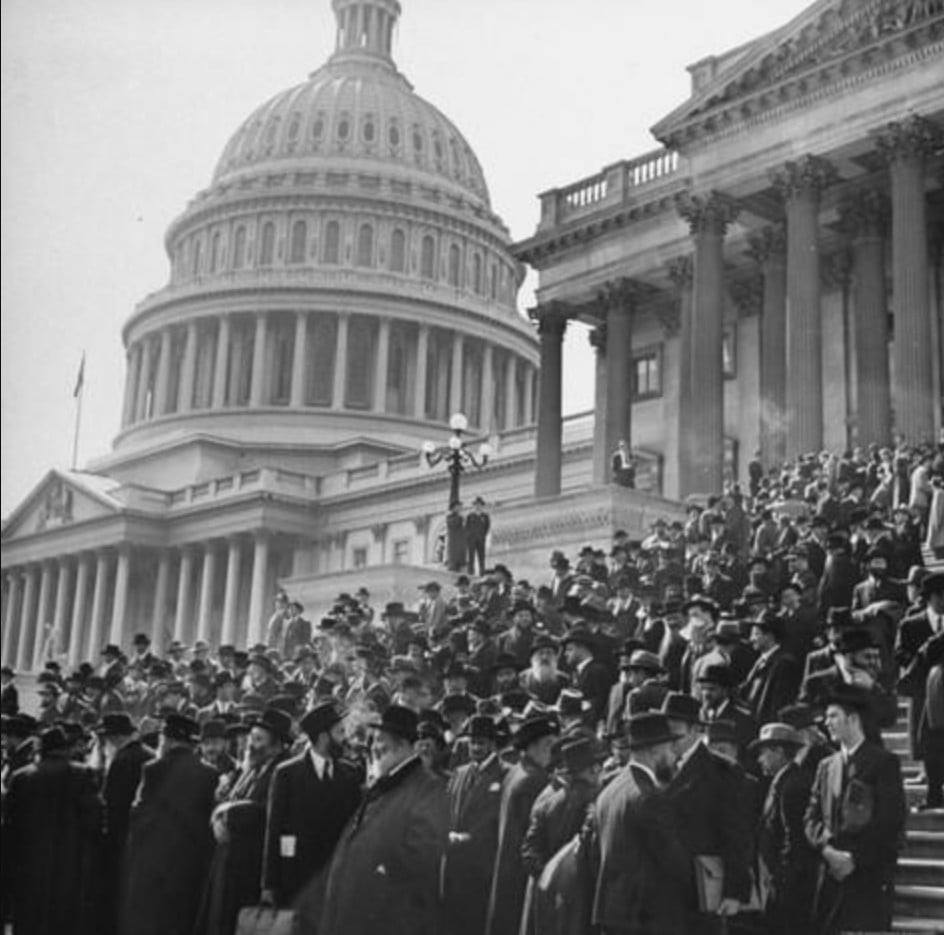 Fake Valor: When American Rabbis marched in DC in Oct. 1943 to lobby for rescuing Jews, you would think Zionists supported them?
If the "State Department Alibi" is a deflection, when exactly was it concocted? It was not the immediate defense after World War II.
For the first two decades following the war (1945–1967), the Zionist establishment did not need an alibi because questions regarding the failure to rescue were effectively taboo. The global narrative was one of triumphalism: the tragedy of the Holocaust was immediately overshadowed by the miraculous, heroic founding of the State of Israel in 1948. Leaders like David Ben-Gurion and Rabbi Stephen Wise were treated as untouchable founding fathers.
The crisis of accountability only arrived in 1968 with the publication of Arthur D. Morse’s groundbreaking book, While Six Million Died: A Chronicle of American Apathy. Morse was the first mainstream author to dig into government archives and expose the vicious, bureaucratic antisemitism of U.S. State Department officials (like Breckinridge Long), detailing their active suppression of the Riegner Telegram.
Morse’s book shocked the American public, but it presented a terrifying problem for the Jewish establishment. They realized it was only a matter of time before the public logically asked: "If the State Department was hiding this, what were our own leaders doing?"
To survive this scrutiny, institutional gatekeepers performed a masterful sleight of hand. They seized upon Morse’s findings and weaponized them. They fully embraced the condemnation of the State Department, amplifying it to the maximum. By pointing all the collective historical rage at American bureaucrats, they successfully directed the spotlight away from the Jewish Agency and Rabbi Wise. The establishment effectively signaled: "Yes, it was a tragedy, but look at what these terrible American officials did to us!"
The "State Department Alibi" was thus engineered more than two decades after the war ended. It was a manufactured lightning rod designed to absorb all historical accountability, ensuring that the Zionist leadership’s own complicity and "State-First" financial diversions remained hidden in the shadows.
Breaking the Silence: Brenner and Wyman
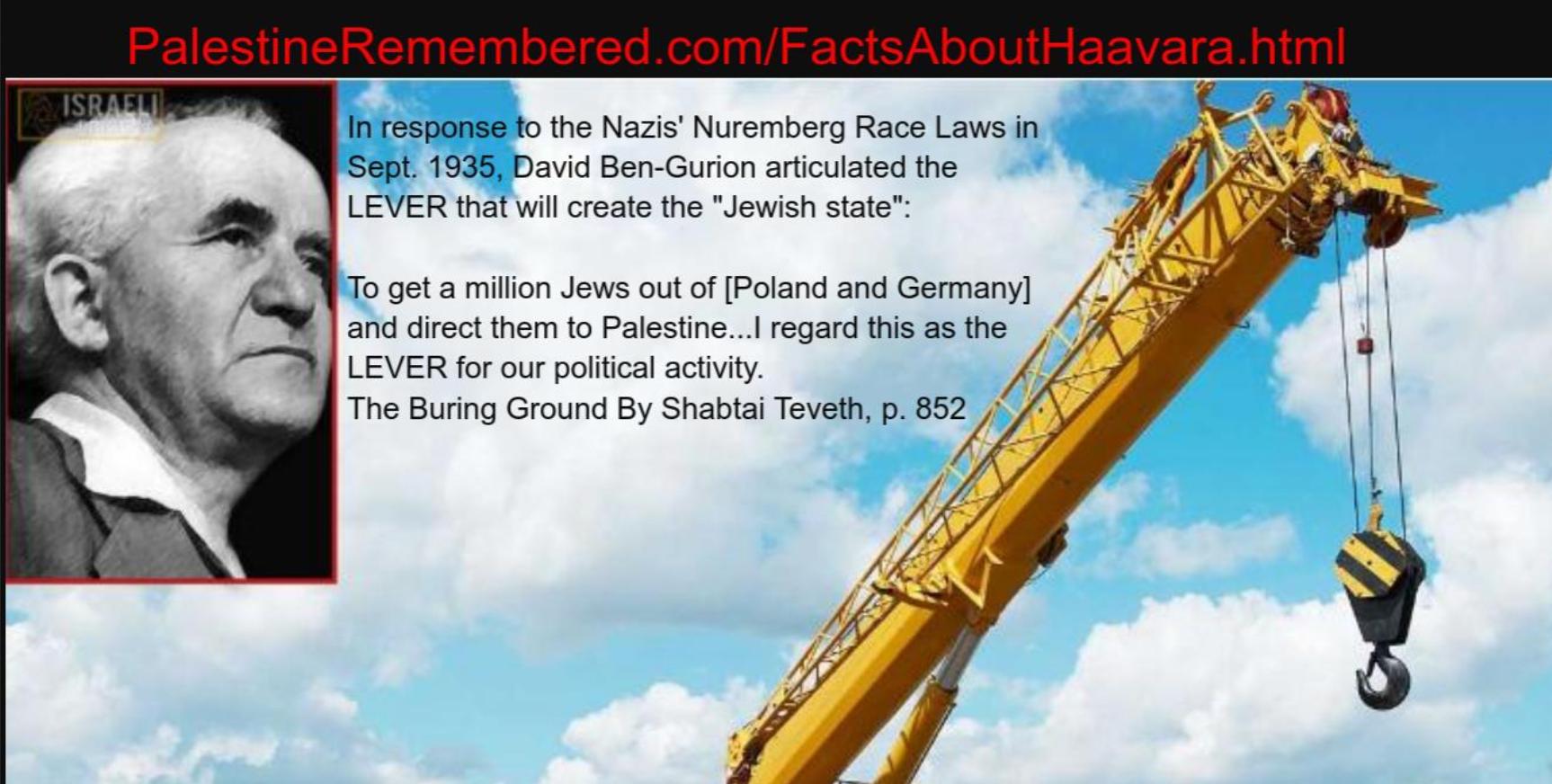 David Ben-Gurion envisioned that Nazis' Nuremberg Race Laws would become the LEVER that would end up creating the "Jewish state," but how? Click the image for the details
 This 1968 deflection held firm until the 1980s, when two historians systematically dismantled it.
In 1983, Lenni Brenner published Zionism in the Age of the Dictators. Brenner exposed the cynical mechanics of the establishment, proving that Wise had admitted to President Roosevelt that he possessed "cables and underground advices for some months" prior to the official announcements, but had actively succeeded "in keeping them out of the press." Brenner argued this suppression was a deliberate policy: the Zionist leadership feared that a loud, disruptive campaign for immediate rescue would anger FDR and derail their lobbying for a post-war state in Palestine.
A year later, in 1984, David S. Wyman published The Abandonment of the Jews. Wyman rebuked the 1968 alibi by demonstrating that the 88-day silence surrounding the Riegner Telegram was not merely forced by the State Department; it was a policy of compliance by the Jewish leadership. Wyman documented how Wise and the establishment actively sabotaged other, more radical rescue groups (like the Bergson Group) who were begging to make the news public.
The Wayback Machine: Gatekeeping in the 21st Century
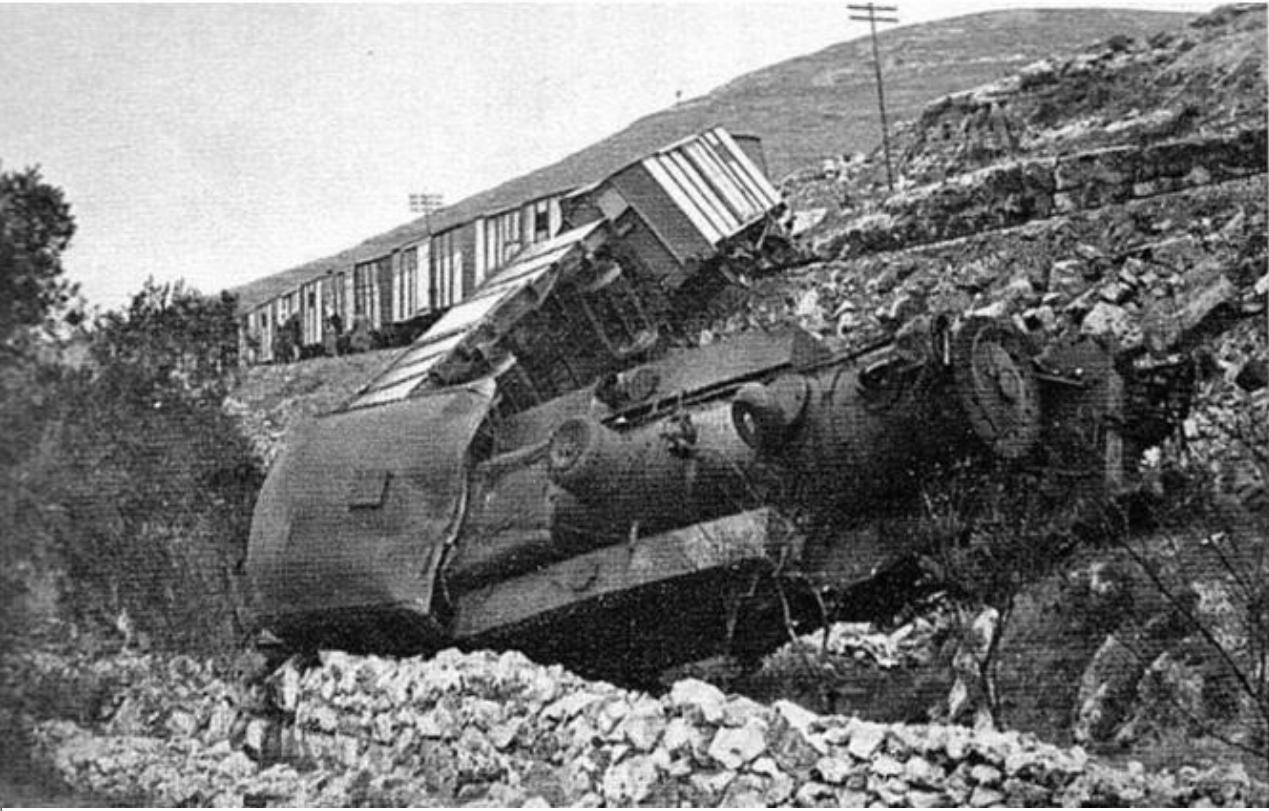 Fake Valor: Why did two of Israel's future PMs, Menachem Begin and Yizhak Shamir, bomb WWII war efforts while their families were being gassed in Poland?
One might assume that the USHMM's reliance on the "State Department Alibi" is simply a relic of older historiography. It is not. It is an active, modern curation of memory.
Digital archives from the Wayback Machine reveal that the USHMM's "Undelivered Telegram" educational page was authored and published in late 2020.
This timeline is a devastating indictment of modern historical institutions. By 2020, the evidence exposing Rabbi Wise and the Zionist leadership had been publicly available for nearly four decades. The curators had full access to the June 1942 JTA reports, the Swiss intelligence network files, the Yad Vashem founding timeline, and the exhaustive research of Brenner and Wyman.
Yet, in the 21st century, they actively chose to omit all of it. They resurrected the 1968 alibi and presented it to the public as the unchallenged truth.
By hiding what the leadership knew, when they knew it, and how they diverted rescue funds to build their state, modern gatekeepers ensure that the architects of the State are remembered as pragmatic saviors, rather than calculating politicians who viewed the ashes of Europe as the tragic, but necessary, foundation of their national home.


 Over 700 Oral History interviews (including 3,500+ hours of recording) can be viewed online.
Post Your Comment
*It should be NOTED that your email address won't be shared, and all communications between members will be routed via the website's mail server.