Zionist FAQs: The Architecture of Erasure: The "Arab House" Real Estate Paradox
Shukri al-Jamal's Palace in the Talibiya neighborhood in Jerusalem, two days after its completion and just before Zionist Jews looted it from him and his family
A Dajani family portrait in front of their Baq'a home that belongs to Dr. Mahmoud al-Dajani. After Nakba, Israelis looted their home, which was featured in the Israeli film called: House
In 1948, during the Nakba, Jewish forces captured the Talbiyeh neighborhood. The Bisharat family, like hundreds of thousands of their fellow Palestinians, fled the violence. Following the establishment of the "Jewish state," the government seized the property under the "Absentee Property Law," a legal mechanism used to loot Palestinian-owned land and homes directly to the state without offering compensation to the original owners.
The famous Haroun al-Rashid Palace in the Talibiya neighborhood in Jerusalem, which used to be the residence of Golda Meir
The Bisharat family’s palace was suddenly state property. And its next occupant would embody the ultimate historical irony.
The Golda Meir Contradiction
In the 1950s, the ground floor of the Harun al-Rashid Palace became the residence of Golda Meir, who was serving as Israel’s Foreign Minister.
Years later, in 1969, Meir would famously declare to the Sunday Times:
If you can read Hebrew, you can read the sign that Israel installed, which clearly says Golda Meir lived in the Bishara palace. Funny how Israelis omitted such a fact in English or Arabic
"There was no such thing as Palestinians... It was not as though there was a Palestinian people in Palestine considering itself as a Palestinian people, and we came and threw them out and took their country away from them. They did not exist."
She made this sweeping declaration of erasure while having literally lived inside a confiscated Palestinian palace, built by a displaced Palestinian patriarch. The psychological walls required to sleep inside a stolen home while publicly denying the existence of the very people who built it are staggering.
The Knock on the Door
The famous Haroun al-Rashid Palace in the Talibiya neighborhood in Jerusalem, which used to be the residence of Golda Meir
The human cost of this erasure was vividly documented in the year 2000, when George Bisharat--a Palestinian-American law professor and the grandson of Hanna Bisharat--traveled to Jerusalem. He went to 18 Marcus Street and knocked on the door of his ancestral home.
Palestinians are being ethnically cleansed out of al-Tantura in May of 1948; soon after, 200+ men were massacred.
Why are these specific homes so prized? Because the Palestinians built with profound love and pride. To the indigenous Palestinian, a home was not merely a utilitarian shelter; it was a permanent, physical statement of existence, deeply woven into the landscape. The arches, the stonework, and the courtyards were an organic extension of the Levantine environment. Conversely, the rapid, brutalist construction favored by the early state--built by European transplants rushing to establish demographic facts on the ground--largely lacked this deep, aesthetic connection to the dirt.
This desire to possess the indigenous aesthetic reaches bizarre extremes. Flanzraich noted how some radical Israeli settlers in the occupied West Bank now attempt to imitate traditional Palestinian life, taking up shepherding and even wearing the kuffiyya. It is the ultimate psychological manifestation of the paradox: claiming the indigenous people "don't exist," while desperately cosplaying as them and paying millions of dollars to live in the beautiful homes they were forced to leave behind.
An Accidental Confession
Palestinian Replacement In A Single Picture:al-Tira's school before and after Nakba. The same place but different people
When modern Israeli real estate agents market a property as an "Arab House in Talbiyeh," they are engaging in an economic hypocrisy. They demand top dollar for the beautiful aesthetic, but require the buyer to sever the architecture from the ethnic cleansing that made the building available to the market in the first place.
The early Zionist narrative heavily relied on the "Blooming the Desert" myth--the idea that Palestine was a barren, malaria-infested swamp waiting for European civilization to arrive. But an empty swamp does not leave behind the Harun al-Rashid Palace. A "land without a people" does not leave behind luxury real estate so beautiful that a Prime Minister moves in.
Every time a real estate listing boasts of an "Arab House," it is not just a sales pitch. It is an accidental, undeniable confession to the existence of the civilization they tried to erase.
The current-day resident of a cherished Palestinian family villa called Villa Harun al-Rashid gives his glossy version of the house’s history, completely erasing its real story:
Here is a great short video exposing the earlier Jewish cognitive dissonance like no other. Hang on to your seat:
 Menu
Menu Shukri al-Jamal's Palace in the Talibiya neighborhood in Jerusalem, two days after its completion and just before Zionist Jews looted it from him and his family
 A Dajani family portrait in front of their Baq'a home that belongs to Dr. Mahmoud al-Dajani. After Nakba, Israelis looted their home, which was featured in the Israeli film called: House
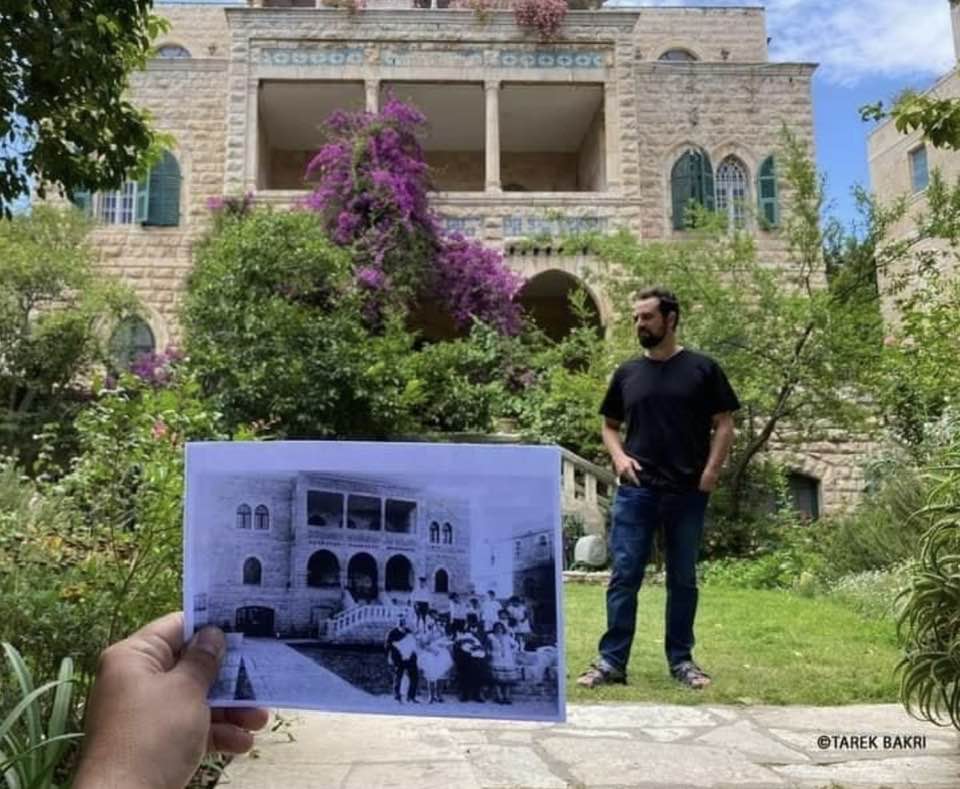 The famous Haroun al-Rashid Palace in the Talibiya neighborhood in Jerusalem, which used to be the residence of Golda Meir
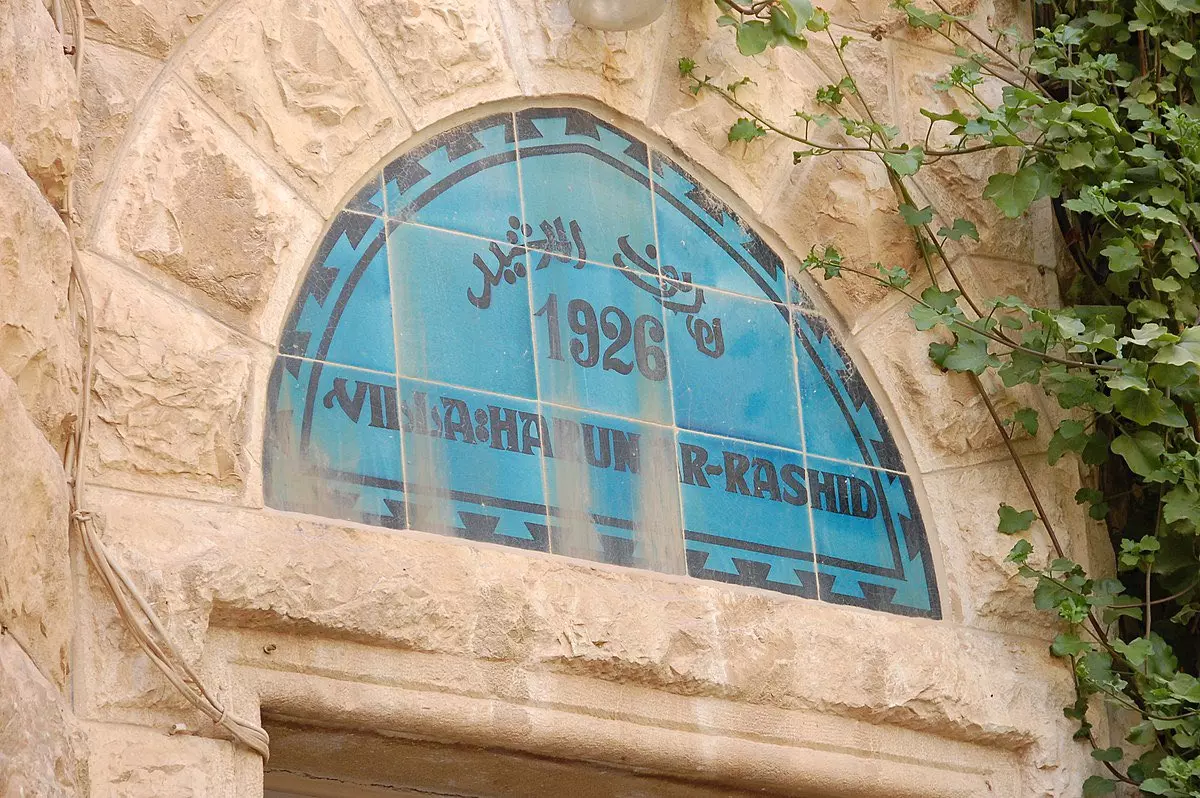 The famous Haroun al-Rashid Palace in the Talibiya neighborhood in Jerusalem, which used to be the residence of Golda Meir
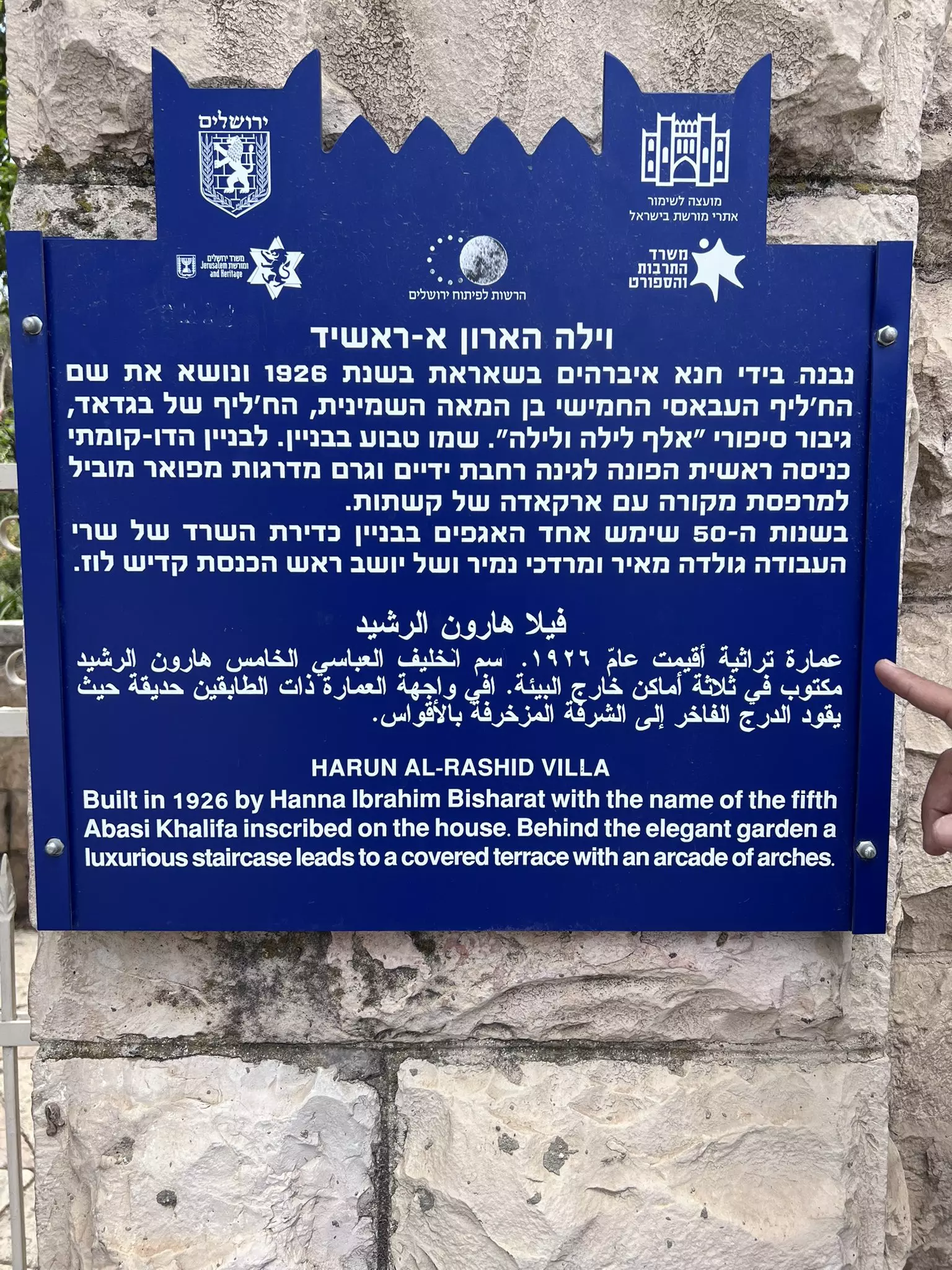 If you can read Hebrew, you can read the sign that Israel installed, which clearly says Golda Meir lived in the Bishara palace. Funny how Israelis omitted such a fact in English or Arabic
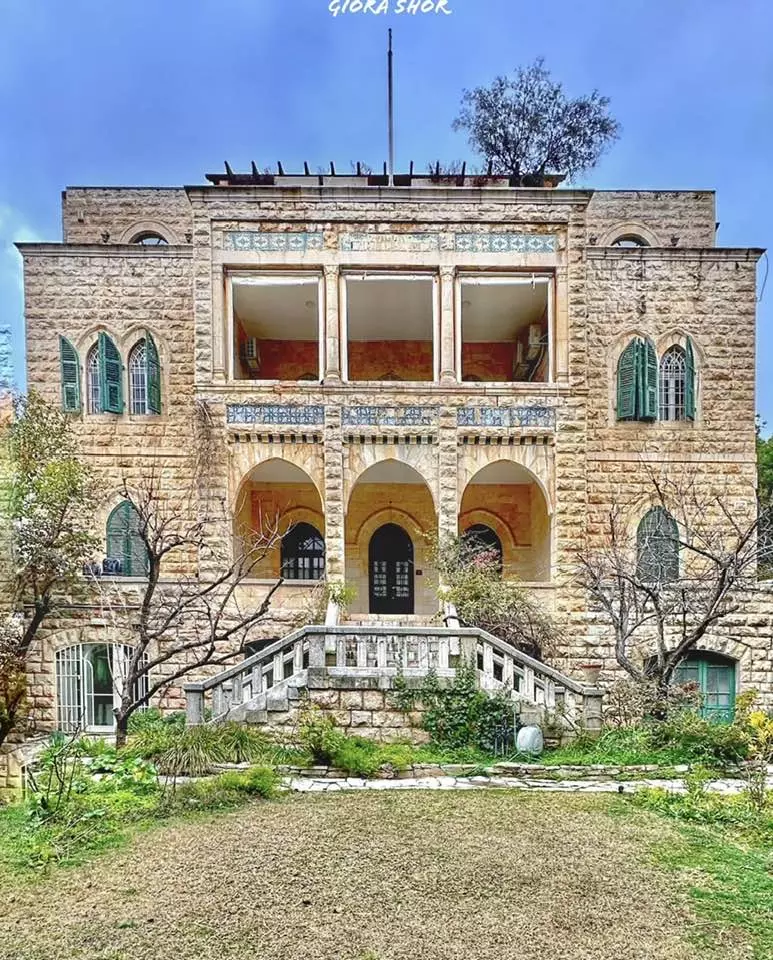 The famous Haroun al-Rashid Palace in the Talibiya neighborhood in Jerusalem, which used to be the residence of Golda Meir
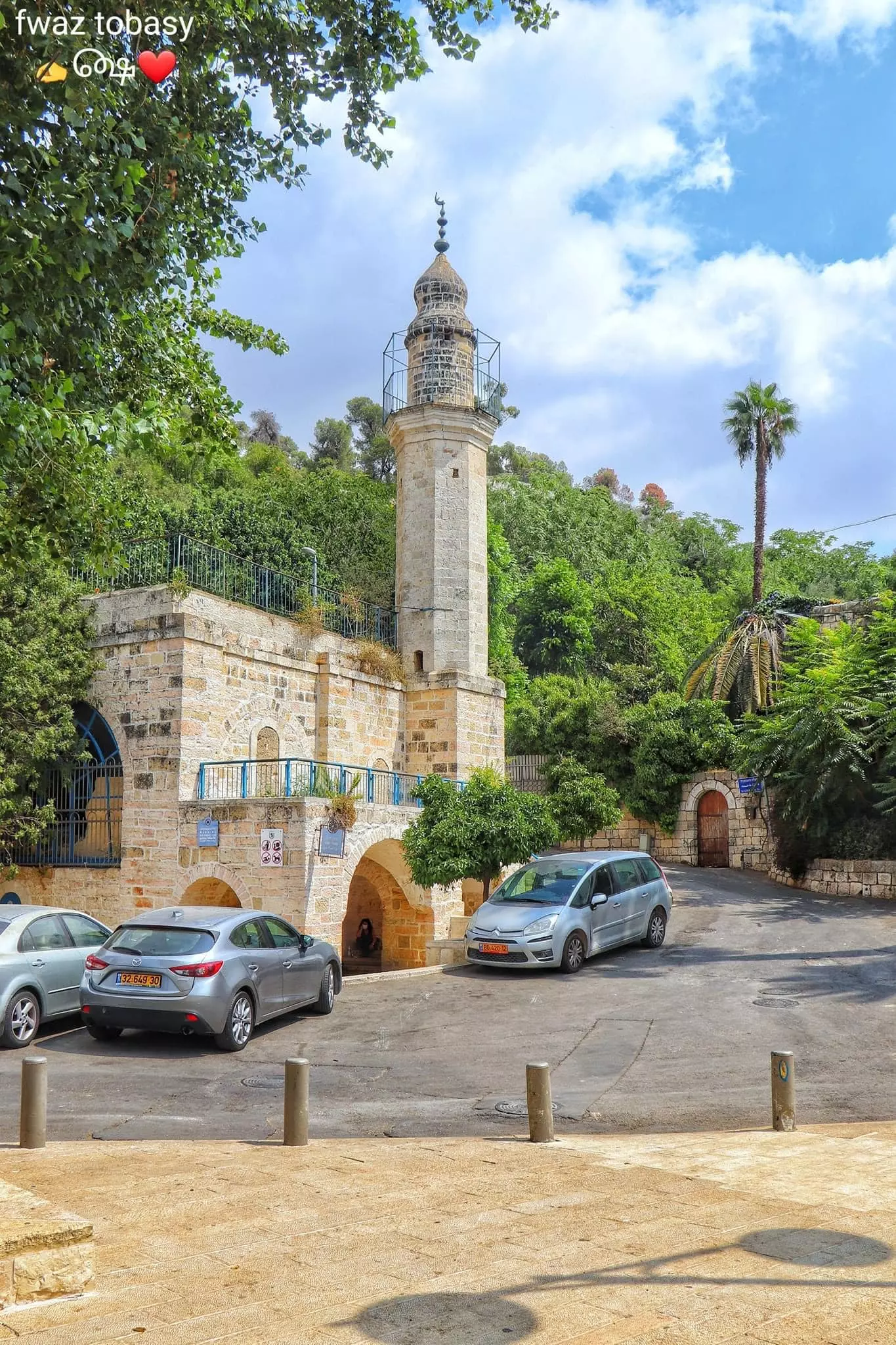 The famous looted Ein Karim's mosque, west of Jerusalem
 Palestinians are being ethnically cleansed out of al-Tantura in May of 1948; soon after, 200+ men were massacred.
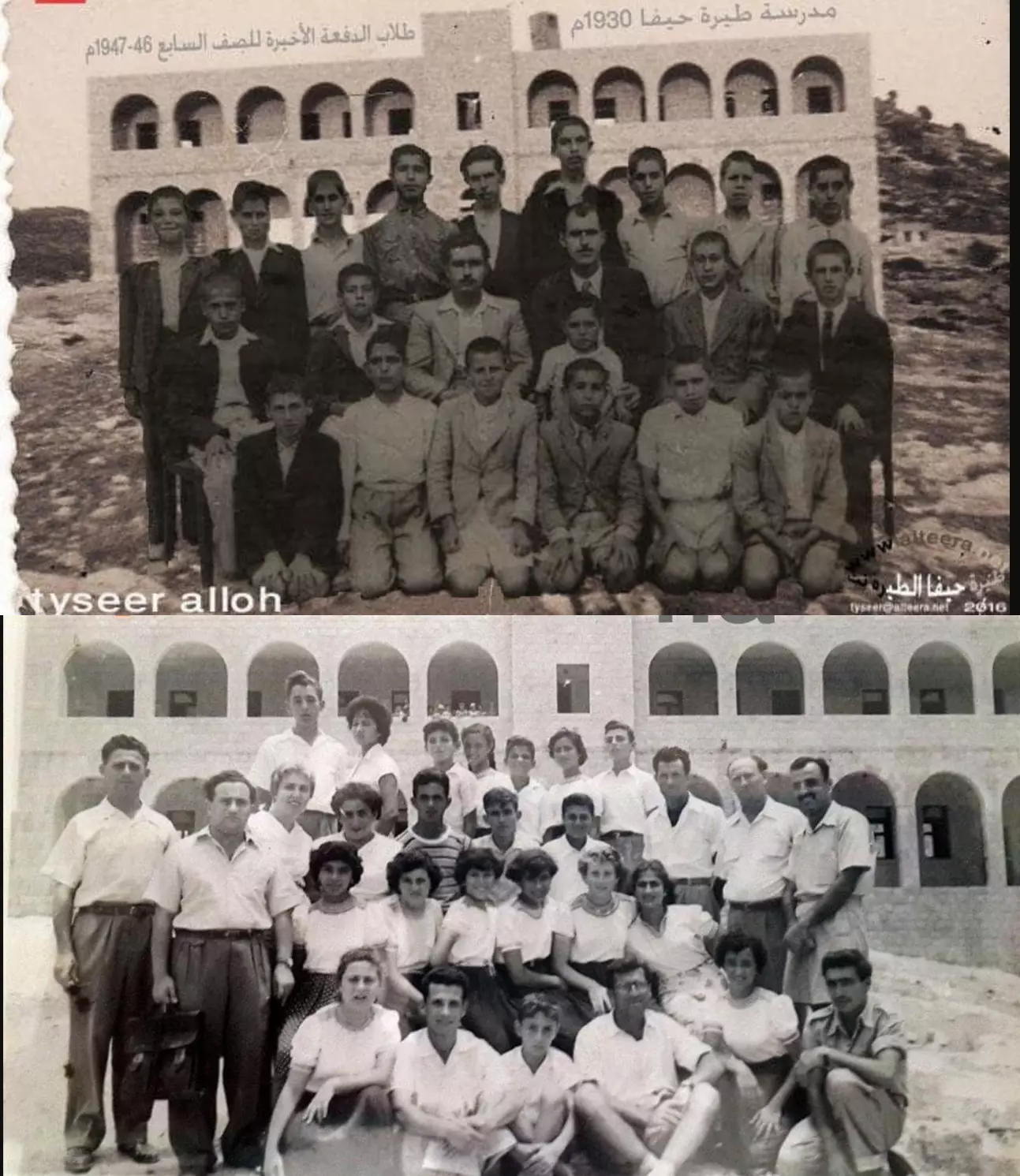 Palestinian Replacement In A Single Picture: al-Tira's school before and after Nakba. The same place but different people


 Over 700 Oral History interviews (including 3,500+ hours of recording) can be viewed online.
Post Your Comment
*It should be NOTED that your email address won't be shared, and all communications between members will be routed via the website's mail server.