Dina Porat’s study provides extensive research on how Zionist leadership responded to the Holocaust before, during, and after World War II. Drawing heavily on primary archives, the book offers detailed data that makes it an essential text for understanding Yishuv policy. However, the narrative is marred by significant historical errors, apologetic framing, and critical omissions:
- Unsubstantiated Demographics and the "Arab Immigration" Myth: Porat commits a major historical error (p. 13) by asserting without citation that Arab populations flooded into Palestine to benefit from Jewish economic development. Official British Mandate census records directly refute this claim, documenting that fewer than 33,305 Arab immigrants entered Palestine between 1920 and 1945 (see A Survey of Palestine, p. 185). Indeed, David Ben-Gurion himself acknowledged in 1947 that the Palestinian Arab population suffered from net emigration rather than immigration. Porat repeats this demographic myth--popularized by Joan Peters’ discredited hoax From Time Immemorial (which was thoroughly debunked by critics and the New York Times six years prior to Porat's publication)--without offering a single supporting source. (See Google AI's evaluation of Porat’s claim on page 13).
- Apologetic Framing of Zionist Leadership: Porat goes to great lengths to rationalize the Yishuv executive's stance on rescue operations. Notably, she omits David Ben-Gurion’s notorious 1938 address following the Kristallnacht pogrom--where he openly declared he would prefer half of Germany's Jewish children perish in England than be rescued to non-Palestine destinations--despite referencing the very Jewish Agency Executive meeting where the statement occurred (pp. 2, 9–10, where the JAE spoke of the Shoah in the past tense). While attempting to contextualize how leaders understood the destruction of European Jewry, Porat avoids acknowledging Ben-Gurion's explicit strategy of viewing European Jewish distress as political LEVERAGE to force the creation of a Jewish state. Like many establishment historians--including Tom Segev, Yehuda Bauer, and Aaron Berman--Porat exhibits a systemic blind spot regarding the disdain mainstream Zionist leaders held toward non-Zionist European Jewish masses, who widely viewed political Zionism as an ideological adversary from within.
-
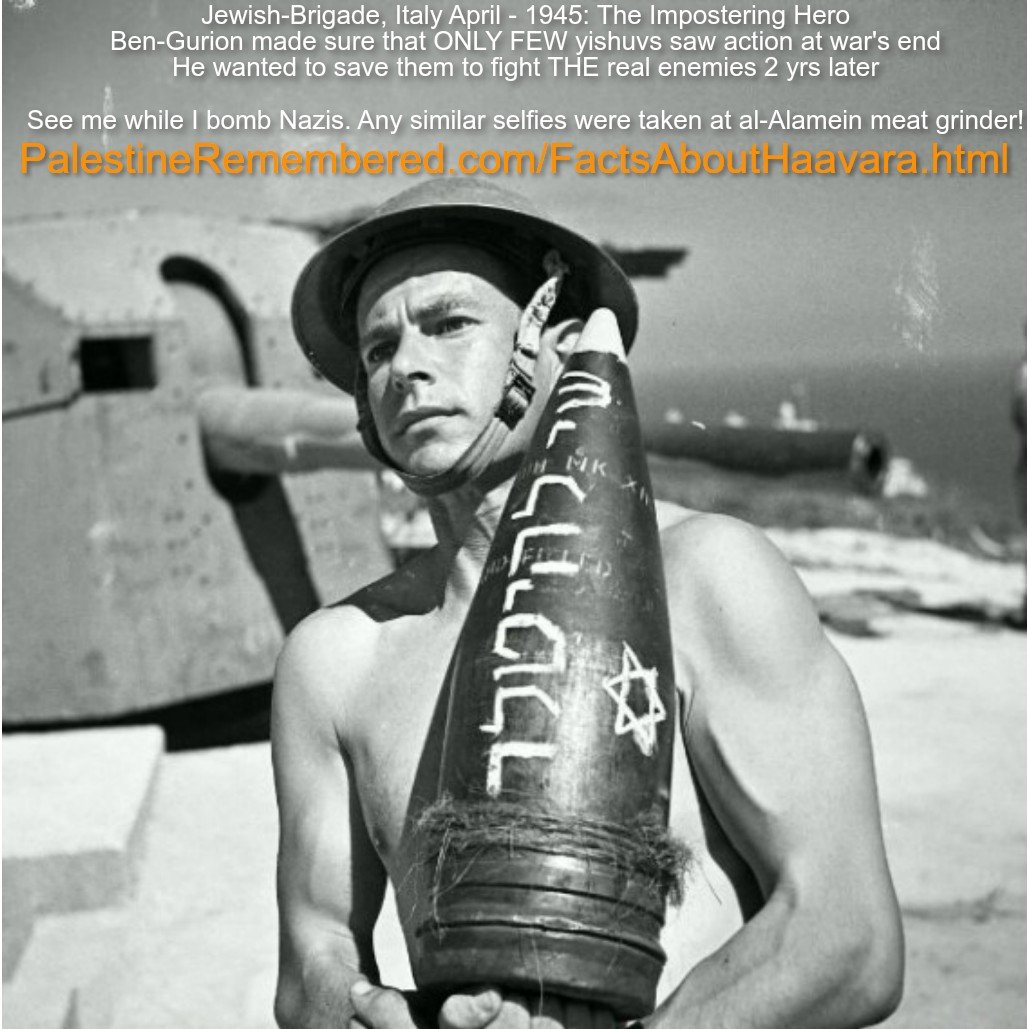 Fake Valor: Jewish Brigade, Italy April 1945: The Impostering Hero, see me while I bomb Nazis ONLY a few weeks before WWII ended. We wonder if similar selfies were taken at the El Alamein meat grinder!
- Ignoring the Bergson Group and the War Refugee Board: Porat ignores the decisive political impact of the Bergson Group (Peter Bergson/Hillel Kook) in pressuring the Roosevelt administration to establish the War Refugee Board (WRB) in 1944. The WRB is historically credited with saving upwards of 200,000 Jews, expending eight times more capital on emergency rescue in a few short months than the Yishuv spent throughout the entire war. Far from supporting this breakthrough, official Zionist leadership actively opposed the Bergson Group's campaigns and resisted the WRB’s non-sectarian rescue efforts.
- Attempting to Discredit Rabbi Michael Dov Weissmandl: Porat devotes significant space (pp. 174–188) to attacking the credibility of Rabbi Michael Dov Weissmandl. She dismisses his post-war testimony regarding Nathan Schwalb's letter (the Jewish Agency’s Geneva representative) due to a lack of contemporaneous paper trails--an unreasonable standard of documentation to demand from a resistance leader who escaped an Auschwitz death train. Schwalb’s callous stance was explicitly corroborated by Andrej Steiner of the Bratislava Working Group (p. 77, cited by Yehuda Bauer) and mirrored contemporary statements by David Ben-Gurion and Yitzhak Gruenbaum (head of the Rescue Committee).
Compounding this distortion, Porat misattributes the original proposal to bomb the Auschwitz extermination camps and rail lines to Rabbi Benjamin (of the Al-Domi group), ignoring that Rabbi Weissmandl was the first to urgently call for military strikes. Mainstream Zionist leadership opposed bombing the death camps throughout 1943, even as the destruction was openly acknowledged during the American Jewish Conference in late 1943 (see official proceedings on gas chambers). The Jewish Agency maintained its opposition to bombing rail lines until June 1944, reversing course only after public outcry erupted following the Swiss publication of the Auschwitz Protocols.
- Erasure of the Auschwitz Protocols Authors: Porat leaves the authors of the Auschwitz Protocols (Rudolf Vrba and Alfréd Wetzler) anonymous, despite the primary source she references explicitly naming them. For decades, neither the Auschwitz Protocols nor Rudolf Vrba's memoirs were translated into Hebrew, keeping their revelations out of mainstream Israeli consciousness. Paradoxically, an establishment that refused to enforce an economic boycott of Nazi German goods effectively boycotted the whistleblowers of Auschwitz--a culture of suppression that allowed collaborator Kapos to walk free while critics who exposed them faced state libel prosecutions.
-
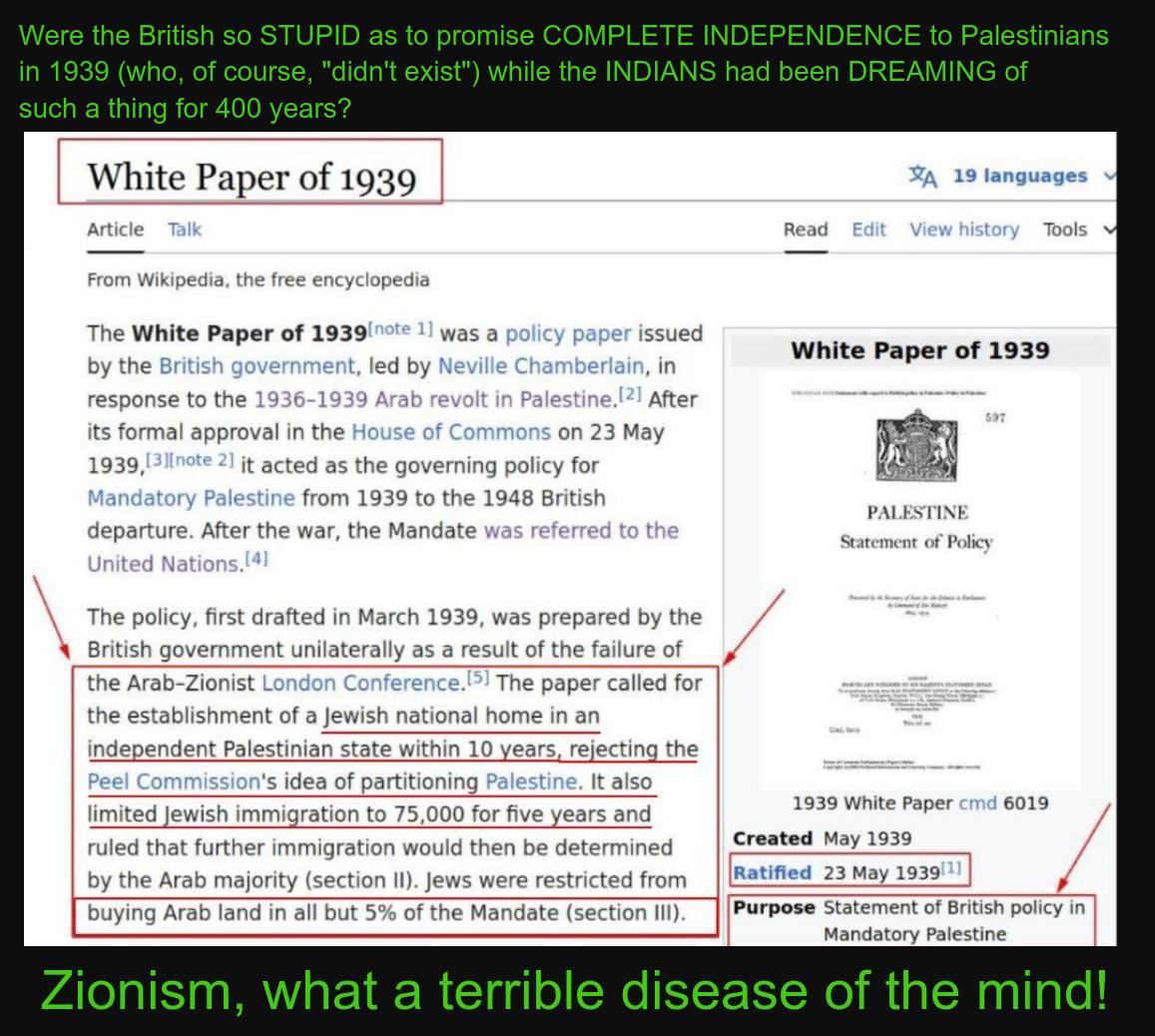
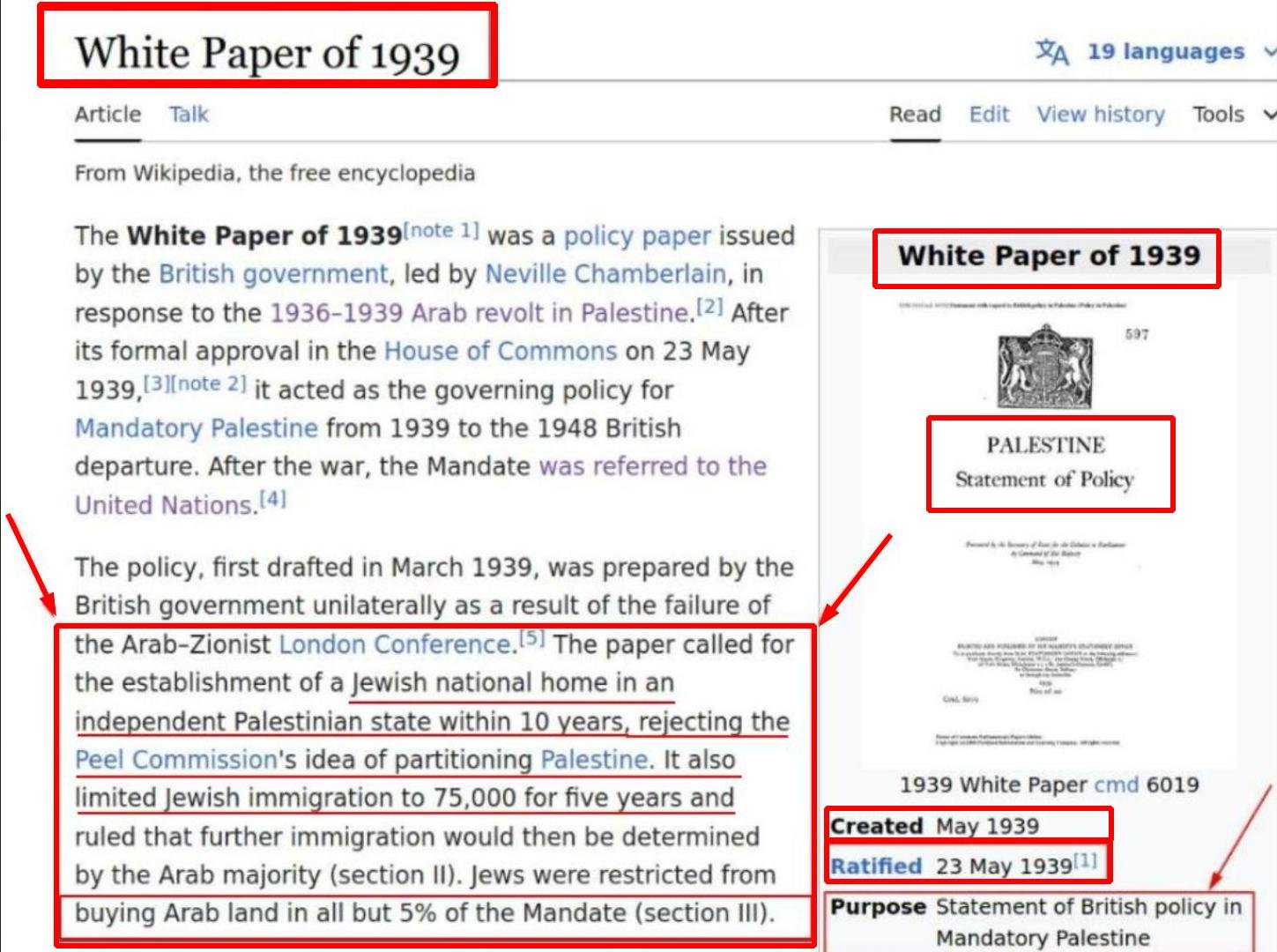 Were the British so STUPID as to promise COMPLETE INDEPENDENCE to Palestinians in 1939 (who, of course, "didn't exist") while the Indians had been DREAMING of such a thing for 400 years?
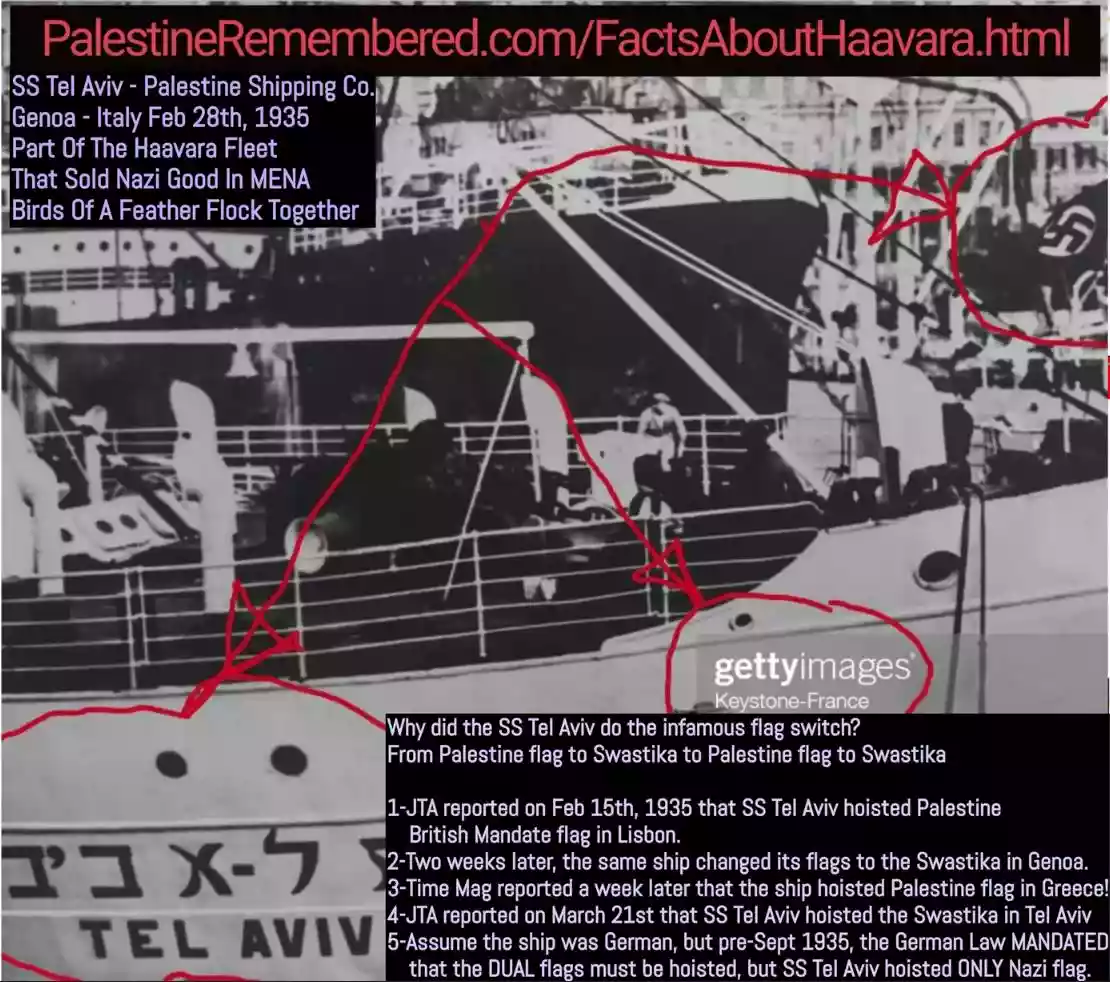
- Colonial Double Standards and Hasbara Framing: Porat routinely frames Palestinian anti-colonial resistance against British rule as "terrorism," while characterizing Haganah' & Irgun's violence against the British and the 1939 White Paper as legitimate political struggle. Paradoxically, while British concessions to the indigenous population are labeled "appeasement," the Zionist movement’s nine-year economic normalization with the Third Reich via the Haavara Agreement is excused (a policy World Jewish Congress president Nahum Goldmann later lamented as disastrous appeasement). By operating from an uncritical settler-colonial framework, Porat erases indigenous Palestinian nationhood--treating native resistance to foreign conquest as criminal rather than anti-colonial. Ironically, even Revisionist Zionist founder Ze'ev Jabotinsky demonstrated greater honesty regarding the indigenous nature of Palestinian resistance than liberal court historians who pretend the native population never existed.
 Menu
Menu


 Over 700 Oral History interviews (including 3,500+ hours of recording) can be viewed online.
Post Your Comment
*It should be NOTED that your email address won't be shared, and all communications between members will be routed via the website's mail server.