On the morning of November 25, 1940, in the harbor of Haifa, a massive explosion ripped through the hull of the SS Patria. The ship, an ocean liner requisitioned by the British, was carrying over 1,800 Jewish refugees who had fled Nazi-occupied Europe. Within 16 minutes, the ship capsized. Two hundred and sixty-seven people drowned in the steel belly of the vessel, trapped like rats in the very sanctuary they had risked everything to reach.
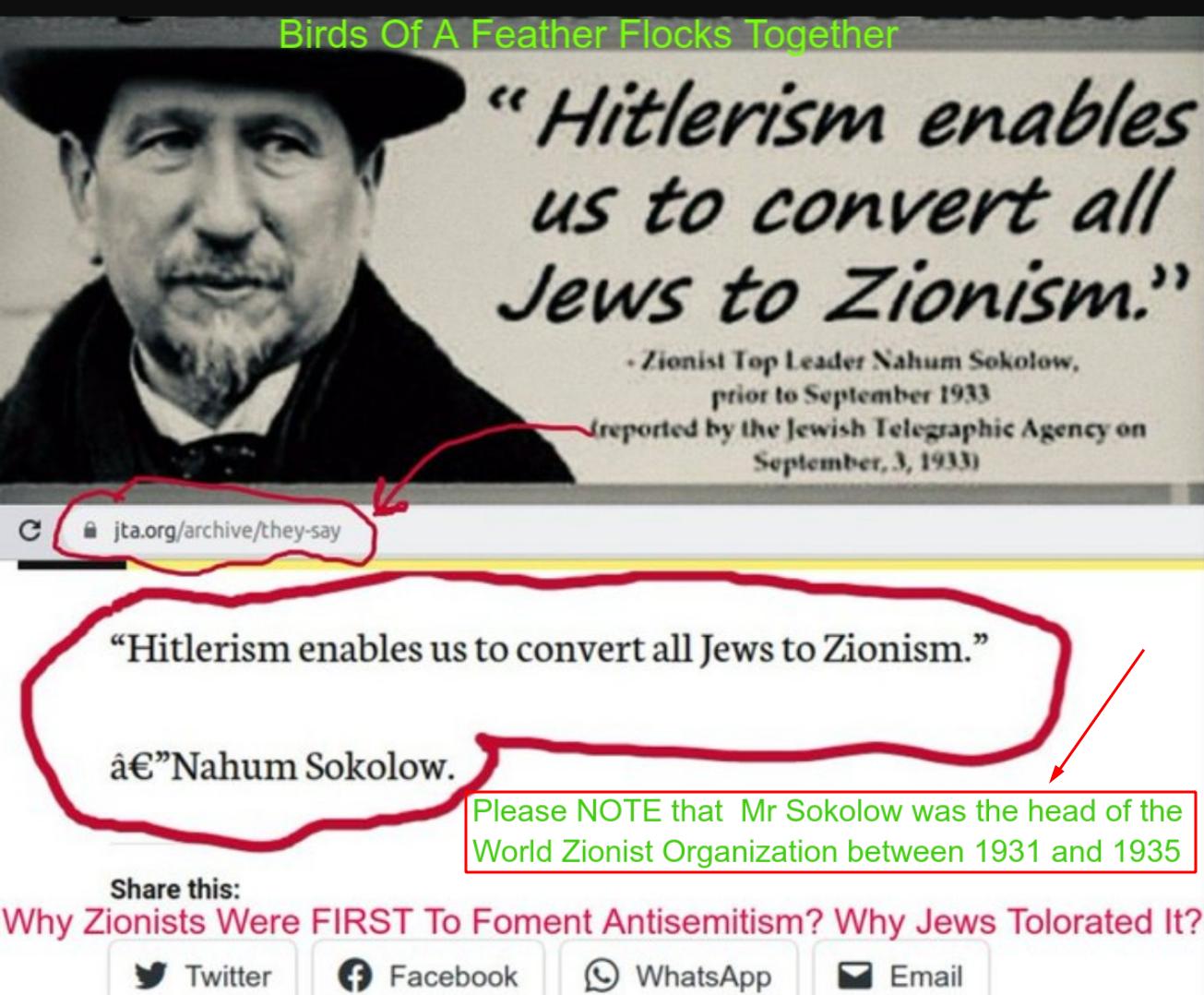 JTA Sept. 3rd, 1933 Quoting Nahum Sokolow: "Hitlerism enables us to convert all Jews to Zionism."
For nearly two decades, the official Zionist narrative --broadcast to the world and taught to schoolchildren-- was that the passengers of the Patria had blown themselves up. It was framed as a modern-day "Masada on the Sea," a collective act of martyrdom by Jews who preferred death to deportation by the British. It was a potent story. It cast the British as heartless villains and the Jewish refugees as heroes of the Zionist spirit: "Eretz Israel or Death", see Beit-Zvi, p. 259.
There was only one problem with this story: It was a lie.
The passengers did not commit suicide. They were killed by a miscalculation of the Haganah (the Zionist paramilitary), which had smuggled a bomb on board to disable the ship’s engines. The operation was intended to force the British to let the refugees stay in Palestine while the ship was repaired. Instead, they used too much explosive, blew a hole the size of a house in the hull, and sent hundreds of their own people to the bottom of the harbor.
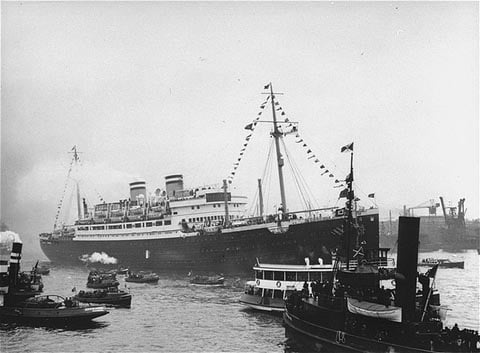 In May 1939, MS St. Louis in Havana was refused to unload its Jewish passengers in Cuba & US, and it was forced to go back to Antwerp. Jewish Agency refused to give any of its passengers immigration visas to Palestine. Over 250 of the passengers perished during the Holocaust.
The Patria disaster was not just a "tragic operational error," as later apologists would claim when the truth finally leaked out in the late 1950s. It was the "canary in the coal mine." It established a terrifying precedent that would define the Zionist leadership’s conduct throughout the Holocaust: the willingness to gamble Jewish lives on the altar of political goals, and the immediate, cynical shifting of blame onto their opponents.
The sinking of the Patria was the first clear application of David Ben-Gurion’s most chilling political doctrine: that disaster is a lever, and Jewish blood is the fulcrum upon which the State would be leveraged into existence.
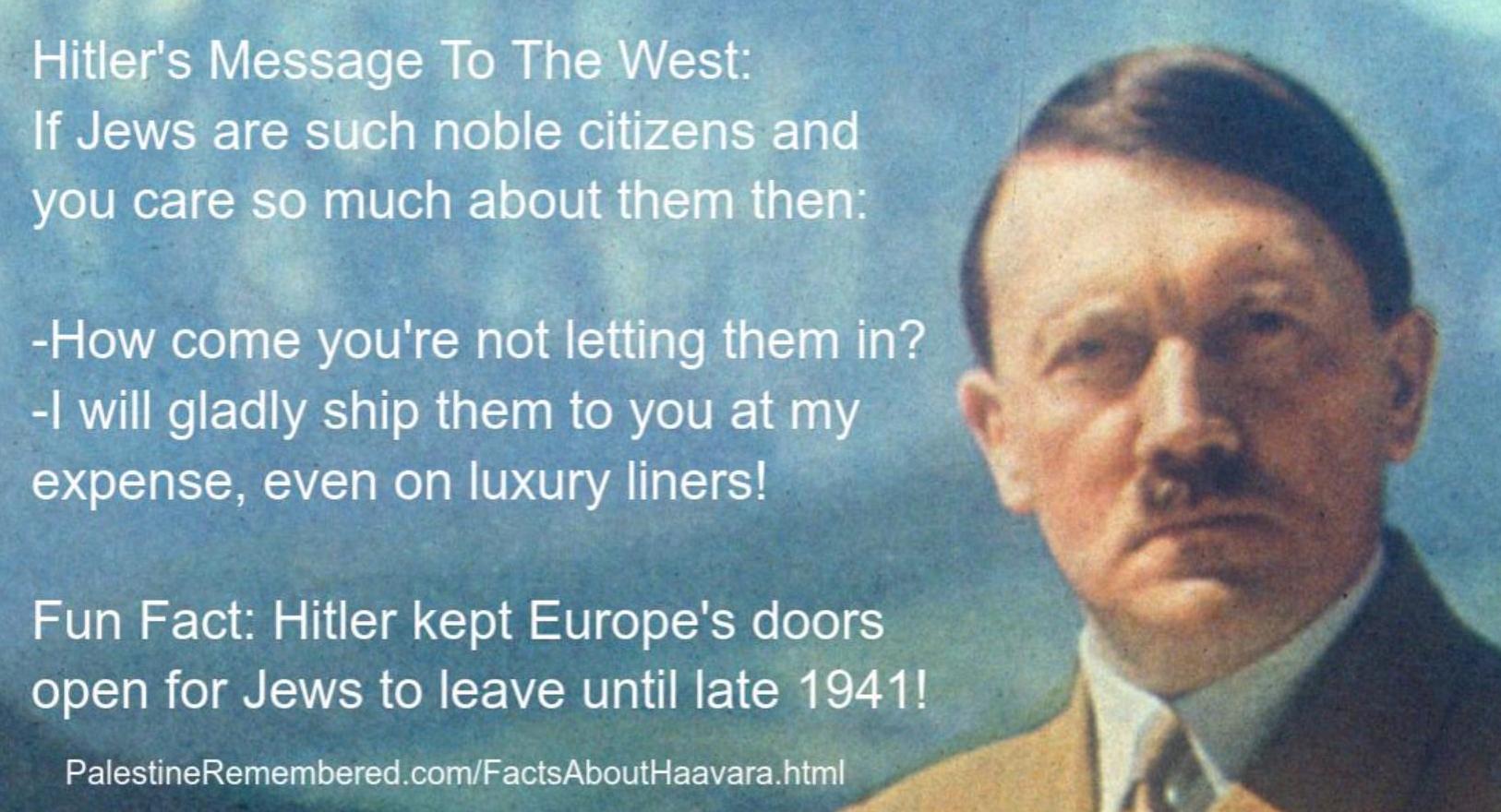 Hitler's Message To The West: If Jews are such noble citizens and you care about them, how come you're not letting them in?
The myth that the Patria passengers committed mass suicide was not a spontaneous rumor; it was a calculated narrative crafted by the highest echelons of the Jewish Agency to cover their tracks.
Immediately after the sinking, the Haganah’s "Committee of Four" conducted a secret internal inquiry. They confirmed that their operative, Munya Mardor, had planted the bomb. The leadership knew the truth instantly. Yet, rather than admitting to the manslaughter of 267 refugees, they decided to weaponize the dead.
Three days after the explosion, the Haganah distributed a leaflet framing the dead not as victims of a botched bombing, but as martyrs who died intentionally to avoid deportation, see The Jews Are Expandable, p. 48 & Beit-Zvi, p. 265. But the most damning complicity came from the political leadership.
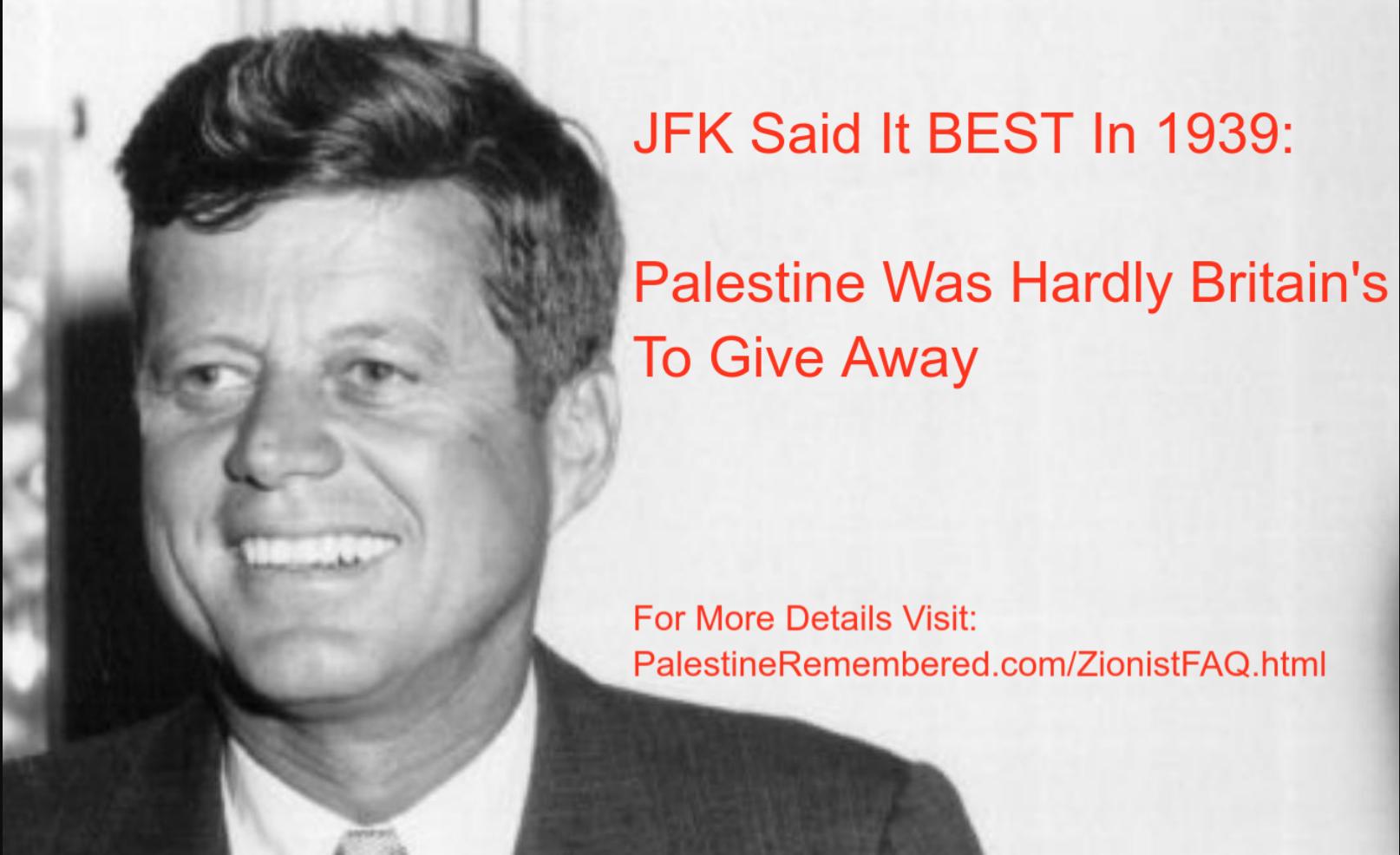 JFK said it BEST in 1939: Palestine Was Hardly Britain's to Give Away
Moshe Sharett (then Shertok), the head of the Jewish Agency’s Political Department and later Israel’s second Prime Minister, stood over the fresh graves of the victims --killed by his own paramilitary-- and delivered a eulogy that cemented the lie. As documented by historian Tom Segev in The Seventh Million, Sharett branded the event "The Masada of the day."
By invoking Masada --the ancient fortress where Jews committed mass suicide rather than surrender to Rome-- Sharett was explicitly telling the world: These people killed themselves to avoid British deportation. Similarly, many others linked this disaster to Tel Hai over the objections of several in the JAE, such as Yitzhak Lufban, see Beit-Zvi, p. 267. This lie served two purposes: it shielded the Zionist leadership from accountability, and it turned the corpses of refugees into a propaganda club to beat the British administration.
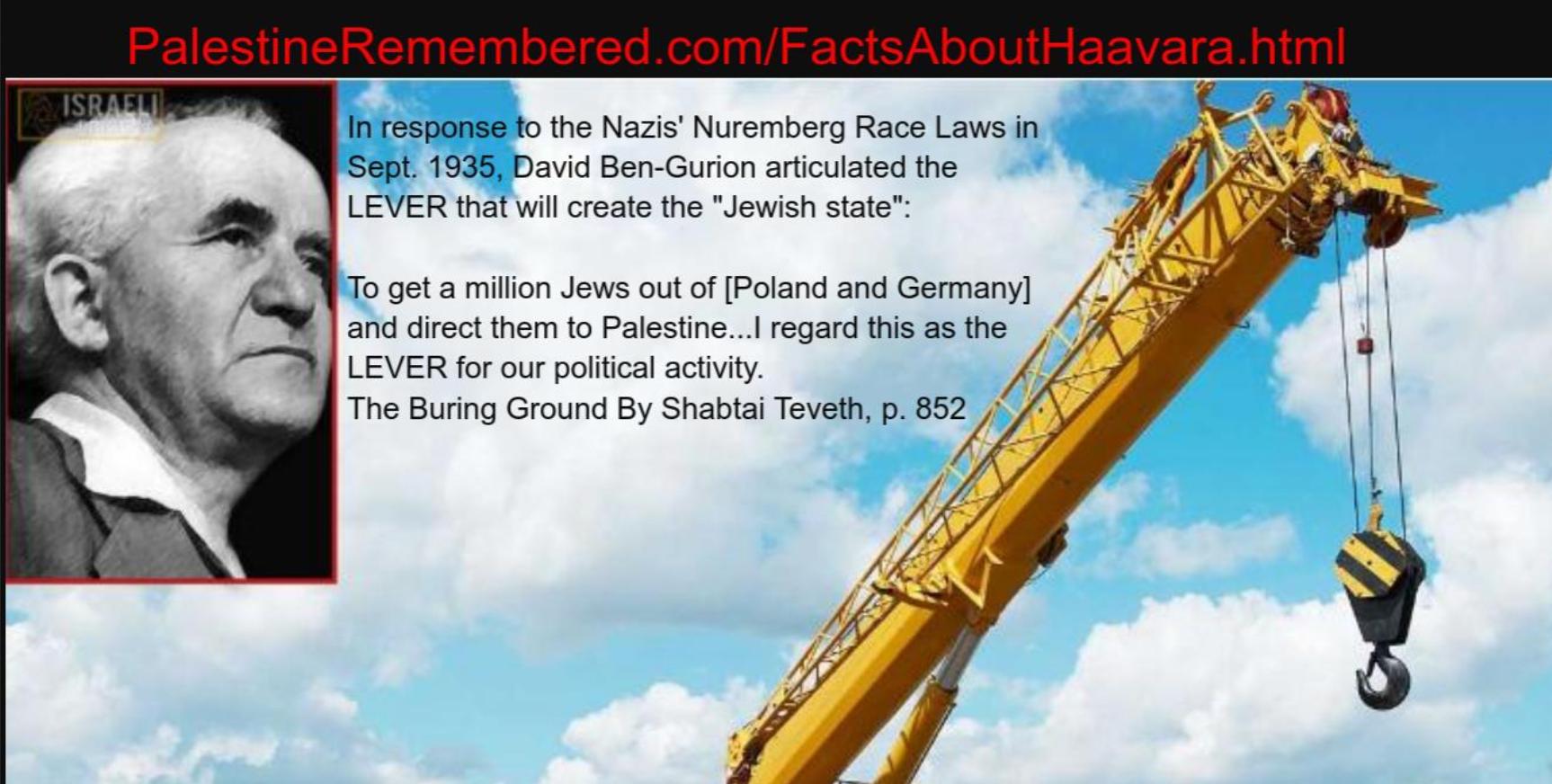 David Ben-Gurion envisioned that Nazis' Nuremberg Race Laws would become the LEVER that would end up creating the "Jewish state," but how? Click the image for the details
 To understand how the leadership of the Yishuv could bomb a ship full of Jewish refugees and then use their corpses as propaganda, one must look at the ideology of David Ben-Gurion.
Ben-Gurion was not merely a pragmatist; he was a "Catastrophic Zionist." He believed that the quiet, assimilated life of Jews in the diaspora was a disease and that only shocks, trauma, and displacement could force the Jewish people to do what he believed was necessary: populate Palestine.
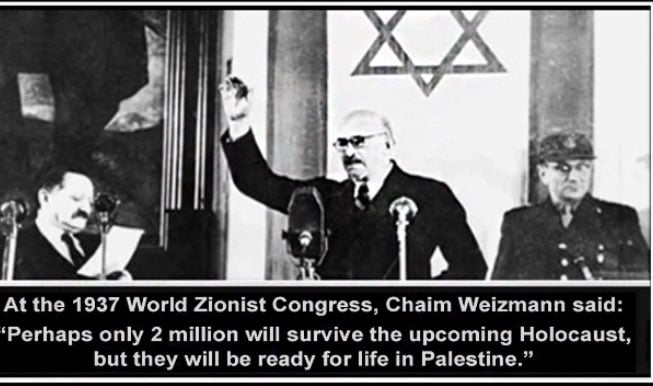 Catastrophic Zionism at its worst: Zionists often spoke of the Holocaust decades before its time. What did Zionists do to confront it? Zionists were the FIRST to normalize trade with the Nazis!
In his biography Ben-Gurion: The Burning Ground, historian Shabtai Teveth uncovers the uncomfortable truth of Ben-Gurion’s reaction to the rise of Nazism. As Teveth notes, Ben-Gurion’s vision was "incomplete." He did not initially grasp the industrial nature of the genocide, but what he did grasp, he sought to use.
Teveth writes of Ben-Gurion:
"He, along with everyone else, was thinking in terms of a relatively modest catastrophe that his Zionist concept defined as suitable for exploitation... He foresaw destruction, but not the Holocaust, and this imperfect forecast predetermined his actions."
The key phrase here is "suitable for exploitation." For Ben-Gurion, the rise of Hitler was terrifying, but it was also a "Zionist asset." Teveth continues:
 The Zionist Version Of Lebensraum: A Map Of The Great Israel
"This incomplete vision was what allowed Ben-Gurion to become so attached to the concept of turning a Jewish misfortune into a Zionist asset... Each disaster, Ben-Gurion might have said, has its rewards for Zionism, and given that Hitler was the worst disaster until then, Ben-Gurion was determined to make it yield the greatest prize."
This is the psychological root of the Patria disaster. Ben-Gurion viewed the refugees not as individuals with an inherent right to safety anywhere in the world, but as "human material" for the state-building project. If they could not be brought to Palestine to build the demographic majority, their utility dropped precipitously.
Ben-Gurion explicitly stated that he regarded the masses of refugees fleeing the Nuremberg Laws as "the lever for our political activity." A lever is a tool. It is an object used to apply force. When the Haganah planted the bomb on the Patria, they were applying that lever. When the lever broke and killed 267 people, the leadership did not recoil in shame; they simply adjusted their grip and used the tragedy itself as the new lever.
The Patria was the microcosm; the Holocaust was the macrocosm. The logic used in Haifa harbor --that a refugee is only valuable if they lead to Palestine-- became the dominant logic of the Zionist response to the Nazi genocide.
As the war dragged on and the "Lever" of disaster grew into a mountain of corpses, the Zionist leadership faced a dilemma. Opportunities arose to rescue Jews to places other than Palestine. The Dominican Republic offered sanctuary. There were proposals for settlements in British Guiana or Alaska.
A "Rescue First" mindset would have welcomed any haven. But the "State First" mindset of Ben-Gurion saw these alternatives as existential threats. As noted by Norman Finkelstein in a 1987 New York Times correspondence, Ben-Gurion viewed any rescue operation outside the Zionist framework as "witch doctor's medicine." To him, saving Jews in England or America was a quack cure that would only "perpetuate the misery of the Jewish people" by delaying the only true solution: Statehood.
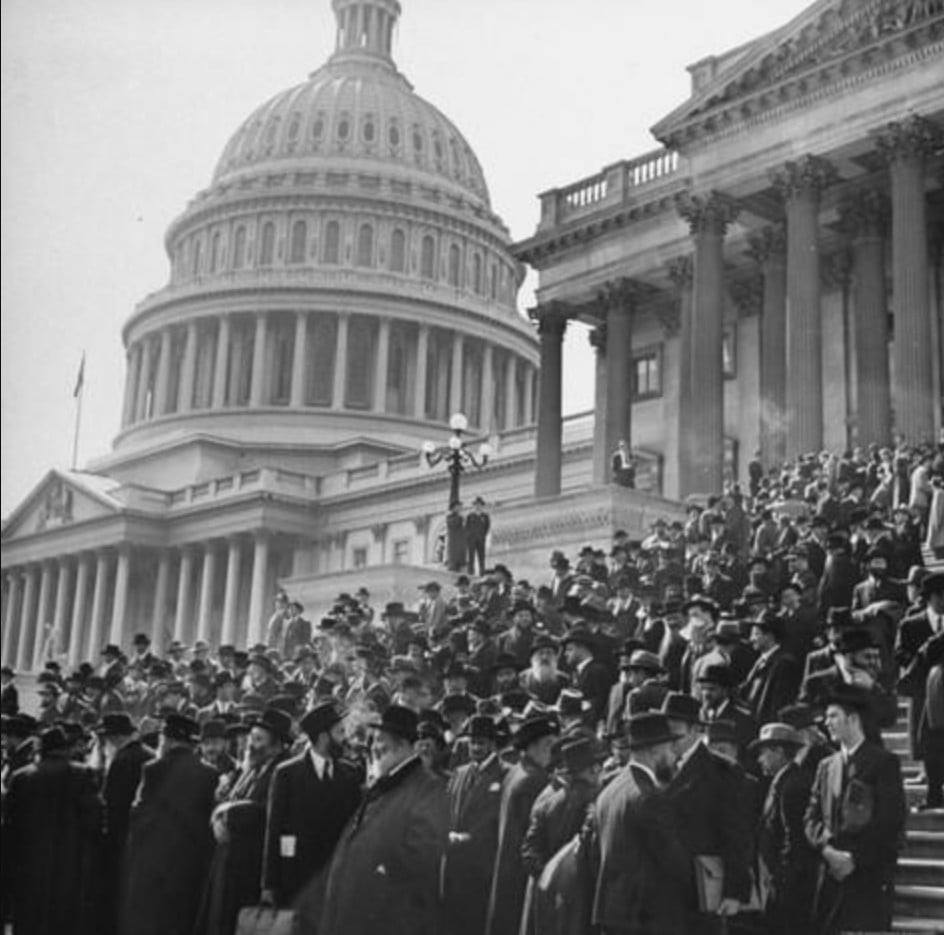 Fake Valor: When American Rabbis marched in DC in Oct. 1943 to lobby for rescuing Jews, you would think Zionists supported them?
This ideology transformed rescue from a humanitarian imperative into a zero-sum political game. If the Jews of Europe were saved and dispersed to America or the Caribbean, the demographic pressure required to demand a state in Palestine would evaporate. Therefore, a successful rescue elsewhere was viewed as a failure for Zionism.
Finkelstein highlights a devastating quote from Ben-Gurion regarding the 1938 Evian Conference, where world powers met to discuss the refugee crisis. While the rest of the Jewish world prayed for the gates of America or Britain to open, Ben-Gurion was terrified that they actually might. As cited in Dan Kurzman’s biography Ben-Gurion: Prophet of Fire, Ben-Gurion confessed to his colleagues:
"I do not know if the [Evian] conference will open the gates of other countries... But I am afraid [it] might cause tremendous harm to Eretz Yisrael and Zionism... Our main task is to reduce the harm, the danger and the disaster... and the more we emphasize the terrible distress of the Jewish masses in Germany, Poland and Rumania, the more damage we shall cause."
This context makes Ben-Gurion’s famous 1938 declaration regarding the Kindertransport even more chilling. When he stated that he would choose to save half the children in Palestine rather than all of them in England, he was not speaking hypothetically. He was prescribing the only "medicine" he believed in. The Patria was that prescription filled: 267 dead were the "half" sacrificed so that the survivors could be the "human material" for the state.
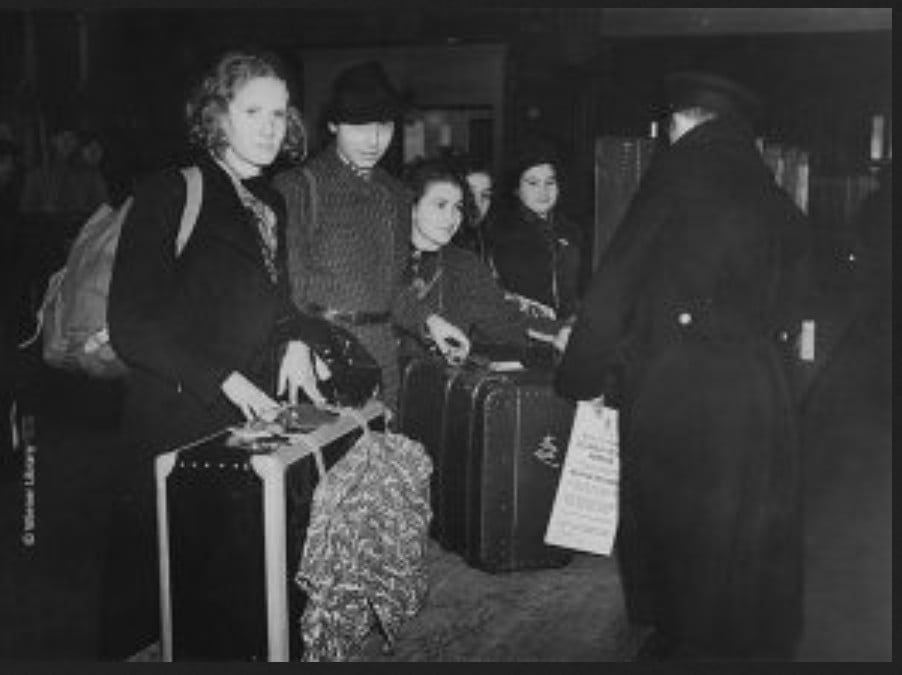 How did Zionist leaders respond when British people rescued 10,000 German Jewish children after the Kristallnacht pogrom?
The lie of the Patria was not self-sustaining; it required active, physical enforcement. For years, the leadership of the Yishuv maintained a code of silence (Omertà) regarding the true cause of the disaster. When that silence was broken, the response was swift and personal.
In December 1945 --five years after the sinking-- the cracks in the "suicide" narrative began to show. Isaac Lofven, the deputy editor of Ha-Po'el ha-Tza'ir (The Young Worker), the official newspaper of Ben-Gurion's own Mapai party, published a daring editorial. Referring to the tragedy, he wrote: "On one bitter and impetuous day, a malicious hand sank the ship."
Lofven likely believed he was criticizing a rogue element or an irresponsible cell within the underground. He did not realize that the "malicious hand" belonged to the very leaders of his party, Moshe Sharett and the Haganah command.
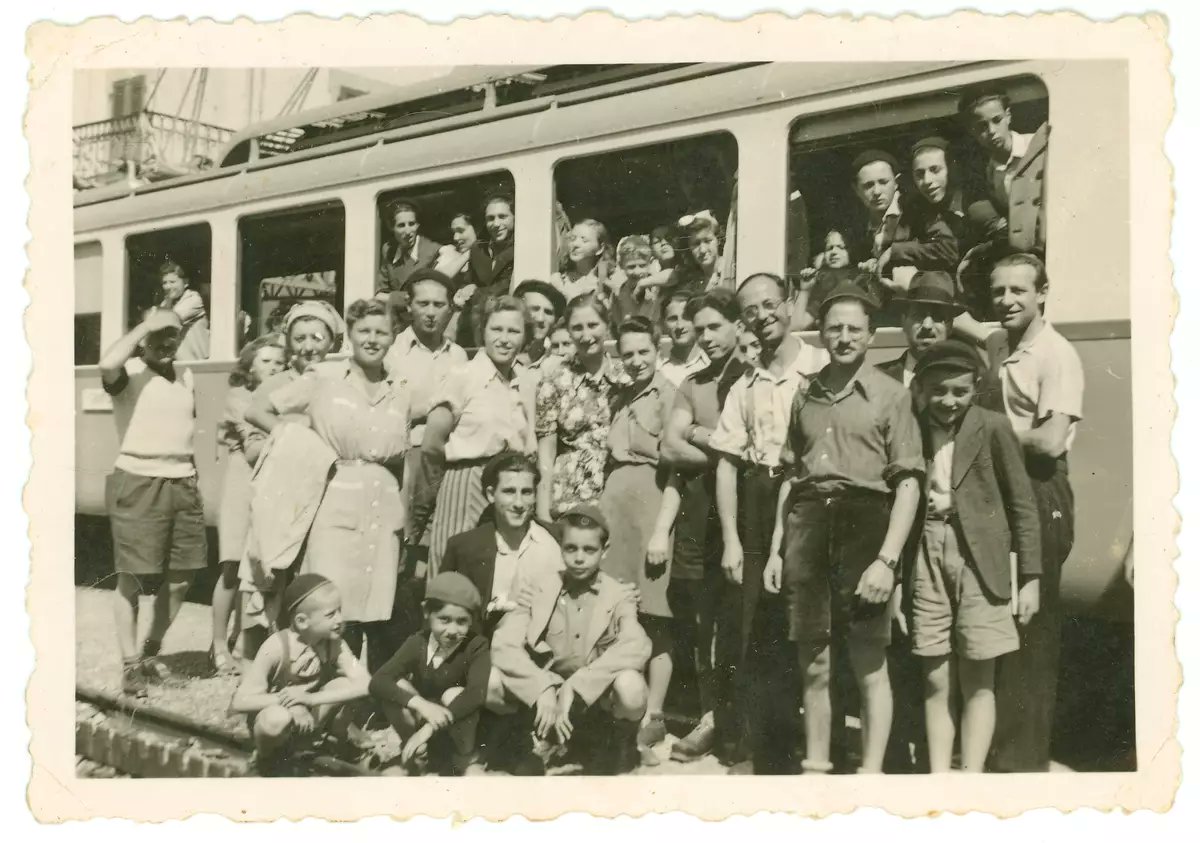 Kastner Saved Lives Too: How does justifying Haavara after the fact not resemble Rudolf Kastner's defense of what happened on his famous train but on a much larger scale? Kastner train passengers on their way to Switzerland, 1944
The reaction from the leadership was visceral. They did not issue a correction. They did not write a letter to the editor. Instead, the response was physical violence.
Amos Ben-Gurion, the son of David Ben-Gurion and a future police commander, marched into the newspaper offices. In an act of intimidation reminiscent of a mob enforcer, he slapped the editor, Isaac Lofven, across the face.
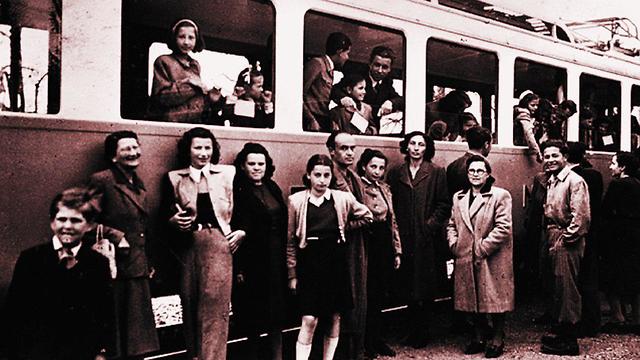 Kastner Saved Lives Too: How does justifying Haavara after the fact not resemble Rudolf Kastner's defense of what happened on his famous train but on a much larger scale? Kastner train passengers on their way to Switzerland, 1944
This slap was symbolic of the entire era. It was a warning to the press and the public: The narrative of the Patria was a protected state secret. To question the myth of "Masada" --to suggest that Jewish refugees were victims of Zionist recklessness rather than British cruelty-- was treason. The leadership was willing to strike its own loyalists to keep the "Lever of Disaster" intact.
The truth would not be officially permitted to surface until 1957, nearly two decades after the bodies were pulled from the harbor. Until then, the history of the Patria was written by the hand that planted the bomb --and the hand that slapped the face of anyone who dared to speak of it.
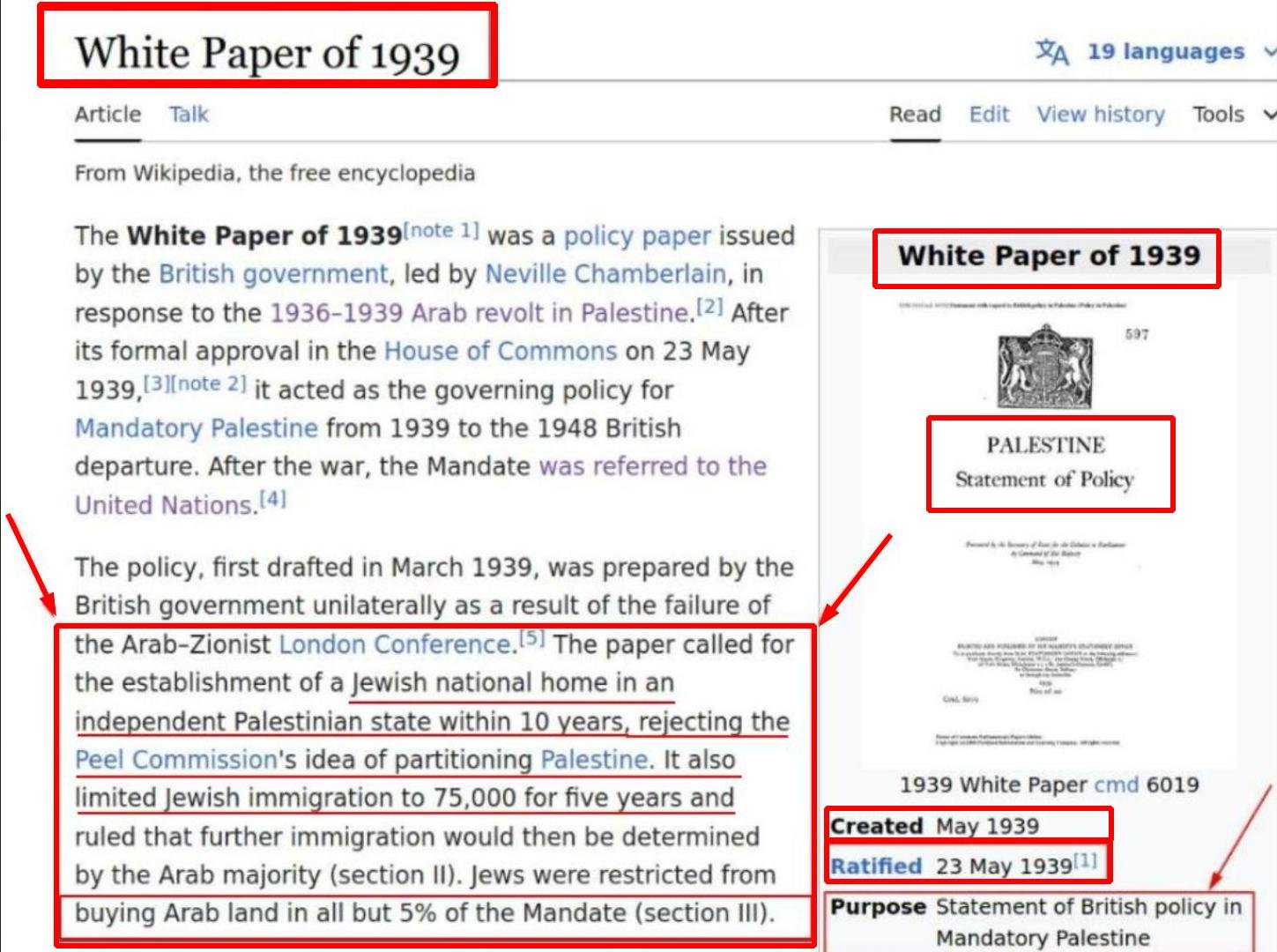 Were the British so STUPID as to promise COMPLETE INDEPENDENCE to Palestinians in 1939 (who, of course, "didn't exist") while the Indians had been DREAMING of such a thing for 400 years?
The most damning evidence of this doctrine is not found in secret cables, but in public speeches. Two years after the Patria sank, the true nature of the Holocaust was becoming undeniable. The Zionist leadership gathered in New York for the landmark Biltmore Conference in May 1942.
By this time, Ben-Gurion knew exactly who had sunk the Patria. He knew that the Haganah, under his ultimate political authority, had placed the bomb. He knew the British were not responsible for the explosion.
Yet, standing before the gathered delegates to rally support for a Jewish Commonwealth, Ben-Gurion invoked the ghosts of the Patria and the Struma (another refugee ship sunk in the Black Sea) to score political points.
As documented by historian Shabtai Beit-Zvi in Post-Ugandan Zionism in the Crucible of the Holocaust, Ben-Gurion declared:
"The meaning of these two ships is simple: Eretz-Israel or death--and as soon as the war ends, many ships like these will stream to Eretz Israel." (Beit-Zvi, p. 259)
This statement is breathtaking in its cynicism. Ben-Gurion framed "Eretz Israel or Death" as a heroic choice made by the refugees. In reality, for the passengers of the Patria, it was a choice made for them by the Haganah. The refugees did not choose death; they chose life, and the Zionist paramilitary chose to risk that life for a political demonstration against the British White Paper of 1939.
By shouting "Eretz Israel or Death," Ben-Gurion was not describing a reality; he was enforcing a policy. He was telling the world that Jews had no use for life outside of Palestine. He employed the tragedy he helped cause as a propaganda weapon to prove that there was no solution to the Jewish problem other than sovereignty.
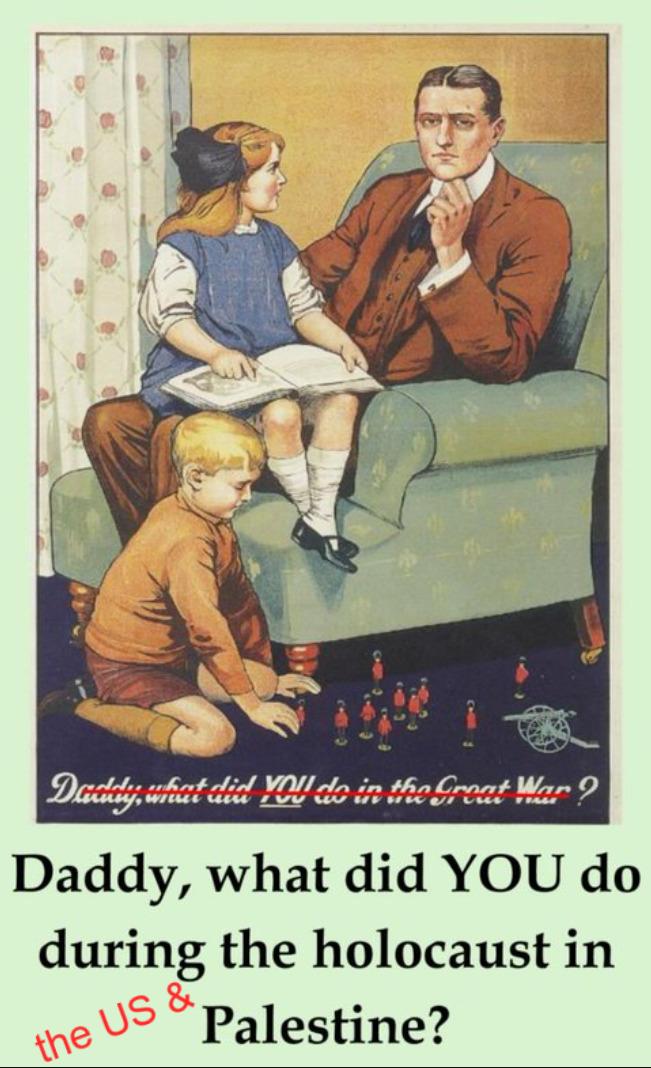 Fake Valor: Daddy, what did you do during the Holocaust while you were in Palestine?
The legacy of the Patria is not just in the loss of life, but in the perfection of a political tactic that repeats to this day: Provoke, Sacrifice, Blame, Exploit.
-
Provoke: Initiate an action to force a political outcome (bombing the ship).
-
Recklessly risking lives: Accept the mass death of one's own people as "necessary collateral."
-
Blame: Pivot the narrative to blame the enemy (The British) for the deaths.
-
Exploit: Use the moral outrage to demand the original political goal (Statehood).
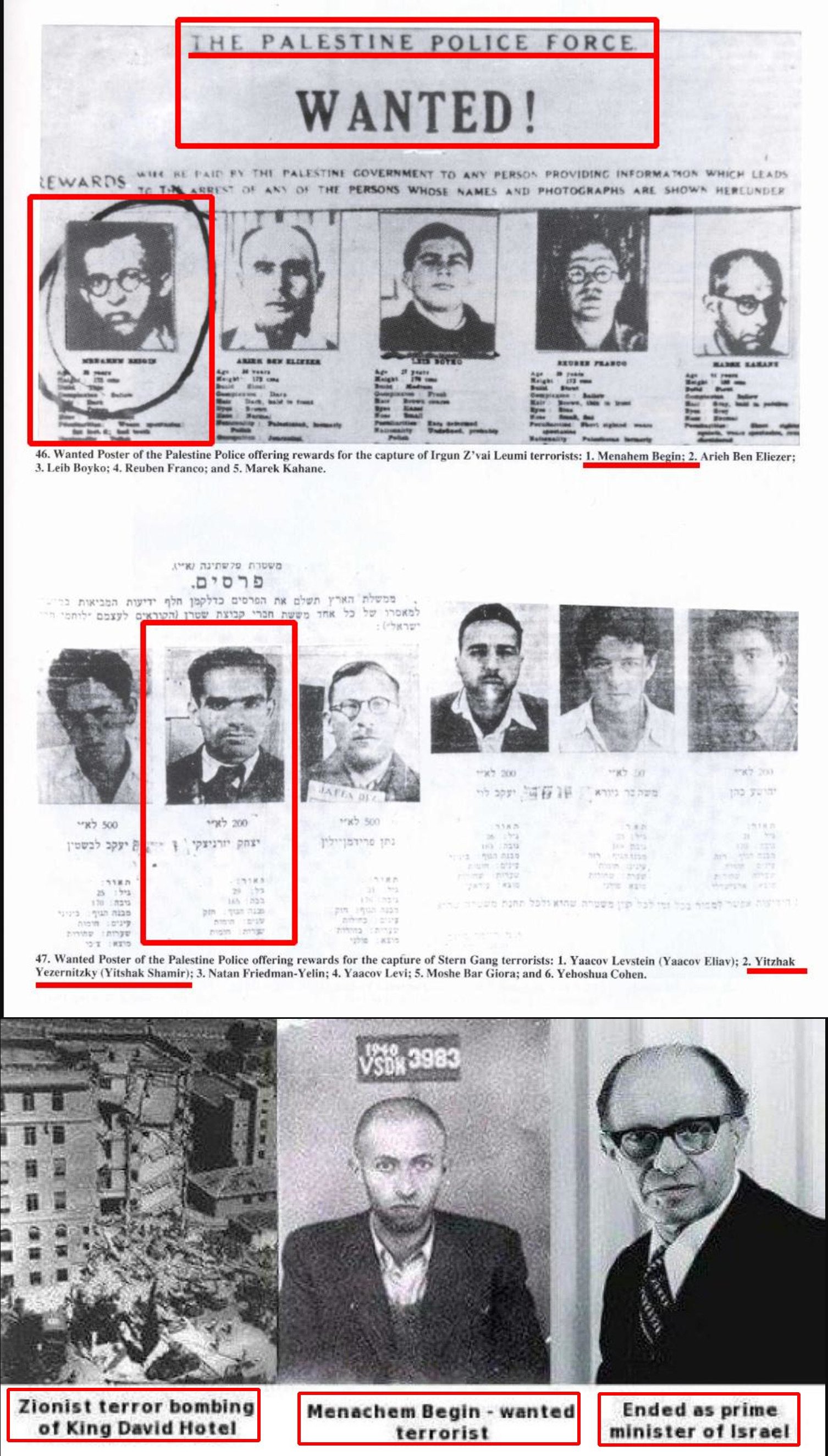 Why did Great Britain indict two of Israel's future PMs on charges of terrorism? Those evil British must have been "Jew-hating" antisemites!
We see this "straight line" of logic running from the harbor of Haifa in 1940, through the intentional inaction during the Holocaust, to the Nakba in 1948, and into present-day conflicts where civilian safety (Jewish or Arab) is secondary to state security. Spolier Alert: The Hannibal Directive!
Ben-Gurion was right about one thing: Disaster is strength, if you have no shame in how you use it. The Patria was the canary in the coal mine, warning us that for this movement, the State would always be more sacred than the Human. The canary died, blown apart by its own "protectors," and the miners simply stepped over the body, claiming it as a martyr for the cause.
Sources
 Menu
Menu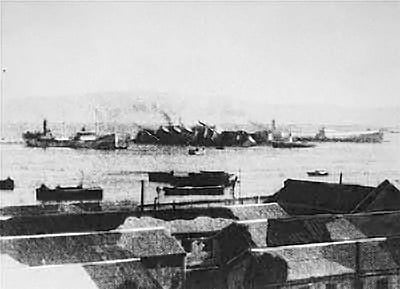 SS Patria sinking in Haifa port, November 25, 1940
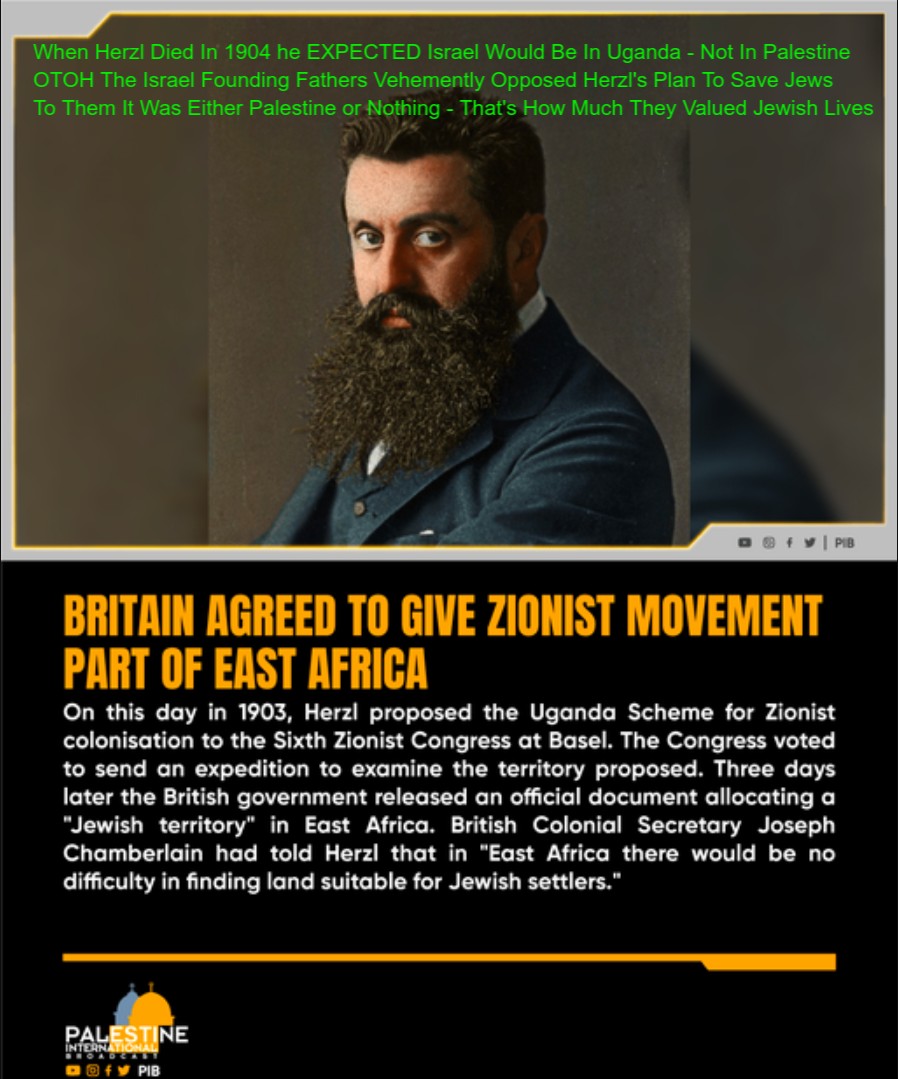 Herzl Died Thinking Israel Would Have Been in Uganda, not in "empty" Palestine
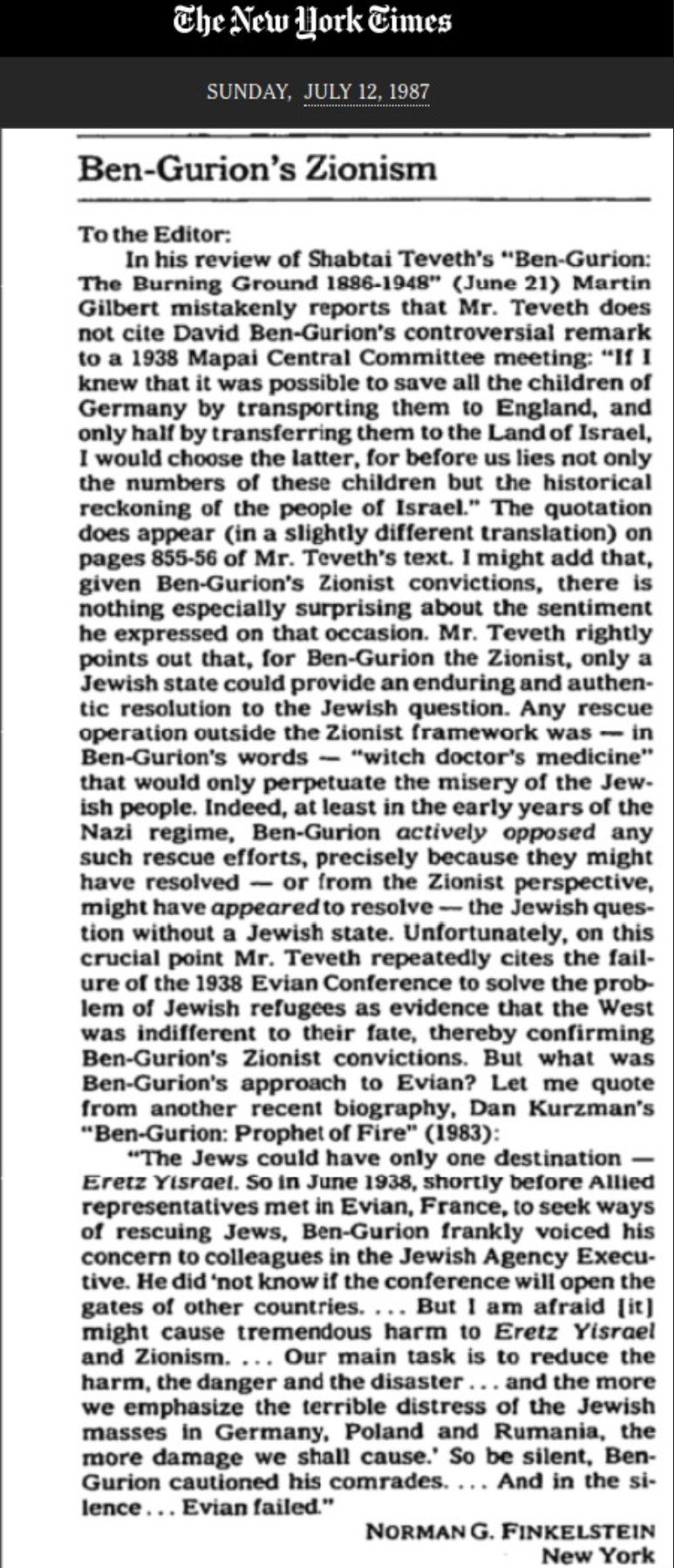 David Ben-Gurion's Response to the British Kindertransport a month after Kristallnacht: NY Times, July 12th, 1987, citing Ben-Gurion's official biographers showing how much he "cared" about Europe's Jews who saved themselves by immigrating to countries other than Palestine!
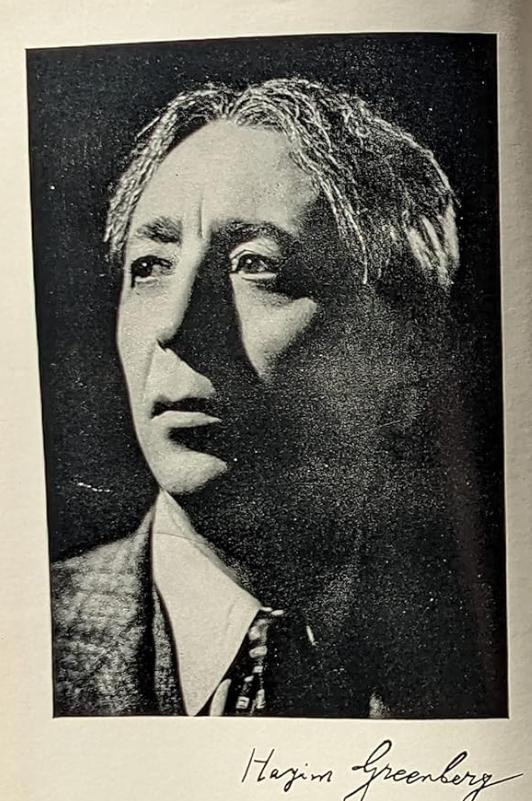 Why did Hayim Greenberg describe American Jewry as "morally bankrupt" in early 1943?
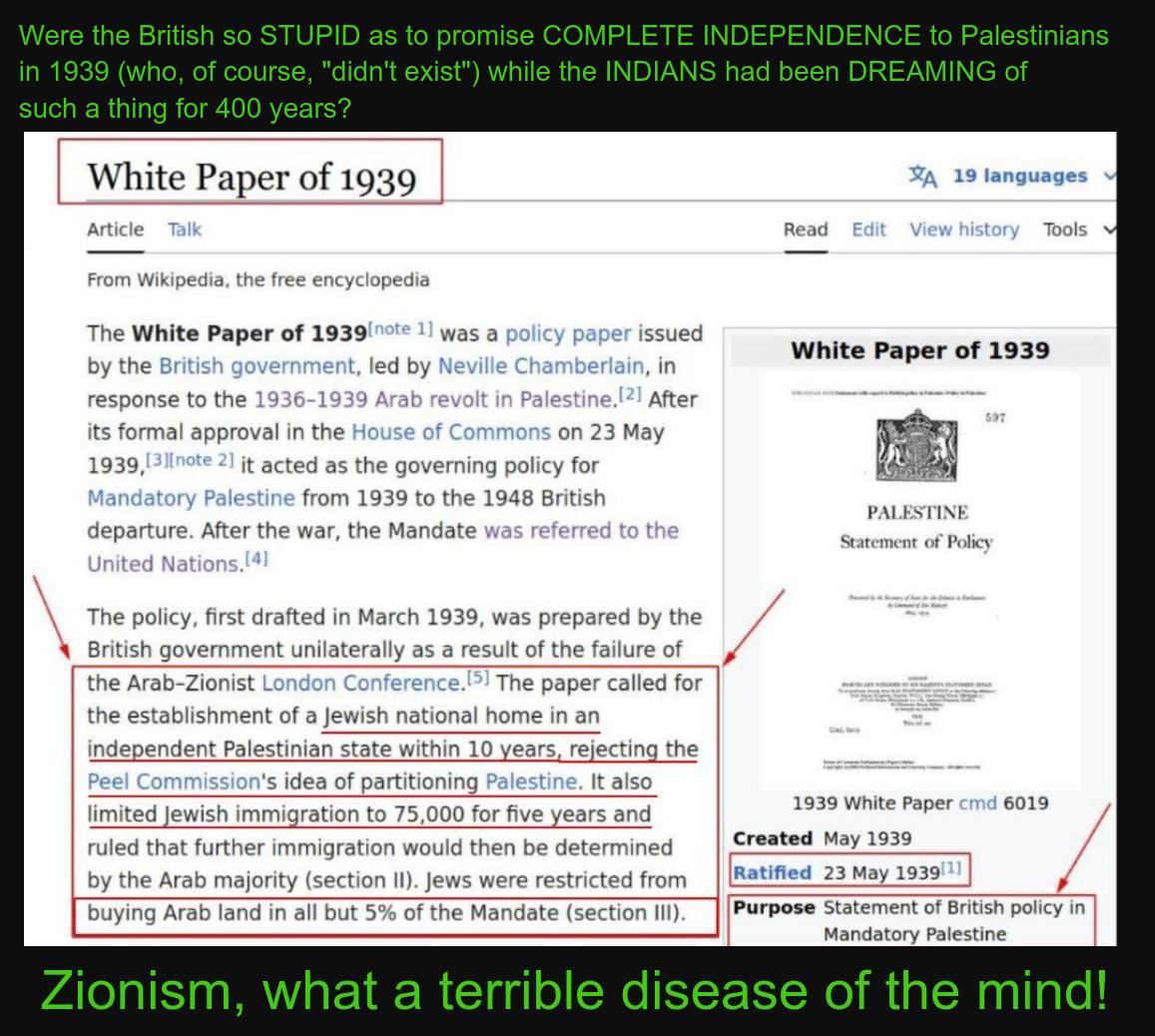 Were the British so STUPID as to promise COMPLETE INDEPENDENCE to Palestinians in 1939 (who, of course, "didn't exist") while the Indians had been DREAMING of such a thing for 400 years?
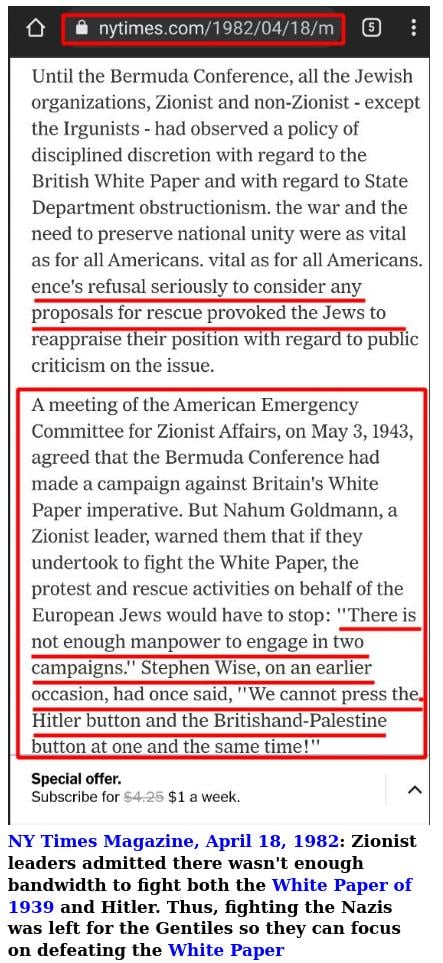 NY Times Magazine, April 18, 1982: Zionist leaders admitted there wasn't enough bandwidth to fight both the White Paper of 1939 and Hitler. Thus, fighting the Nazis for the Gentiles so they can focus on defeating the White Paper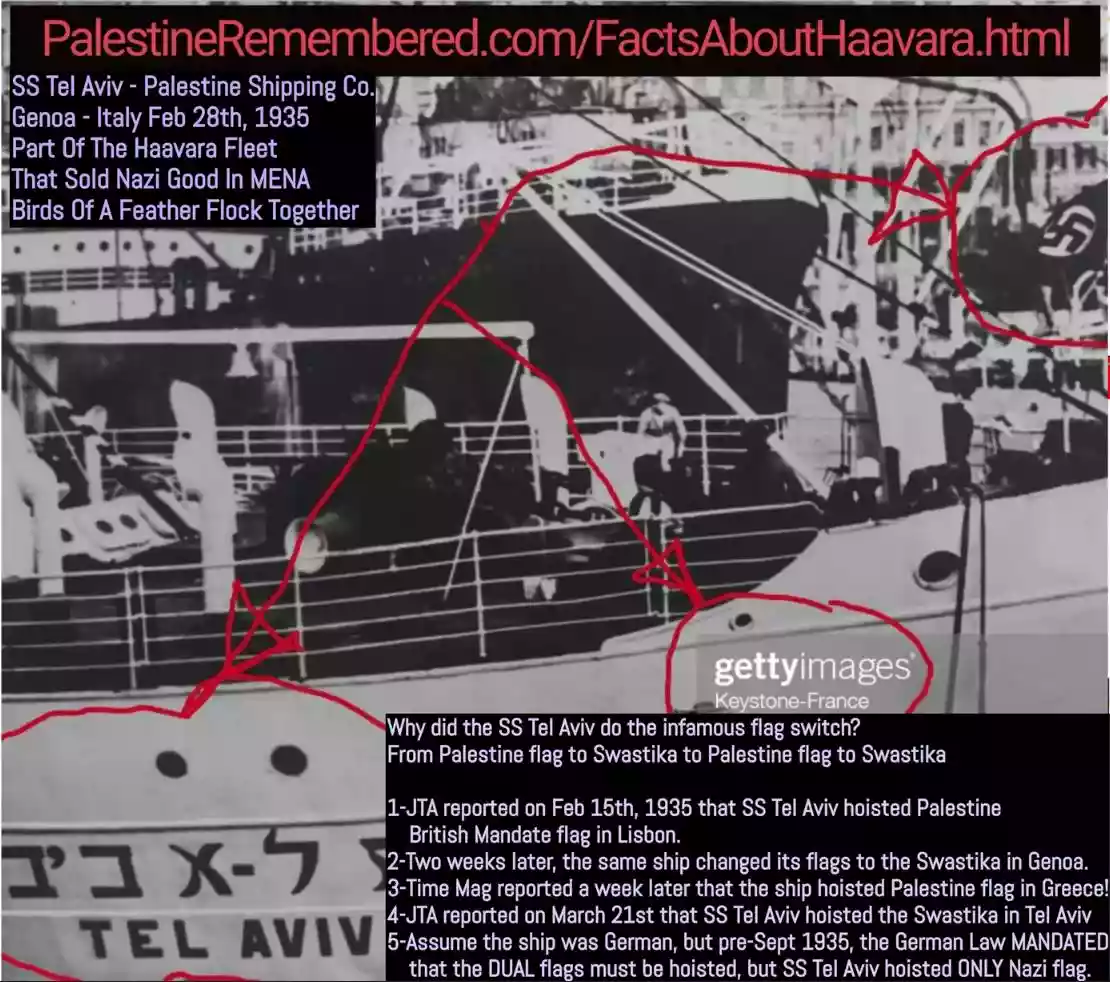


 Over 700 Oral History interviews (including 3,500+ hours of recording) can be viewed online.
Post Your Comment
*It should be NOTED that your email address won't be shared, and all communications between members will be routed via the website's mail server.