PR Editor's Note: This article is the first of a two-part series about AIPAC. This one tackles the taboo subject of how and why the Lobby was formed before Nakba, and in the second part we tackle how the Lobby wields and deploys its power.
The standard history of the pro-Israel lobby in Washington frames it as a humanitarian response to the Holocaust. However, archival evidence reveals that the organization that became AIPAC was forged through a deliberate rejection of humanitarianism in favor of raw political coercion in the service of state-building.
In the fall of 1943, the American Zionist movement, during the infamous American Jewish Conference, underwent a radical transformation. Rabbi Abba Hillel Silver seized control of the American Zionist Emergency Council (AZEC). Silver was not a diplomat; he was a political operative who operated with the ruthless efficiency of a Mafia boss. Critics often noted that in both temperament and appearance, he bore a striking resemblance to the later infamous fixer Roy Cohn.
Silver’s doctrine was absolute: "Not to request, but to demand; not to seek favors, but to exert pressure." He believed that philanthropic pleading had failed and that the movement must instead accumulate coercive political leverage within the American domestic system through whatever means necessary.
2. Mobilizing the Evangelicals: The Christian Council on Palestine
Why did Hayim Greenberg describe American Jewry as "morally bankrupt" in early 1943?
Long before the modern "Christian Right" existed, Silver’s AZEC engineered a massive grassroots mobilization of American Protestants. They founded the Christian Council on Palestine during WWII to support the creation of the "Jewish state", which eventually grew to include nearly 3,000 Protestant ministers. This organization served as a front for the lobby, framing Zionist political goals as a biblical and moral imperative to the American public.
By organizing these "Christian Zionists," the lobby created the appearance of a broad-based American consensus, providing political cover for Congressmen to support the Zionist program without appearing to be catering solely to a specific minority interest.
3. Subordinating Rescue to Statehood
Under Silver’s leadership, the lobby made a strategic and controversial decision: it subordinated the immediate rescue of European Jews to the long-term goal of securing a sovereign "Jewish state." Silver argued that rescue without statehood was a distraction. Consequently, the lobby’s resources were focused on political mobilization in Washington rather than on broad humanitarian rescue campaigns lacking a political statehood component.
Hitler's Message To The West: If Jews are such noble citizens and you care about them, how come you're not letting them in?
David Ben-Gurion envisioned that the Nazis' Nuremberg Race Laws would become the LEVER that would end up creating the "Jewish state," but how? Click the image for the details
Allow this unpleasant fact to sink in: America's and Palestine's Jewry voted on such a resolution when Europe's Jewry was hanging by a thread. Not only did they vote to table rescue at the height of the calamity, but most importantly, they lobbied with tooth and nail to torpedo rescue efforts (such as the War Refugee Board that saved hundreds of thousands of Jews) unless the destination was only Palestine. In fact, during the infamous American Jewish Conference, Rabbi Silver advocated against bombing the death camps and the railroads leading to them; even he questioned the value of sending food baskets to the ghettoes!
Spoiler Alert: What we shared with you already is an open secret in Jewish communities around the world, but it is a big taboo to discuss! This subject is the third rail of Jewish politics.
4. The Binary Choice: Strategic Resource Allocation and the 1943 Pivot
Fake Valor: Daddy, what did you do during the Holocaust while you were in Palestine?
Professional historians have long sanitized the history of pre-state Zionism as a story of a marginalized, powerless minority doing their utmost to save European Jewry, only to be ignored by the Great Powers. However, archival evidence suggests a more complex reality: the "helplessness" often cited was not a lack of tools, but a strategic decision to deploy those tools toward a singular, sovereign end: the "Jewish state".
4.1 The Myth of Helplessness vs. Strategic Agency
The evidence indicates that the American Zionist lobby possessed significant domestic political power during the 1940s. The central tension of the era was not an inability to influence policy, but the management of finite political "bandwidth." Leaders were forced to decide which objectives would receive the full weight of their lobbying apparatus and which would be relegated to the periphery.
Don't take our word for it; read it from the heads of the Zionist movement in the US (Nahum Goldman and Rabbi Stephen S. Wise) in May 1943. What both said was and still is an open secret in the Zionist movement:
We cannot press the Hitler button and the British and Palestine buttons at the same time! (NY Times, April 18th, 1982: AMERICAN JEWS AND THE HOLOCAUST By Lucy S. Dawidowicz and The Abandonment of the Jews by David S. Wyman, p. 176)
4.2 The 1943 Pivot: The Abba Hillel Silver Doctrine
David Ben-Gurion's Response to the British Kindertransport a month after Kristallnacht: NY Times, July 12th, 1987, citing Ben-Gurion's official biographers showing how much he "cared" about Europe's Jews who saved themselves by immigrating to countries other than Palestine!
A transformative moment occurred in 1943 when the "Old Guard"--represented by Stephen S. Wise and Nahum Goldmann--was sidelined by the more militant Rabbi Abba Hillel Silver. Silver’s takeover of the American Zionist Emergency Council (AZEC) signaled a move away from philanthropic diplomacy and toward raw political leverage.
Silver argued that the humanitarian tragedy in Europe was being used as a distraction from the political necessity of a state. Under his command, the lobby adopted two core principles:
Consolidation: Merging all disparate lobbying efforts into the AZEC to create a unified, top-down command structure.
The Ultimatum: Ensuring that any rescue proposals brought before the U.S. government were subordinate to, or included, the "Palestine Clause"--the demand for a sovereign state.
4.3 The "Two Buttons" and Zero-Sum Logic
The "Buttons" analogy emerged from the realization that the lobby had only enough political "current" to power one machine effectively. To push the "Rescue" button required an all-out assault on the Roosevelt administration to open U.S. quotas--a move that would inevitably alienate the power brokers needed to pressure Britain for a state.
This was a zero-sum game. Every hour spent lobbying for a refugee visa was an hour not spent lobbying for the Biltmore Program. In the strategic mind of Abba Hillel Silver, humanitarian rescue was viewed as a potential drag on the primary goal of statehood.
The Lever of Disaster: The Patria, Ben-Gurion, and the Doctrine of Sacrificial Statehood
After the war, the lobby utilized the 250,000 survivors in European Displaced Persons (DP) camps as a political lever. By resisting efforts to resettle these survivors in the United States or Western Europe, the lobby forced the international community to accept that the "only" solution to the refugee crisis was the opening of Palestine, thereby breaking the British Mandate through a manufactured humanitarian crisis.
6. Forcing Truman’s Hand
Silver’s aggressive style famously brought him into direct conflict with the White House. While many institutional histories attempt to soften the exchange, multiple reports from the era describe Silver literally barging into President Harry Truman’s office and pounding on his desk to demand a commitment to the Zionist program (Israel In The Mind Of America by Peter Grose of the NYT, p. 229). Truman, who found Silver’s "thug-like" arrogance loathsome, was reportedly so incensed by the encounter that he temporarily barred Silver from the White House. Yet, despite Truman's personal distaste, Silver's ability to mobilize domestic political threats eventually forced the President's hand.
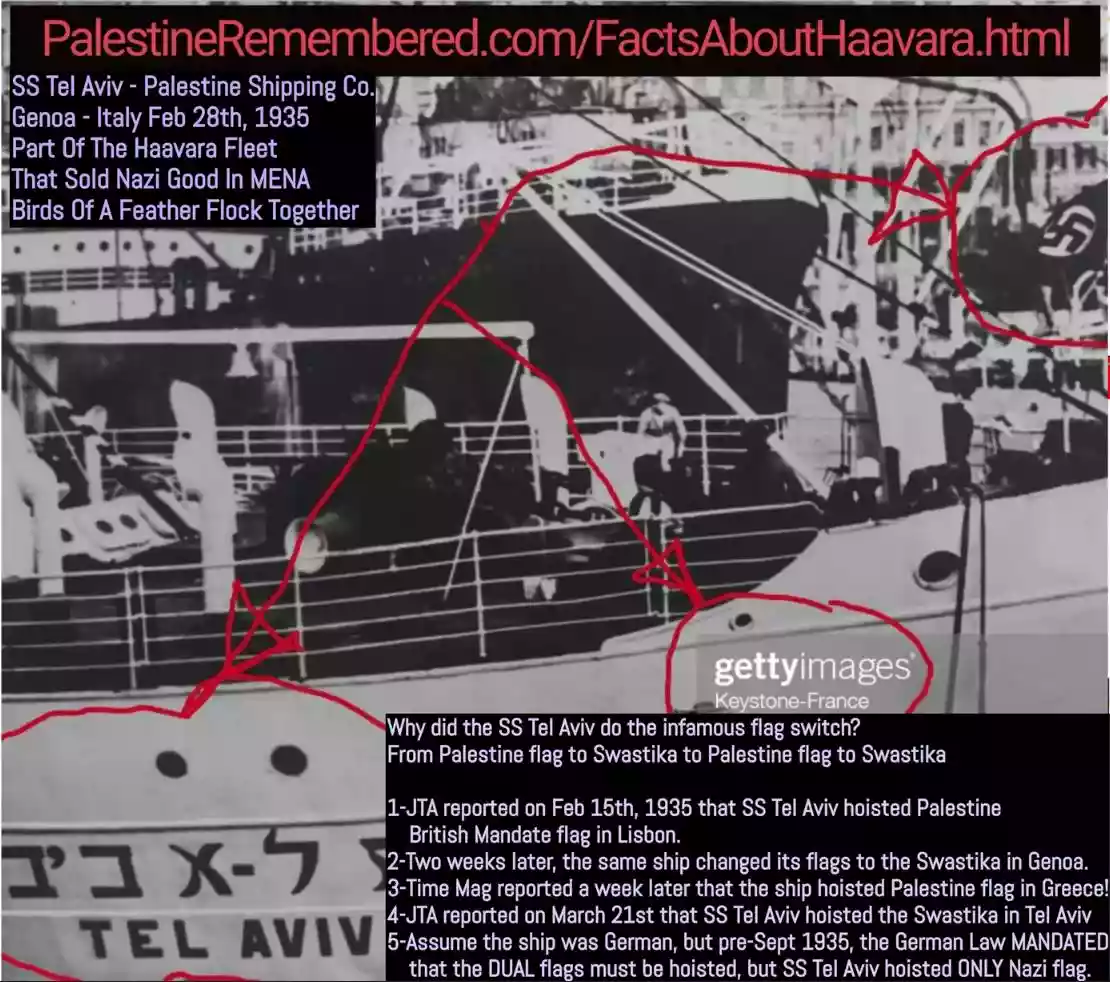
Fake Valor: Why Did Zionist Jews Hoist Nazis Flag on Their Ships in the 1930s?
A major crisis occurred in 1953 following the Qibya massacre, in which an Israeli military unit led by Ariel Sharon killed dozens of civilians in a West Bank village. In response, the Eisenhower administration took the unprecedented step of freezing U.S. economic aid to Israel. This crisis proved that the lobby could not rely on the White House alone. Isaiah Kenen formally established the American Zionist Committee for Public Affairs (AZCPA)--later renamed AIPAC--to focus specifically on the U.S. Congress as a legislative firewall against executive branch pressure.
8. The JFK and RFK FARA Battle (1962–1963)
In the early 1960s, President John F. Kennedy and Attorney General Robert F. Kennedy attempted to force the lobby to register under the Foreign Agents Registration Act (FARA). Investigations revealed millions of dollars flowing from Jerusalem to influence American public opinion. To evade this, Kenen technically dissolved the existing entity and reorganized as a "domestic" lobby (AIPAC), severing formal financial links on paper while maintaining the same mission. This allowed them to avoid the transparency required of foreign agents.
Fake Valor: Jewish-Brigade, Italy April - 1945: The Impostering Hero, see me while I bomb Nazis, ONLY a few weeks before WWII ended. We wonder: were any similar selfies taken at the al-Alamein meat grinder?
The mechanics of this strategic allocation remained consistent long after the war. In 1963, Senator J. William Fulbright, as Chairman of the Senate Committee on Foreign Relations, launched an investigation into the "unsanitized" mechanics of foreign lobbying in the United States. He uncovered a massive financial pipeline designed to bypass domestic transparency laws.
The investigation proved that the Jewish Agency in Jerusalem was using its American Section as a conduit to hide the foreign origin of funds used to influence American media and policy. This led to a legal battle involving Attorney General Robert F. Kennedy, who attempted to force the lobby to register as a Foreign Agent under the Foreign Agents Registration Act (FARA).
The lobby eventually reorganized as the American Israel Public Affairs Committee (AIPAC), utilizing a technicality to maintain its status as a "domestic" entity while continuing the unified strategic mission established during the 1943 pivot.
The lobby didn't forget what Sen. Fulbright did; it lobbied heavily to oust him from the Senate. What happened to Sen. Fulbright became the canary in the coal mine to those who dare to challenege the lobby, and that signaled a new phase in the lobby's ascent to power in America.
Here is an excellent short clip by Ian Lustick (who used to work for AIPAC and authored a book --Israel's Lobby -- with Eli Clifton) that summarizes how consistently the lobby has shackled US Presidents since Eishnour. Watch for two minutes only:
Kastner Saved Lives Too: How does justifying Haavara after the fact not resemble Kastner's defense of what happened on his infamous train, but at a much larger scale? Kastner too saved Live!
Since the events of the October 7th Raid, this seventy-year-old machinery of intimidation has been pushed to its absolute limit. The lobby is now forced to spend tens of millions of dollars to unseat even minor domestic critics, alienating younger generations and shattering the bipartisan consensus it once enjoyed.
Will the old tactics of raw coercion and intimidation continue to work in an era of instant information and shifting demographics? Or has the "Silver doctrine" finally reached its point of diminishing returns? Only time will tell.
NY Times The Daily: Israel, AIPAC, And The Difficult Questions
We strongly encourage you to listen to the episode of The New York Times' The Daily focusing on AIPAC. The podcast actually portrayed AIPAC in a relatively favorable light, explaining that a divergence between American and Israeli interests is a "recent development". However, it also detailed how AIPAC funds advertisements both supporting and opposing the same issues to reward or punish particular candidates, while raising a few other valid criticisms. Despite the NYT's restrained approach, AIPAC still fiercely attacked the newspaper on X. Make sure to read the comments section on YouTube; Americans really flipped on the "Jewish state." It seems dragging the US to fight another war on behalf of the "Jewish state" was the last straw:
When a major Jewish organization and major wealthy Jewish donors are openly willing to poison the public discourse by arming both sides of the argument, how can that not validate the dual loyalty accusation?
 Menu
Menu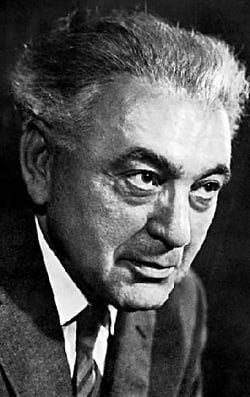 Rabbi Abba Hillel Silver:1893-1963
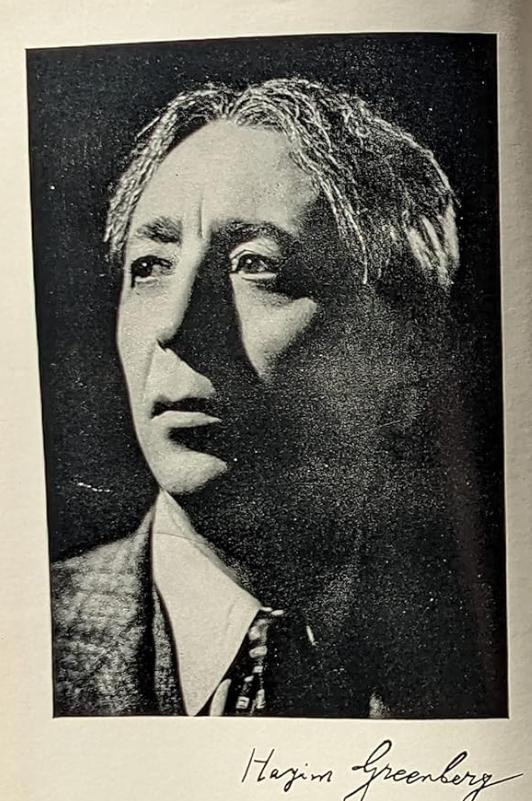 Why did Hayim Greenberg describe American Jewry as "morally bankrupt" in early 1943?
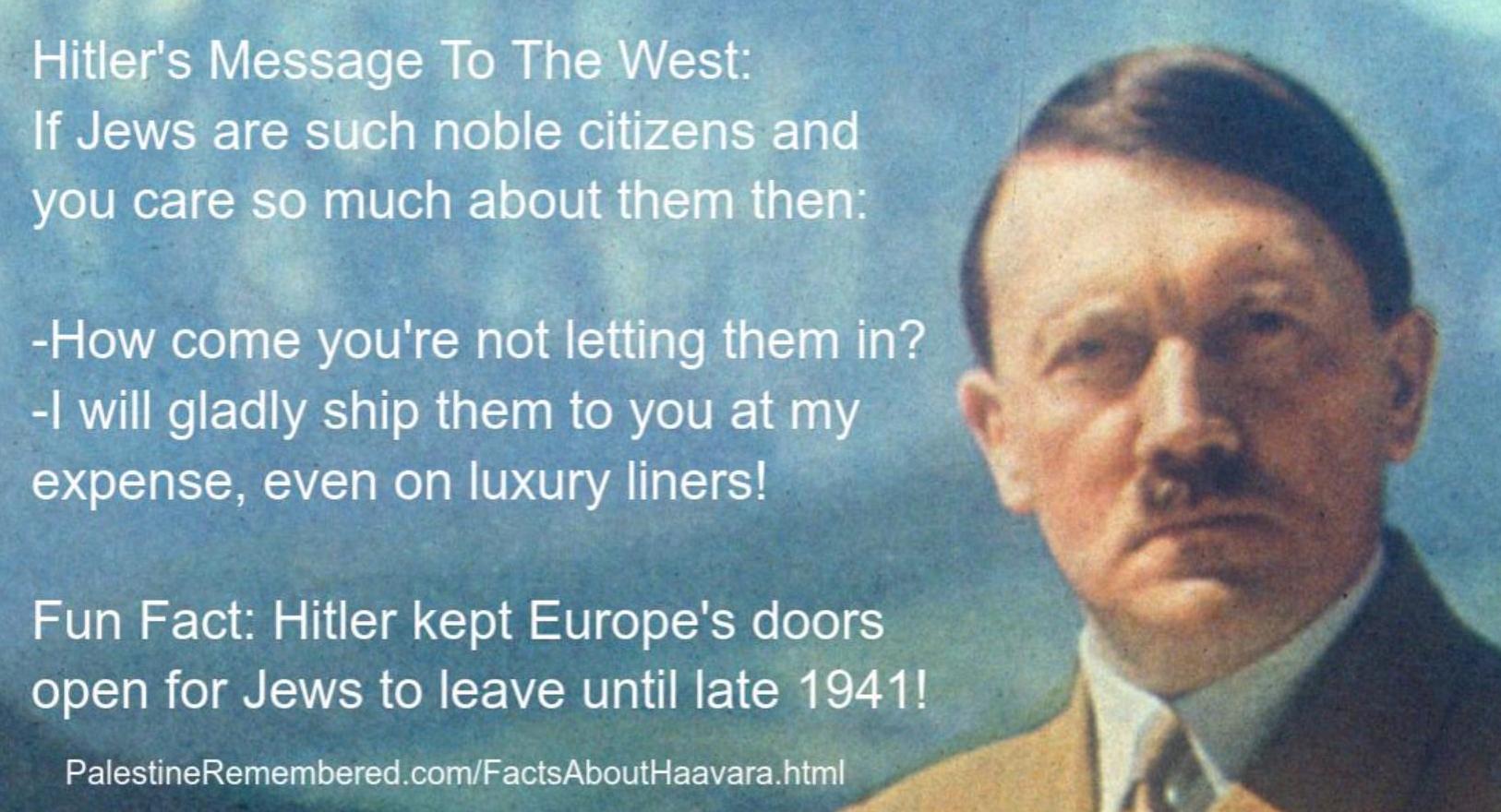 Hitler's Message To The West: If Jews are such noble citizens and you care about them, how come you're not letting them in?
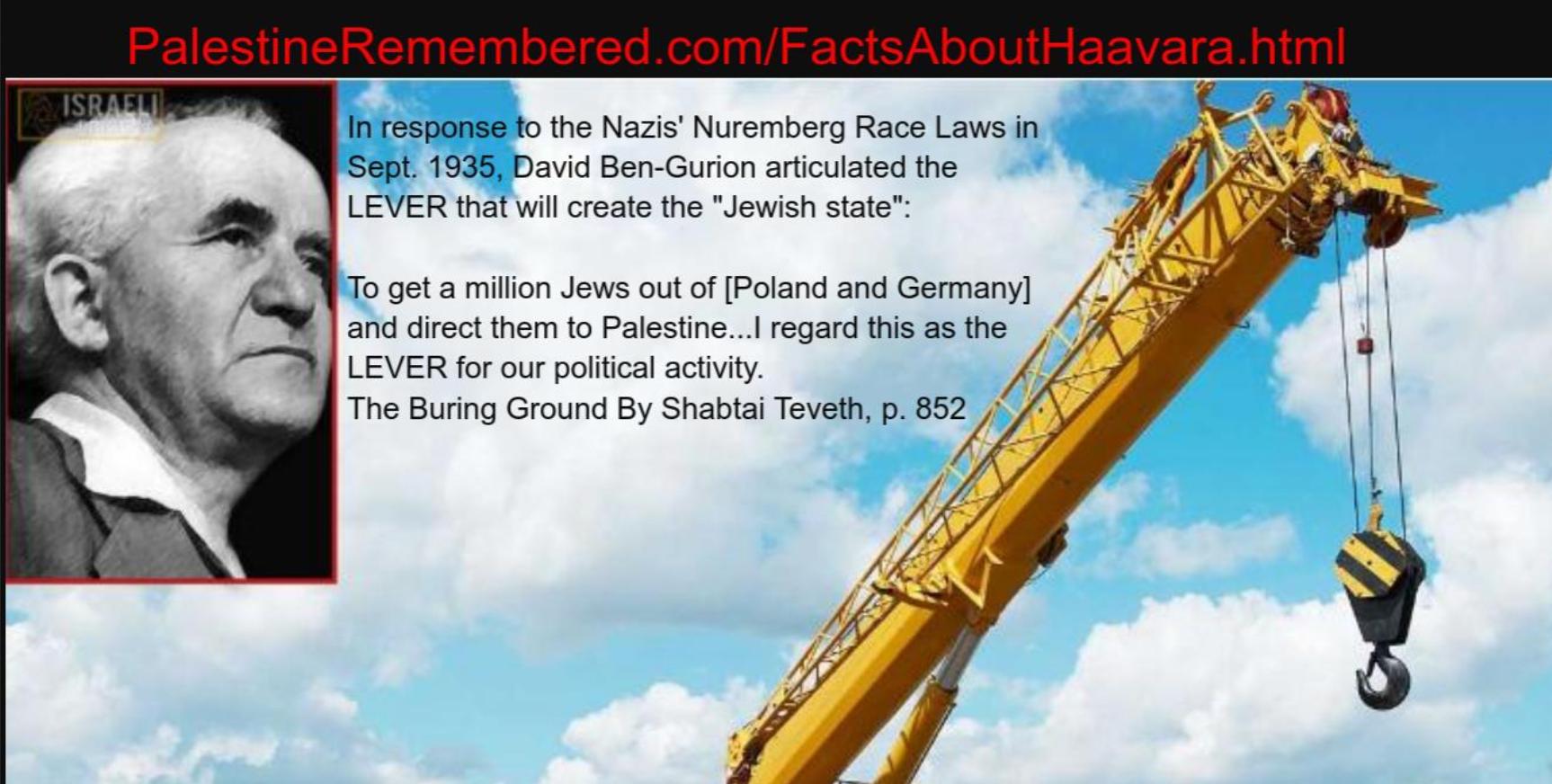 David Ben-Gurion envisioned that the Nazis' Nuremberg Race Laws would become the LEVER that would end up creating the "Jewish state," but how? Click the image for the details
 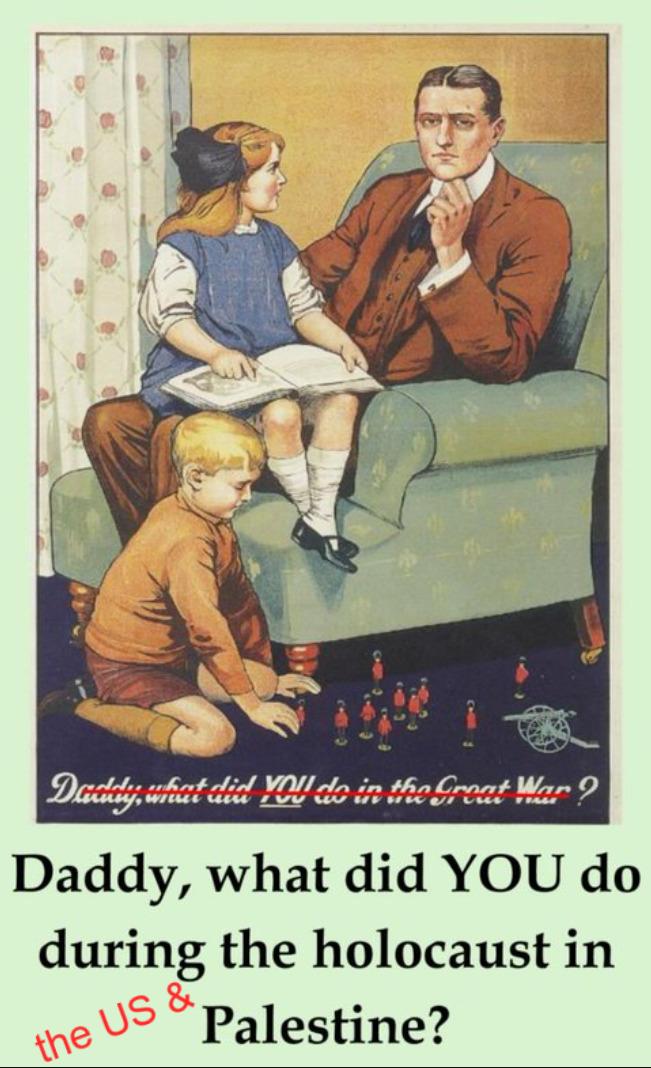 Fake Valor: Daddy, what did you do during the Holocaust while you were in Palestine?
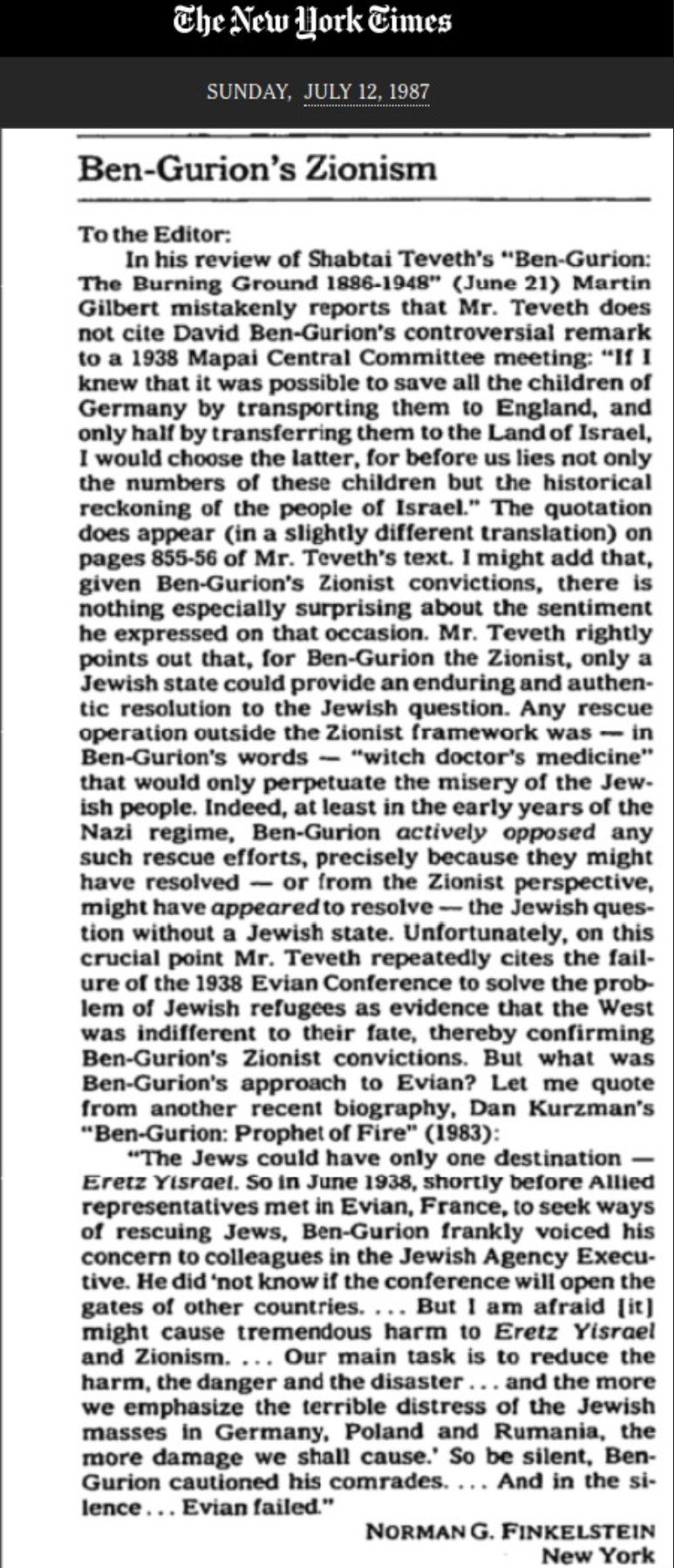 David Ben-Gurion's Response to the British Kindertransport a month after Kristallnacht: NY Times, July 12th, 1987, citing Ben-Gurion's official biographers showing how much he "cared" about Europe's Jews who saved themselves by immigrating to countries other than Palestine!
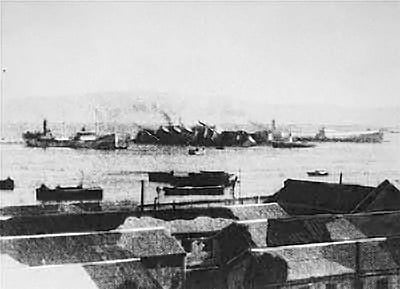 The Lever of Disaster: The Patria, Ben-Gurion, and the Doctrine of Sacrificial Statehood
 Fake Valor: Why Did Zionist Jews Hoist Nazis Flag on Their Ships in the 1930s?
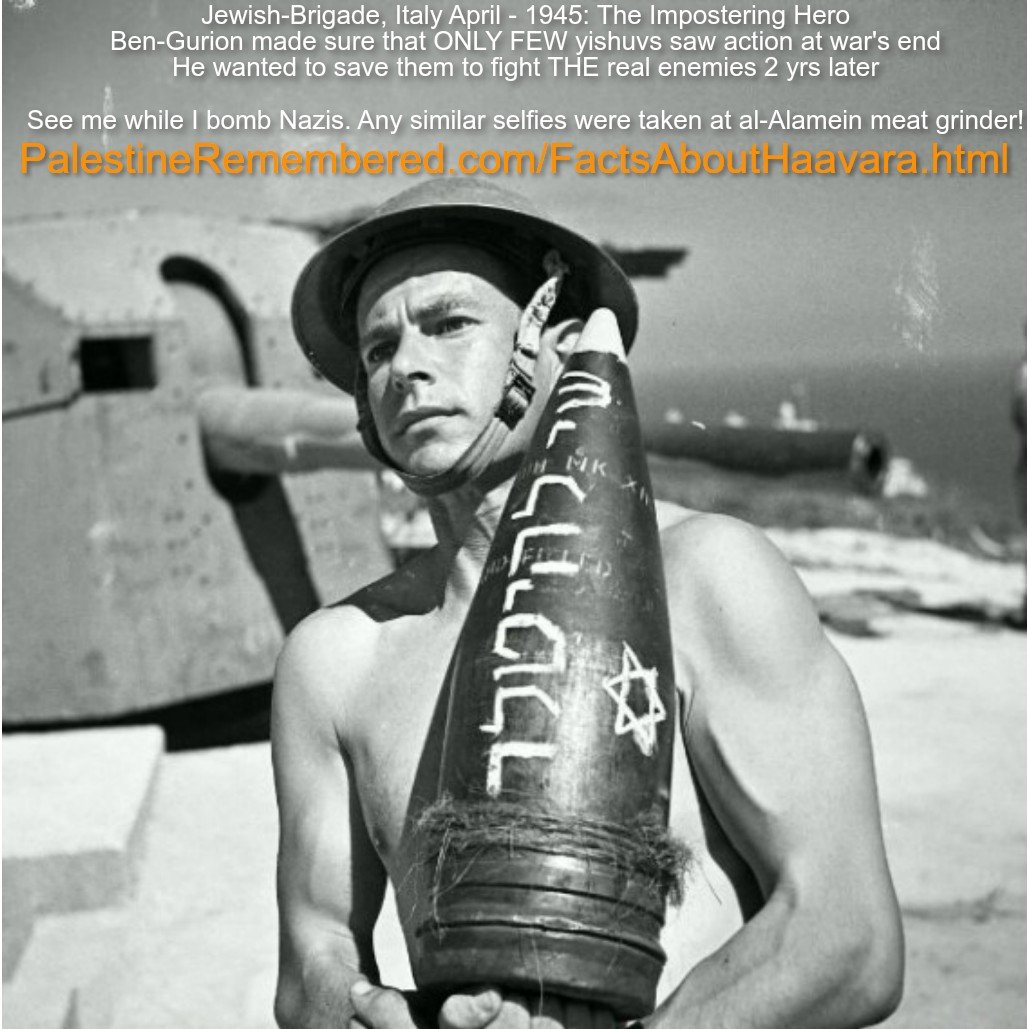 Fake Valor: Jewish-Brigade, Italy April - 1945: The Impostering Hero, see me while I bomb Nazis, ONLY a few weeks before WWII ended. We wonder: were any similar selfies taken at the al-Alamein meat grinder?
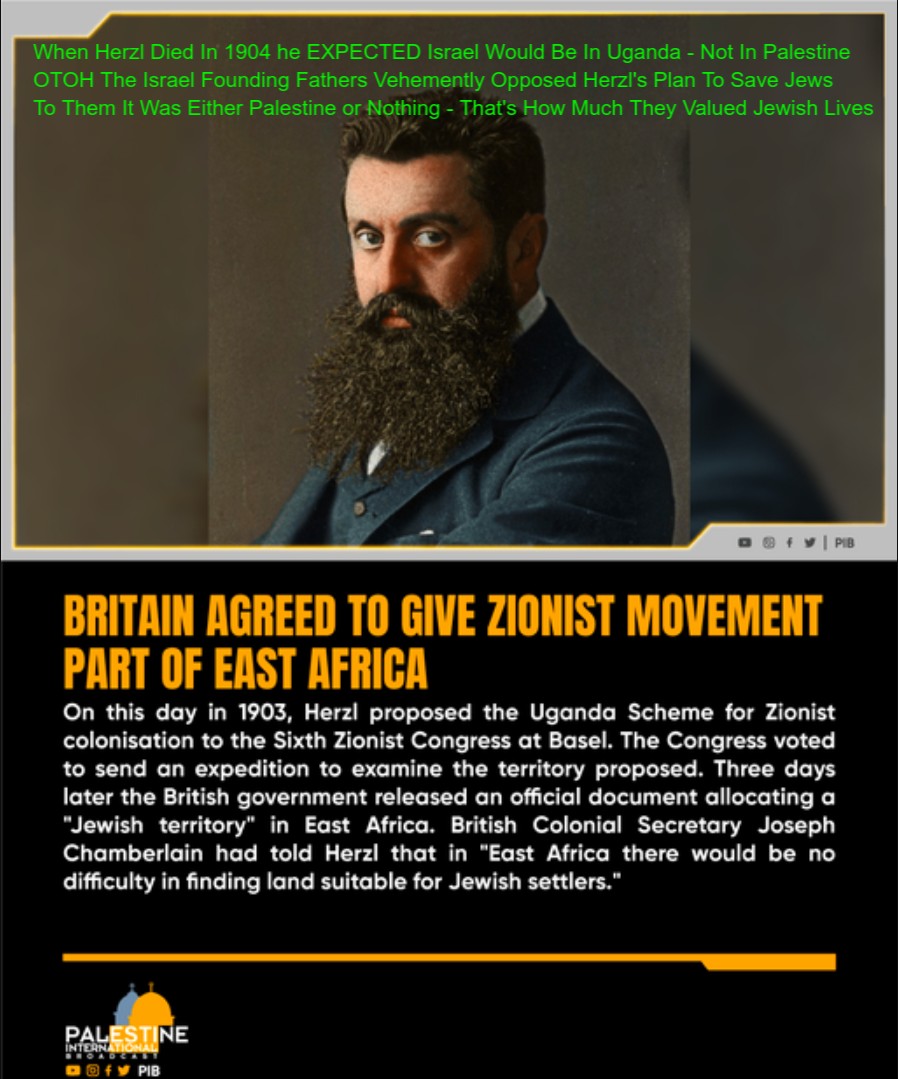 Herzl Died Thinking Israel Would Have Been in Uganda, not in "empty" Palestine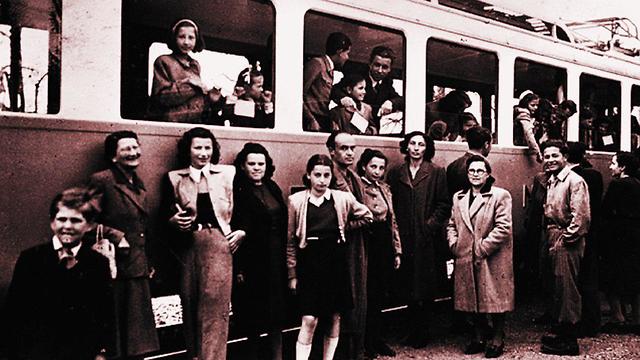


 Over 700 Oral History interviews (including 3,500+ hours of recording) can be viewed online.
Post Your Comment
*It should be NOTED that your email address won't be shared, and all communications between members will be routed via the website's mail server.