 Menu
MenuWhat was the financial situation of the Jewish Agency just before Haavara was signed in August 1933?
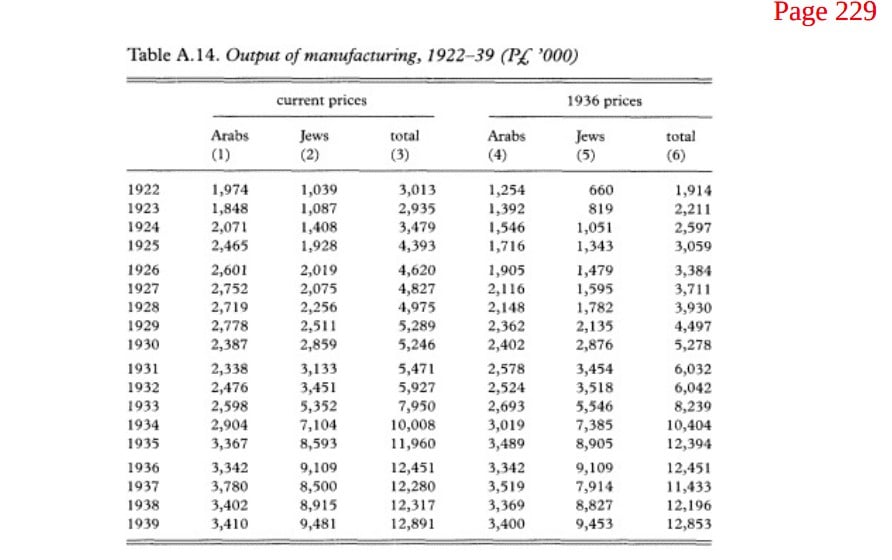 Divided Economy of Mandatory Palestine, p. 213: Zionists Manufacturing output almost tripled during 1st five years of Haavara's life
Introduction
The financial plight of the Jewish Agency (JA) and its communal enterprises was dire, even prior to the Great Depression. However, the Depression exacerbated the crisis when American Jewry, Zionism's primary financial backers, drastically cut funding. Consequently, all Zionist institutions, including the Jewish National Fund (JNF) and Keren Hayesod, faced an existential threat. The Jewish Agency, reliant on diaspora donations for survival, was on the brink of bankruptcy.
As we will shortly demonstrate using Israeli Zionist sources, Zionism was in a critical situation just as Hitler was ascending to power in early 1933.
In this regard, we would like to direct your attention to Edwin Black’s assessment (who is an ardent Zionist) of the agency’s financial status in the early 1930s as Hitler rose to power. Notably, three-quarters of the Jewish Agency's 1933 budget was in deficit, and all fundraising and settlement activities were halted during the Great Depression:
 Why did Hayim Greenberg describe American Jewry as "morally bankrupt" in early 1943?
[The Great] Depression agonies had already halted most international Zionist contributions. Many regular fund-raising drives were suspended indefinitely awaiting some improvement in the world economy. Jewish Agency treasurer Eliezer Kaplan summarized the situation: "In 1933, contributions to the Palestine Foundation Fund [the funding arm of the Jewish Agency] have reached an all-time low of P£160,000 [about $800,000]. Its [recent] deficit was over P£500,000 [$2.5 million, this implies that the total yearly budget was at least P£660,000]. Settlement projects of the Agency Executive were discontinued in 1928. The sole task of the Executive Committee in recent years has been: how to maintain the status quo and prevent bankruptcy." If the Jewish Agency's financial picture did not improve, the question was not if the Zionist Organization would go bankrupt, but when.(The Transfer Agreement, p. 90)
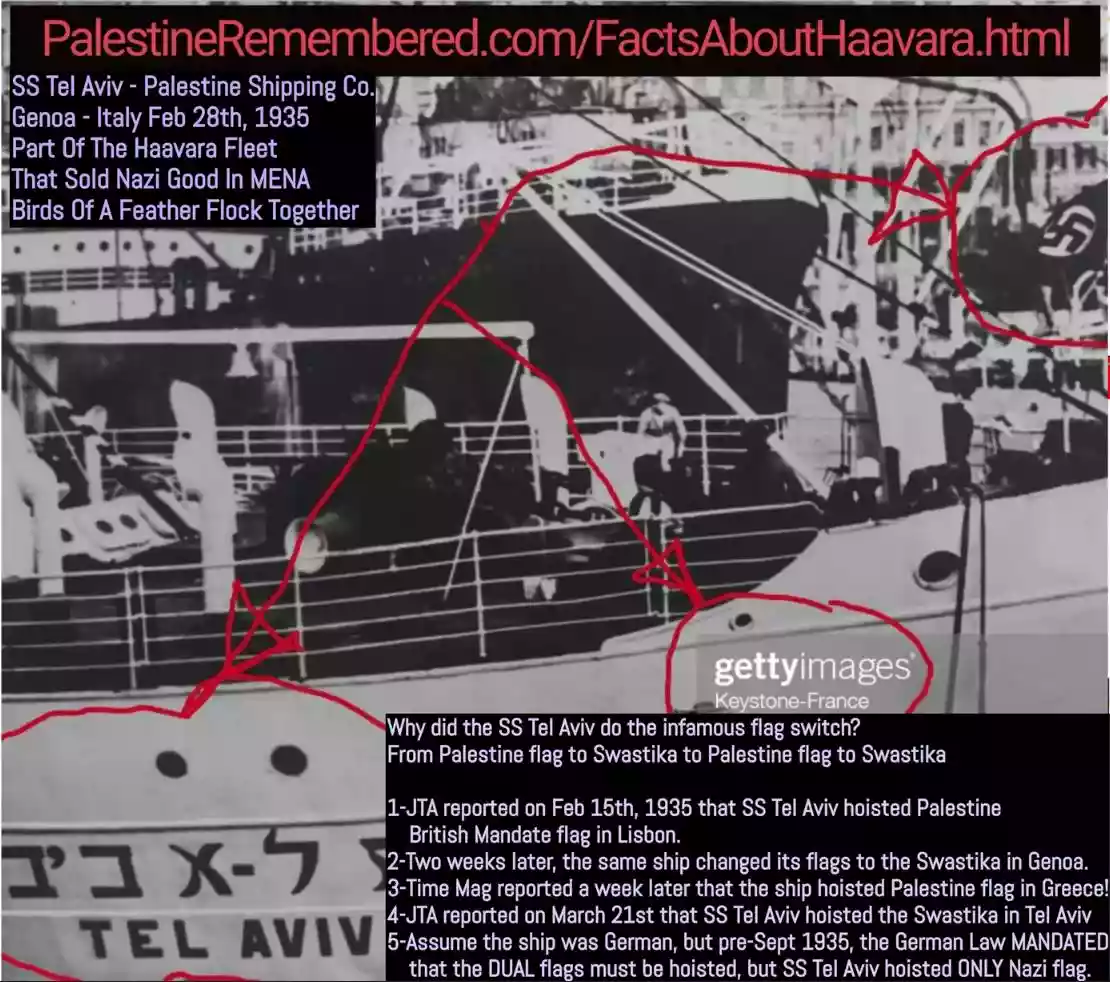
 Fake Valor: Why Did Zionist Jews Hoist Nazis Flag on Their Ships in the 1930s?
What made the situation much worse was that Zionist institutions were highly financially leveraged, and that made them sensitive to financial shocks. In any case, we have not yet examined the Jewish Agency's budgets and JNF's land purchases between 1927 and 1933, but it is assumed to be as bad, if not worse.
How Bad JA's Financial Situation Was In late 1933? Can You Provide Examples?
To paint a picture of Zionists' enterprise during this period, here are a few examples that give an idea of how delicate the situation was during the great depression:
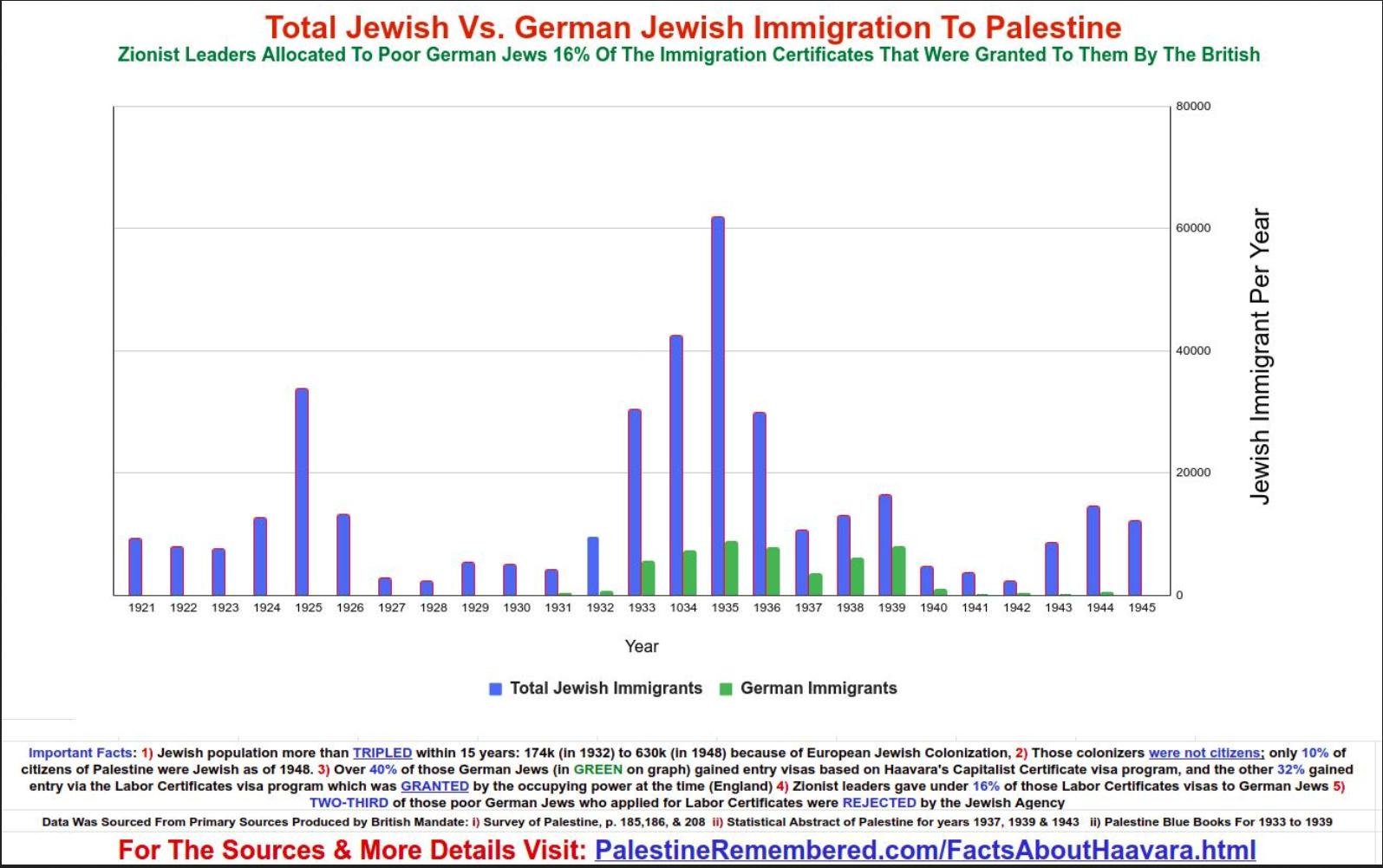 Let's Do The Math: How Many German Jews Were Actually "Saved" Due To The Haavara Agreement?
 A) Here is a JTA report on August 7th, 1929 (2 months before the Great Depression was officially triggered in late Oct. 1929), which painted a bleak picture of Zionists' high unemployment figures, how several enterprises came close to bankruptcy, how American Jewry withheld funding, and most importantly, how Zionist colonization efforts almost crawled to a halt. This report confirms what Mr. Black has reported earlier.
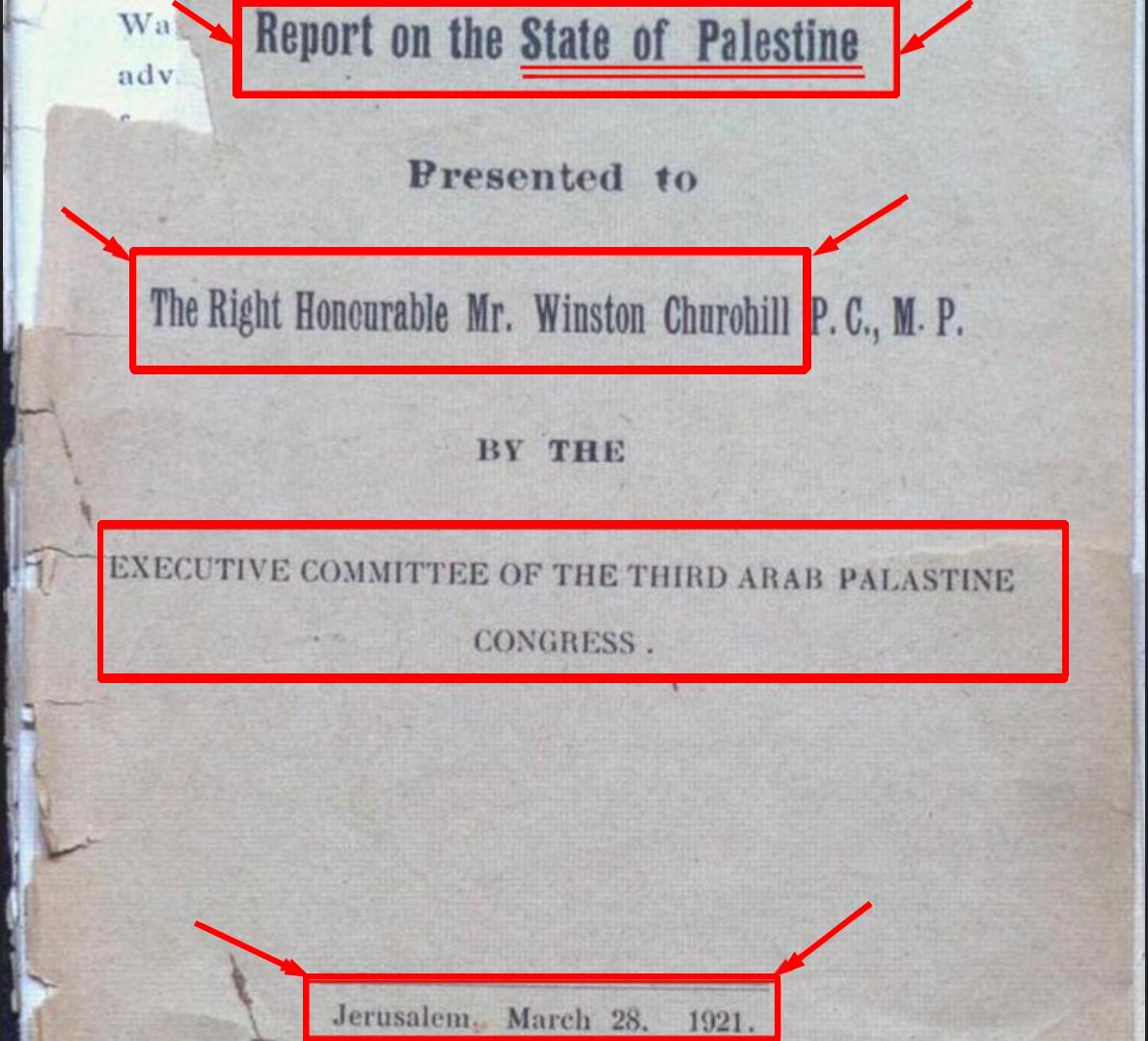 "Report On The State of Palestine" issued on March 28th, 1921, by the Third Palestine Arab Congress to Winston Churchill
 B) Membership in the World Zionist Organization dropped by more than 3/4th of it 1918 level (which must have impacted fundraising by as much).
C) Here is a March 2nd, 1932 JTA article showing how the Jewish Agency had to cut its budget and staff by almost two-thirds (all of that changed less than a year later when the Nazis rose to power), and
D) Here's a report on how Keren Hayesod had scrambled for a big loan from Lloyd's of London by the end of 1933, which accounted for half of its assets (How to build a country? by Adam Hefetz, p. 313-316).
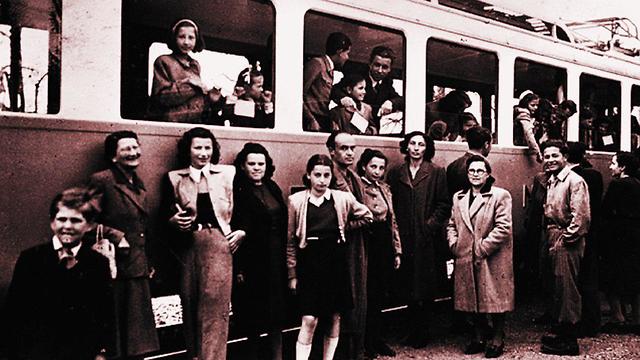
Kastner Saved Lives Too: How does justifying Haavara after the fact not resemble Kastner's defense of what happened on his infamous train, but at a much larger scale? Kastner too saved Live!
E) Here is a JTA report on Sept. 3rd 193,3 showing how half the teachers were laid off.
F) Lenni Brenner did an excellent job of tracking what Chaim Arlosoroff (the Political Director of the Jewish Agency who negotiated the Haavara Agreements with the Nazis) and Menachem Ussishkin (the head of JNF) wrote about the dire financial situation between 1932 and 1933. Mr. Arlosoroff portrayed the financial and immigration situation of the yishuv as if it were a life-or-death situation. As it will be proven soon, the Zionists' dire financial situation during the great depression drove many Jews to leave Palestine, and that confirmed Mr. Arlosoroff's worries. In total, the yishuv had a net gain of less than 8,000 between 1927 and 1931.
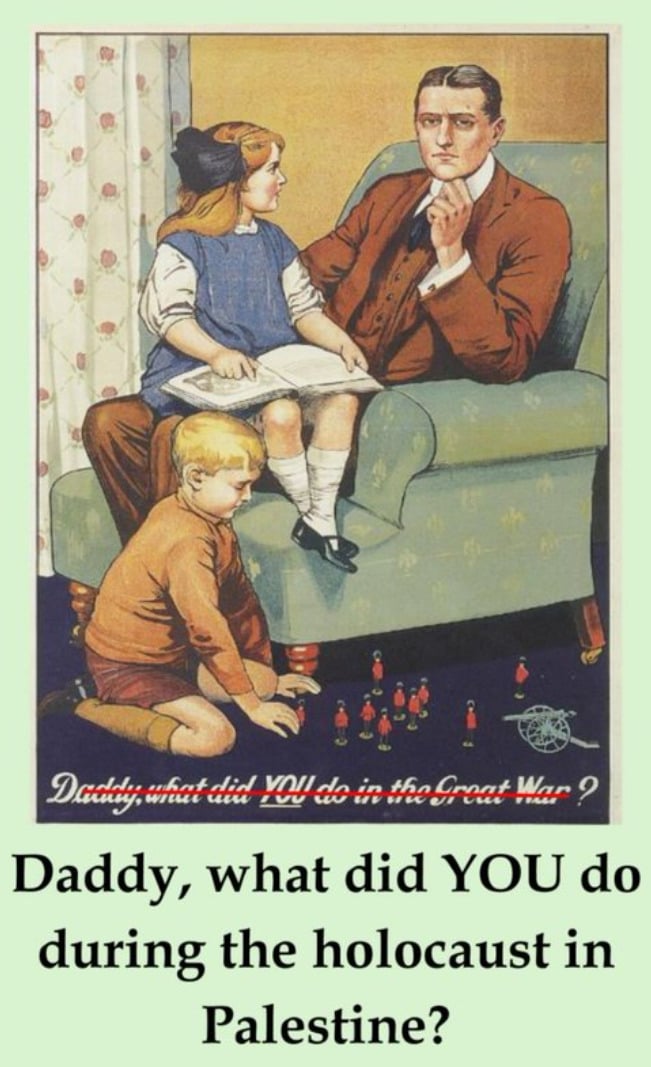 Fake Valor: Daddy, what did you do during the Holocaust while you were in Palestine?
 G) The Jewish Agency's dire financial situation in late 1929 drove its leadership to expand its Executive governing body (JAE) to include non-Zionists. Many of them openly advocated non-Zionist policies like settling Jews in countries other than Palestine (see, for example, JDC's Felix M. Warburg). For those who know anything about Zionist politics, such a policy was (and still is) a hard pill to swallow. Please note that the Warburg banking family of Hamburg was instrumental in architecting the Haavara Agreement from day one.
H) The British canceled the debt of P£70,000 for the Tel-Aviv municipality.
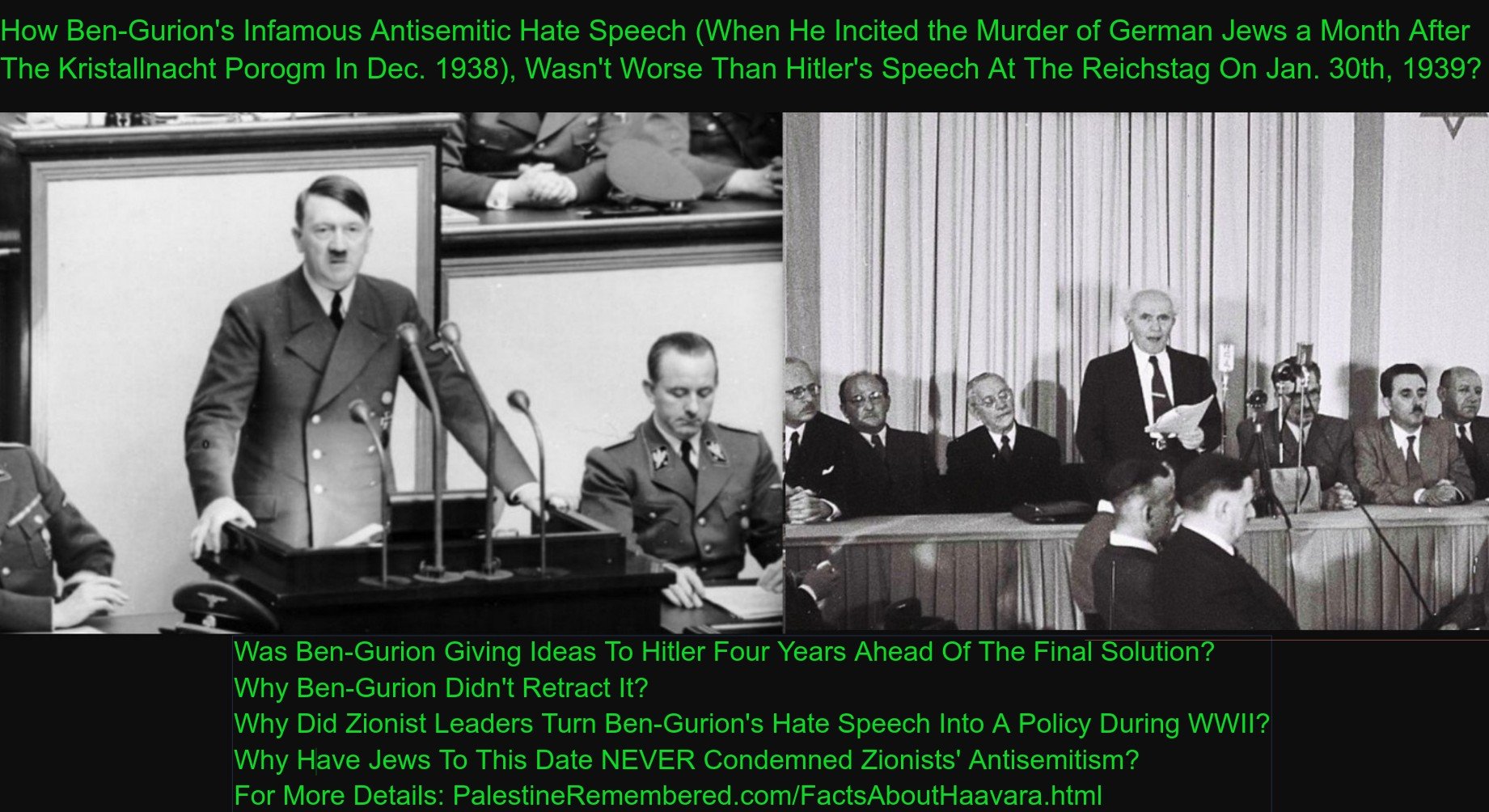 Which hate speech was worse: Hitler's hate speech at the Reichstag on Jan 30th, 1939, or Ben-Gurion's speech (just two months before Hitler's speech) when he incited the murder of German Jews a month after the Kristallnacht pogrom?
 I) For completeness, here is a one-page summary of what Google AI generated about the Jewish Agency's financial situation during the great depression.
Please also note that the Palestinian resistance to Zionist colonization in the 1920s and early 1930s heavily impacted the Jewish Agency's financing. Palestinians not only boycotted but also burned many Zionist colonial enterprises, which automatically increased the cost of security and repairs. All of this, once combined with the start of the great depression, Jewish immigration to Palestine was only a net gain of 7,829 between 1927 and 1931 (the great depression years). Actually, many left. For example, at minimum, 11,330 Jews emigrated out of Palestine between 1927 and 1931, while 19,159 immigrated to Palestine, see Statistical Abstract of Palestine for 1943, p. 12 & 21, One Palestine Complete, p. 261 & JA's submission to Evian Conference. It is worth noting that Ben-Gurion, in 1947, seemed to agree with the official figures (see The Jewish Plan For Palestine by the Jewish Agency, p. 53).
Revolving Line of Credit Offered By The Nazis
 A Playlist Of Short Clips Of Jews Sharing Their DNA Test Results
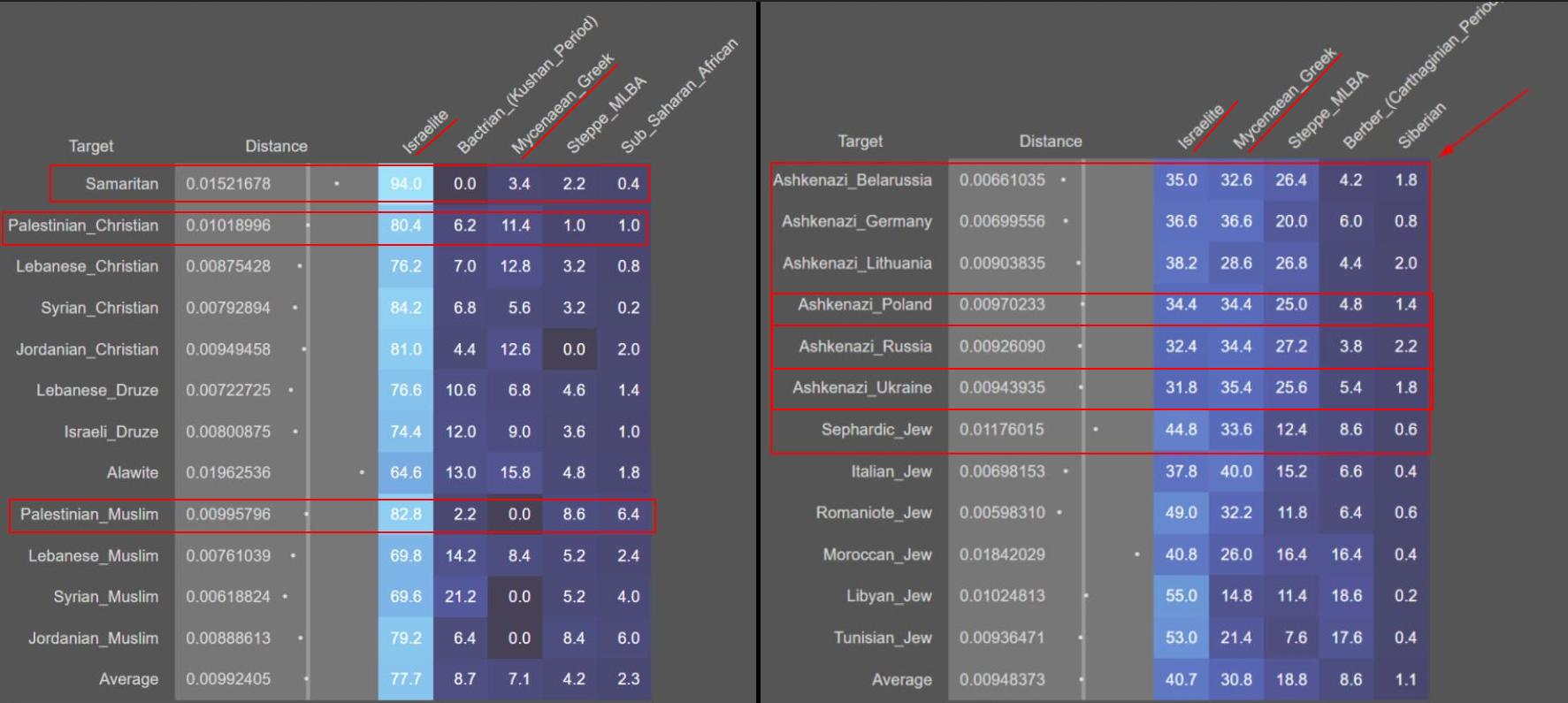 Let's Examine The DNA Genetic Distances between Israelites, European Jews, Arab Jews, and Palestinians
As you consider the earlier facts, remember that much of the Zionists' funding, which came mostly from the US and Poland, dried up even before the great depression, as Mr. Segev pointed out in the next paragraph. Assuming that was the case, then it would be hard not to conclude that it was Hitler who bailed out Zionism in the nick of time, and if it were not for him, the banks would've foreclosed on Zionists' assets.
Tom Segev's Assessment Of The Jewish Agency's Financial Situation in the 1920s and early 1930s
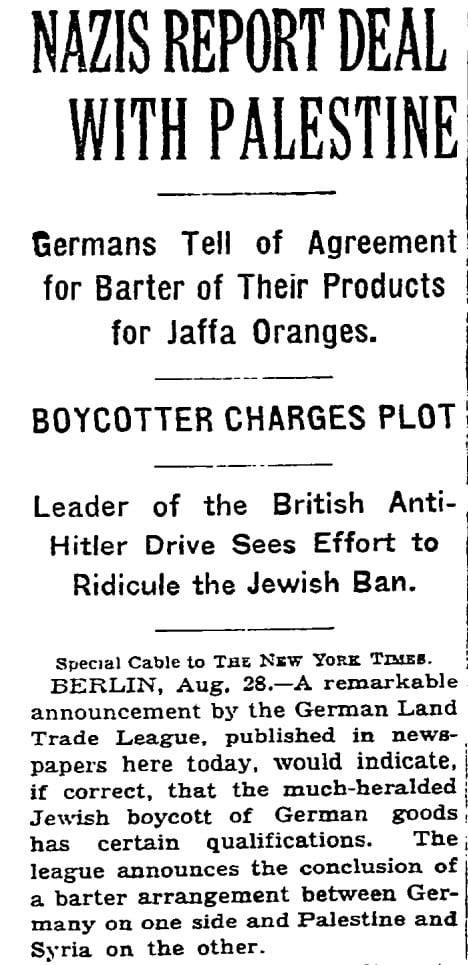
NYTimes: Aug 29, 1933: Germans Tell of Agreement for Barter of Their Products, not only Palestinian oranges but with Syria's oranges too!
Chaim Shalom Halevi had discerned signs of an incipient economic crisis within a few days of his arrival, which was why he had urged his parents to hurry while they could still obtain immigration permits. From another point of view, he saw the crisis as an advantage: the rent rooms were going down. Like the intoxicating illusion of plenty, the despairing shock of the economic depression belongs largely to the history of Tel-Aviv: at its peak, one out of two unemployed people in the country lived in the city; the Jewish unemployment rate rose to over 17 percent. Halevi explained to his parents how this had happened: “The fourth aliya put up buildings on the sand, and it is known that sand is a shaky foundation. Not long after this letter, the Casino went bankrupt. It was demolished and disappeared among the dunes.
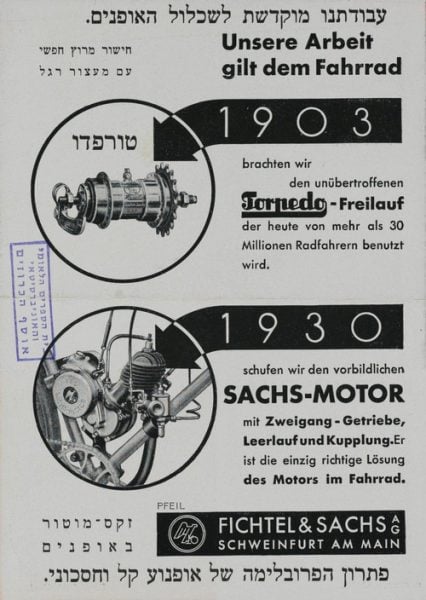 Zionists marketed Nazi goods in Palestine in the 1930s
In 1925, 64 percent of all investment was in construction. Investors put up rental housing on the assumption that immigrants would continue to come. Apart from direct employment, the building industry also supported a large circle of factories and businesses. The construction boom depended on an inflow of overseas capital; foreign investors transferred their money to the local office of the Zionist Organization or to their local bank, which was then transferred to banks in Palestine. Contractors often worked on credit, using capital that was on the way as collateral.
In 1926, the Polish economy went into recession and the Polish currency was devalued. Many people in Palestine were saddled with debts they could not pay and were forced to stop building. As construction companies and associated industries collapsed one after another, jobs disappeared. The British administration expanded public works unwillingly and to a limited extent; its inclination was not to intervene. Neither the Histadrut labor union nor the Zionist movement was prepared to handle such a profound crisis.
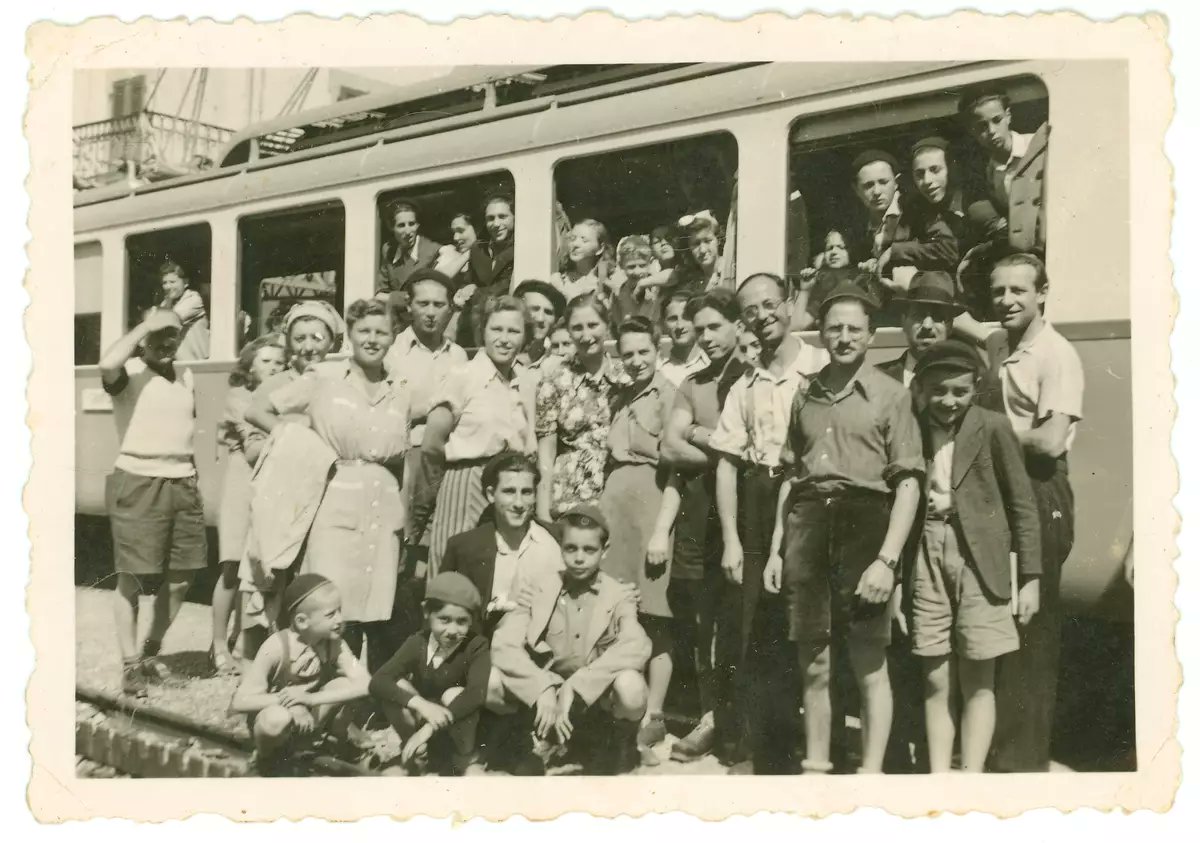
Kastner Saved Lives Too: How does justifying Haavara after the fact not resemble Kastner's defense of what happened on his infamous train but at a much larger scale? Kastner too saved Live!
A sense of despair spread throughout the country. Many left. In 1926, the number of emigrants was close to half the total of immigrants; in 1927, emigration exceeded immigration, and in 1928 the two figures were equal. Overall, during these three years, fifteen thousand Jews left Palestine.
But the crisis didn’t last long and left no permanent scars. The citrus industry soon began to take off.(One Palestine Complete, p. 261)
[Note how Mr. Segev doesn’t tell us when the economy recovered & why citrus exports boomed? Is it possible that the recovery occurred because of Haavara, and it was the Nazis who imported Palestinian & Syrian citrus? Again, 3/4th of the JA's budget was in retreat as of 1933, just before Haavara was signed!]
Abraham Burg's Assessment
Now, let us contemplate how the former speaker of Knesset (Abraham Burg) had concluded on this matter:
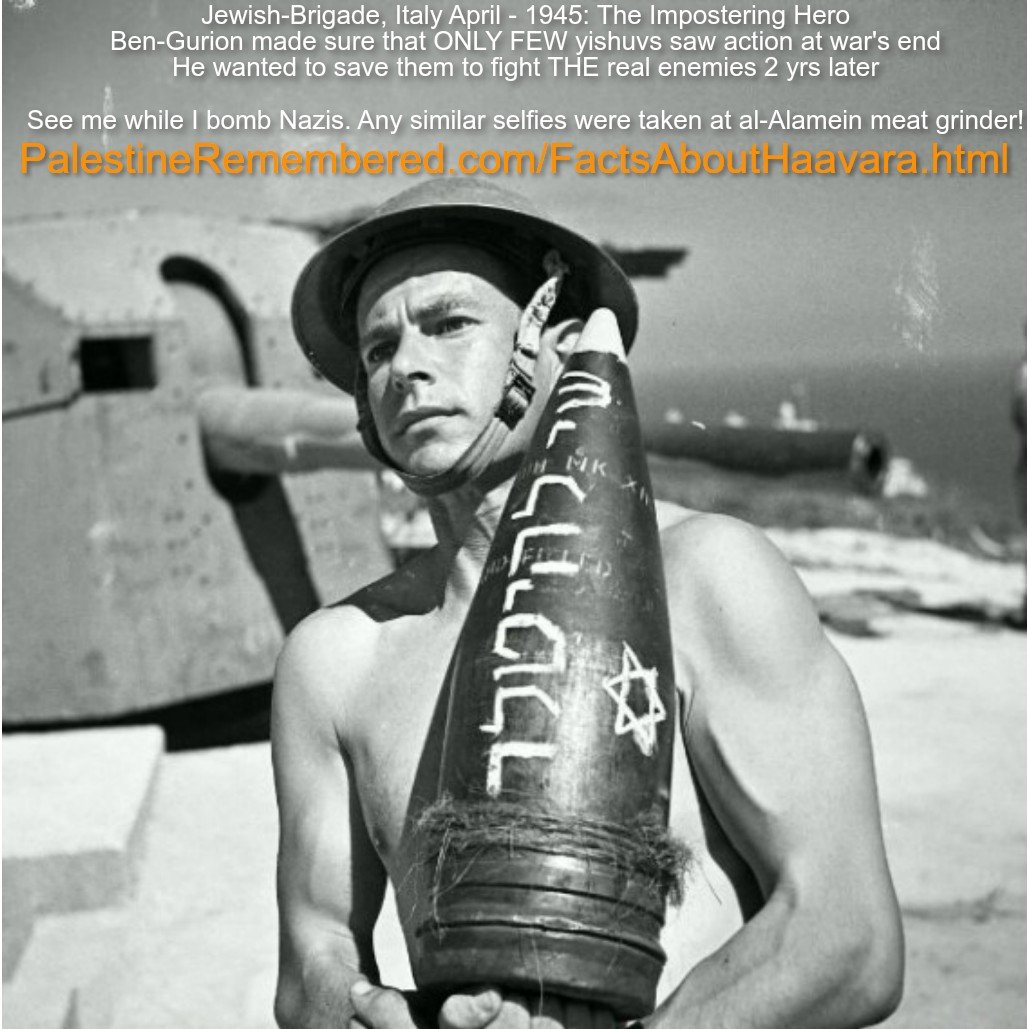 Fake Valor: Jewish-Brigade, Italy April - 1945: The Impostering Hero, see me while I bomb Nazis. We wonder: were any similar selfies taken at the al-Alamein meat grinder?
"It turns out that before the Nazis started to slaughter Europe’s Jews, they enabled us to build the foundations of our state-to-be", Israel. After the Jewish head was decapitated, and our limbs cut offin terrible suffering. This very foundation absorbed the emaciated surviving remnants of European Jewry. After Israel was born in 1948, the German reparations and compensation agreement of 1952 helped the state regenerate itself. Israel absorbed new immigrants and rehabilitated the war refugees, in effect, resurrecting a new Israeli nation that is essentially different from the sum of the ragtag Jewish refugees. (Abraham Burg, pp. 73-4)
Haavara V2.0: When Israel Was On The Verge Of Bankruptcy Soon After Nakba, Who Bailed It Out?
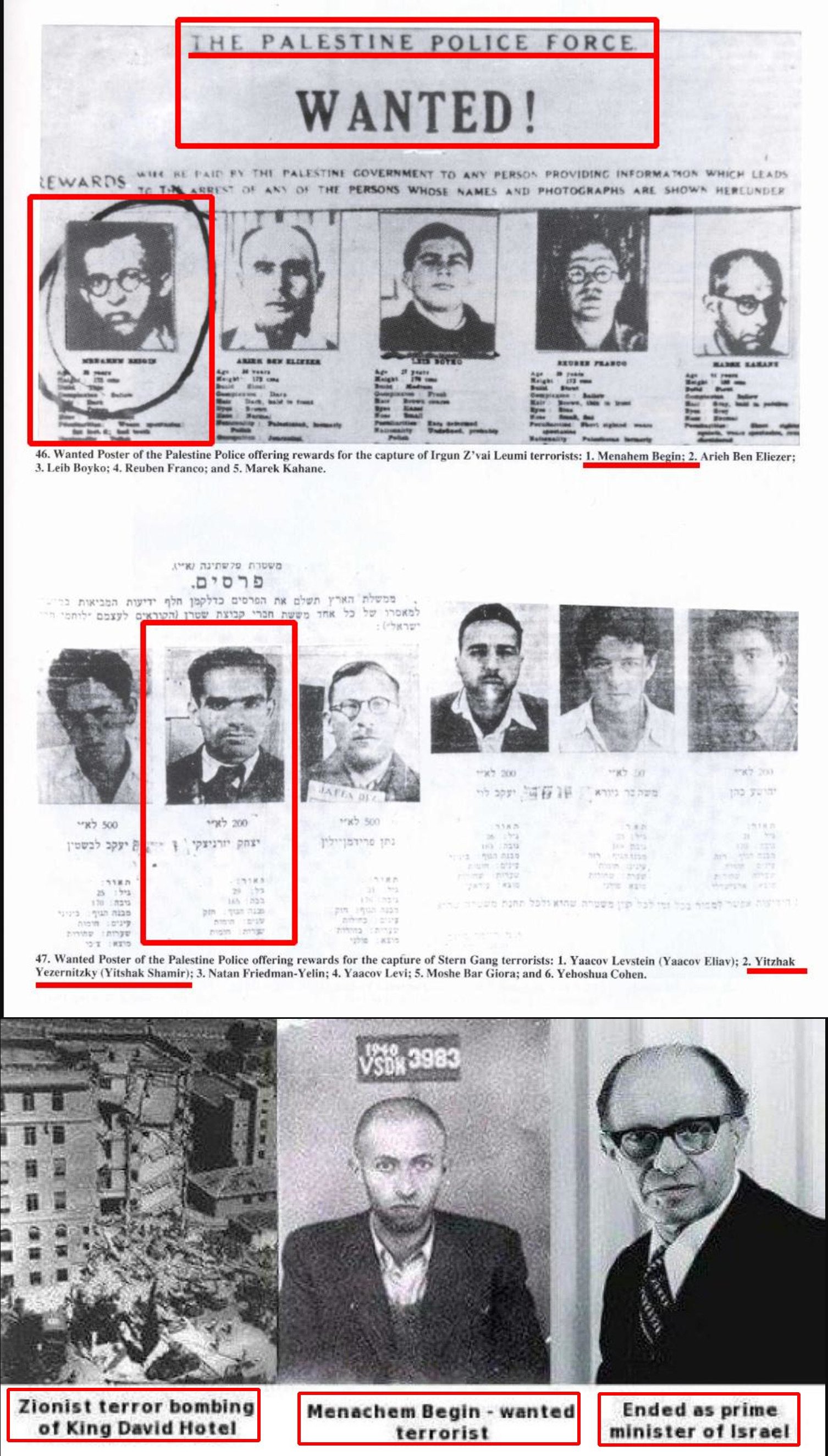 Why did Great Britain indict two of Israel's future PMs on charges of terrorism? Those evil British must have been "Jew-hating" antisemites!
Abraham Burg's earlier assessment was accurate: The Germans bailed out Zionism almost three times:
The 1st was in August 1933 when the Haavara Agreement was signed with Hitler,
The 2nd was in 1952 when the "Jewish state" an existential finanacial crisis, and
The 3rd was in early 1982, when Israel was facing an inflationary economy after the invasion of Lebanon.
If you care, we have addressed this rarely talked about topic in depth in another section.
Conclusion
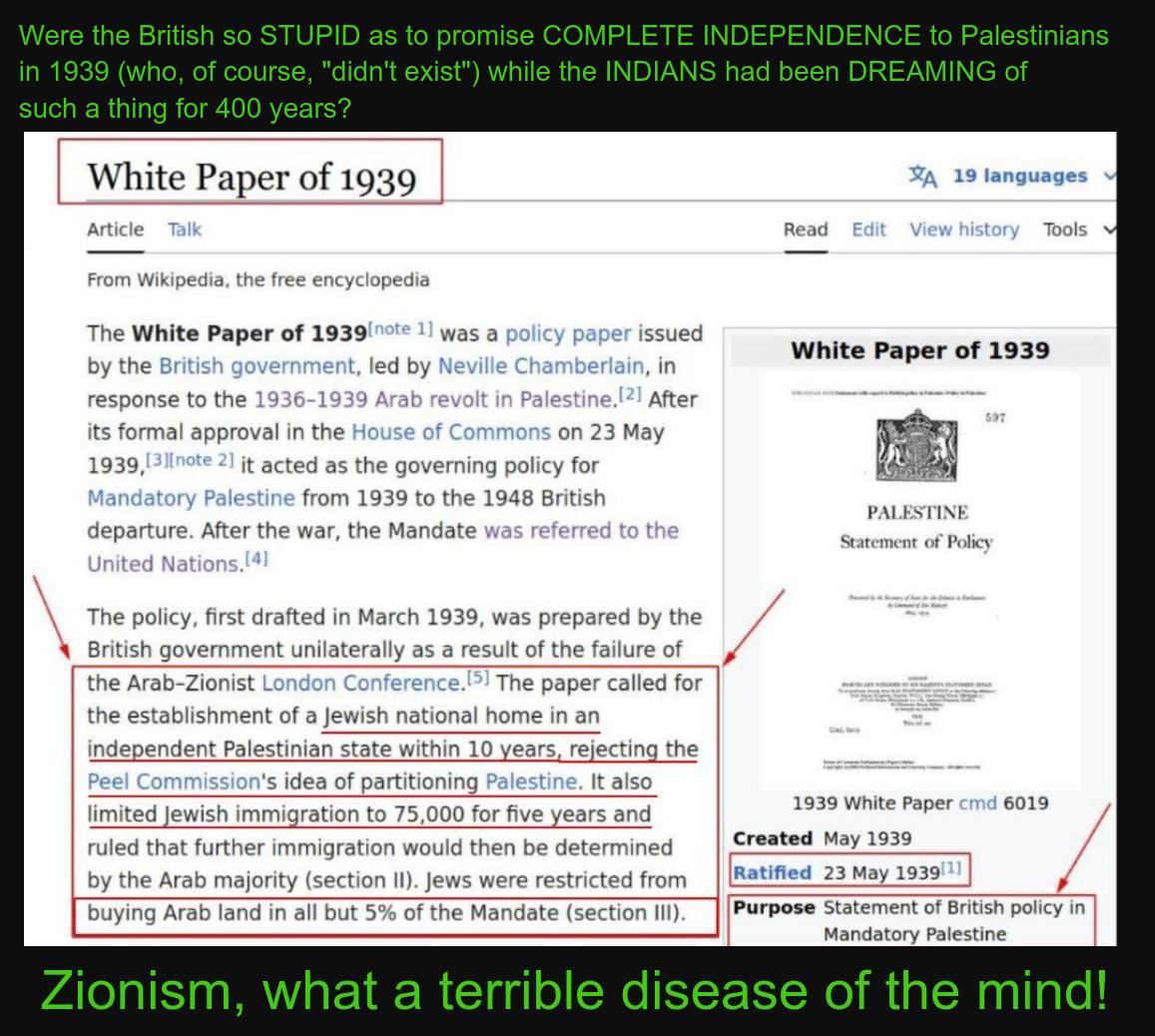 Were the British so STUPID as to promise COMPLETE INDEPENDENCE to Palestinians in 1939 (who, of course, "didn't exist") while the Indians had been DREAMING of such a thing for 400 years?
Let's assume, as often Zionists do, that there were other reasons for signing the Haavara Agreement (such as "saving lives"), and Zionists' dire financial situation played no factor in their decision-making process, then why Zionists were willing to risk their reputation and much of their political capital, especially when those who immigrated to Palestine could have easily done so with or without Haavara? See for yourself how Yed Vashem's most senior Holocaust historian, Yehuda Bauer, characterized it in Jews For Sale?, p. 17.
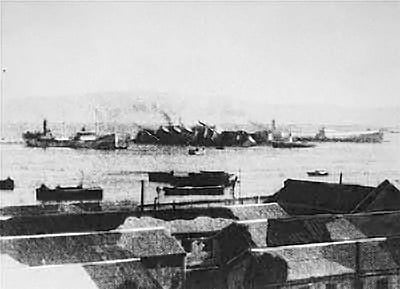 The Lever of Disaster: The Patria, Ben-Gurion, and the Doctrine of Sacrificial Statehood
It is a fact that many of those who gained entry to Palestine could have done so easily based on their money or based on the Labor Certificate visas, which were British grants to begin with. Actually, based on our calculations, 60% of those who gained Capitalist Immigration Certificates were not even Germans. What was tragically funny was that Zionist leaders scrambled to stabilize the Reichsmark (the German currency) when it was under stress in July 1933. Yes, ladies and gentlemen, Zionists were running like a chicken with its head off trying to stabilize Hitler's economy a month before Haavara was signed; Mazeltov. Dear Jews, please give yourselves a big hand.
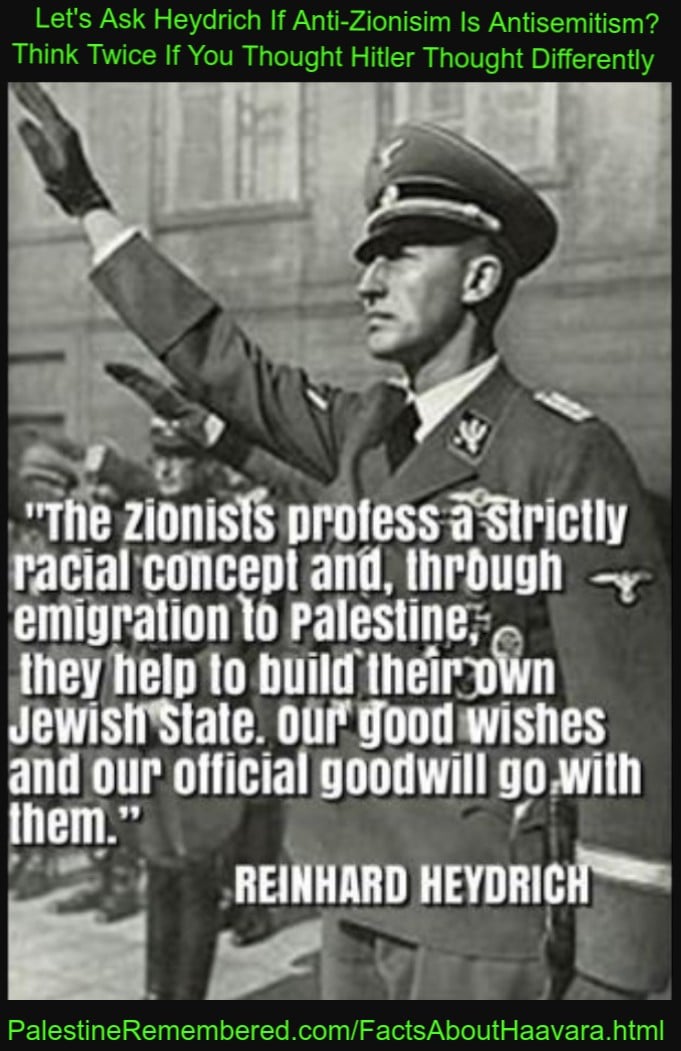 Let us Ask Reinhard Heydrich, The Architect of the Holocaust, If Anti-Zionism Is Antisemitism!
As you contemplate the earlier facts and arguments, please keep in mind that Adolf Hitler was willing to ship German and Austrian Jews anywhere, even on luxury liners, until late 1941. Can we honestly say the same thing about Zionists' policies (during the 1930s and 40s) had similar intentions of saving lives? Then, you be the judge.
Finally, we like to convey how the Zionist leadership felt during this period so you can get a better picture. In 1938, and during the Great Revolt between 1936-39, Ben-Gurion summarized the situation the yishuv was facing as a life-or-death one. Honestly, it seems David was spot on in this analysis. David wrote in 1938:
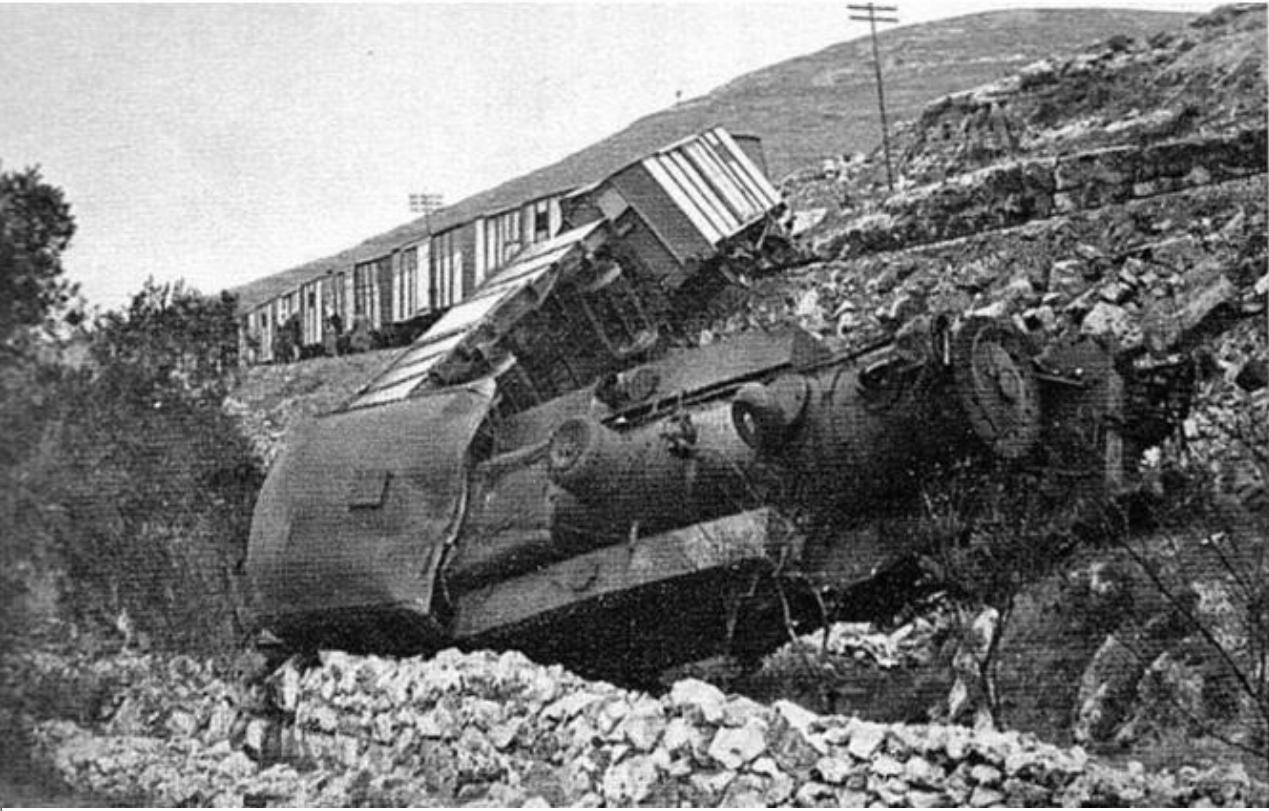 Fake Valor: Why did two of Israel's future PMs, Menachem Begin and Yitzhak Shamir, bomb WWII war efforts while their families were being gassed in Poland?
"Almost every [Palestinian] Arab" opposed Zionism, "because he is an Arab, because he is a Muslim, because he dislikes foreigners, and because we are hateful to him in every way." The conflict had lasted thirty years, and was liable "to continue for perhaps hundreds more." This was a "real war, a war of life or death."(Shabtai Teveth, p. 184)
Now, do you understand why Palestinians and Arabs, in general, HATE Zionists?
Is it possible that this is the case because of the Zionists' hate for Arabs, as Ben-Gurion professed it to be?
If that is what Palestinians and Arabs felt during the pre-Nakba period, how do you think they feel now! Of course, we have to assume first that Palestinians do exist in the first place!


 Over 700 Oral History interviews (including 3,500+ hours of recording) can be viewed online.
Post Your Comment
*It should be NOTED that your email address won't be shared, and all communications between members will be routed via the website's mail server.